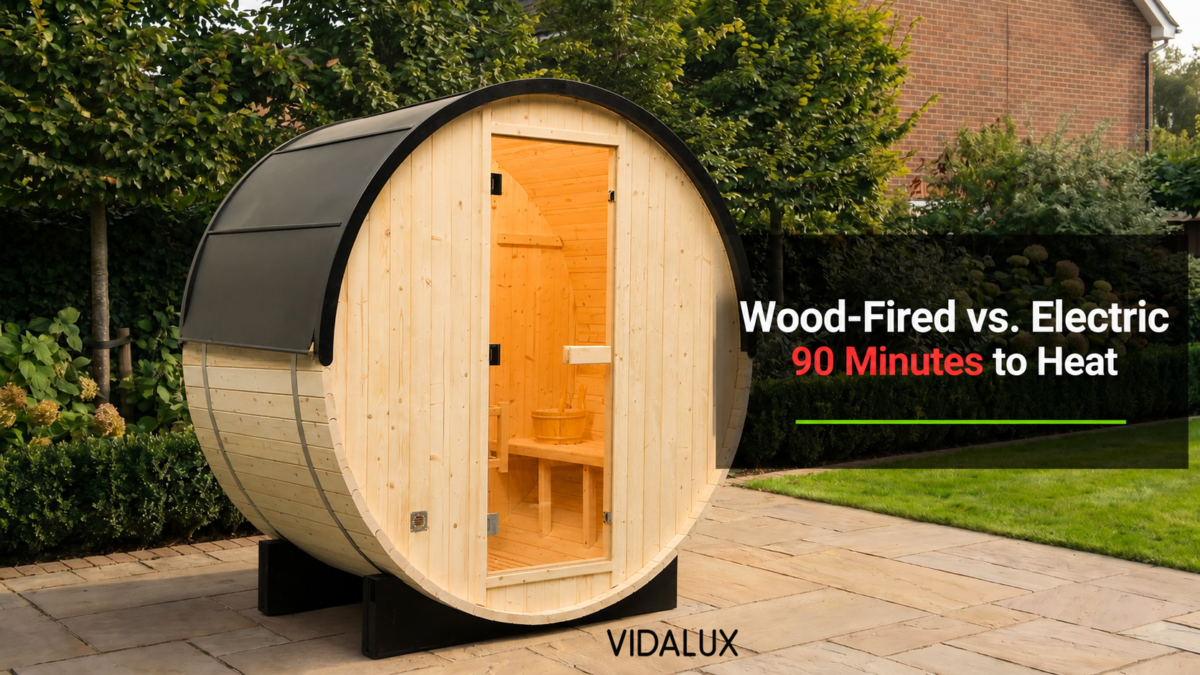
The Reality of Wood-Fired Saunas: 90 Minutes to Heat vs Instant Electric Control
It is a wet Wednesday in February. The kindling is in the shed. The kiln-dried logs are in the porch. Your wood-fired sauna takes 90 minutes to reach temperature. You have had a long day. Will you actually go and light it, or will you scroll your phone for an hour and tell yourself you will go tomorrow?
That single decision, repeated across 200 evenings a year, is the question nobody asks before they buy a wood-burning sauna. The brochures show the crackling stove and the steam. They do not show the wet logs in November or the half-full ash pan you have been meaning to empty.
This article is about the gap between the romance and the reality, and what that gap actually costs you in real sessions per year.
The Romance is Real. So is the Reality.
Wood-fired saunas deliver something genuinely distinctive. The rustic charm of the cast-iron stove. The soft crackling sounds of seasoned logs. The radiant warmth thrown from heated stones. The sensory engagement that connects you to centuries of Finnish ritual.
Sauna purists will defend the wood-fired experience for life, and they are not wrong about what it offers. The authentic experience is real.
But there is a question that rarely makes it into the marketing brochures.
How often will you actually use it?
That question matters more than any other. Because the wellness benefit of a sauna is not delivered by the heat source. It is delivered by the frequency of use. We will come back to that, with the science, in a moment. First, the practical reality.
The 90-Minute Reality: What Heat-Up Time Actually Costs You
Wood-fired sauna heat-up times typically run 60 to 90 minutes from cold to a usable 70-90°C. Electric saunas reach the same temperature in 30 to 45 minutes. In UK winter conditions, with damp ambient air and slightly damp logs, the wood-fired figure stretches further still.
Here is the thing. The wood-fired heat-up is not passive time. It includes lighting the fire, monitoring the burn, sometimes restoking, then waiting. UK forum voices put it bluntly: on cold days when the temperature hovers near zero, getting the cabin up to heat can take hours, not minutes.
An electric sauna heater is different in design. You press a button. You walk away. You come back when the cabin is at a temperature. The thermostat holds it there. There is no monitoring, no restoking, no judging the burn.
That difference does not look enormous on paper. Sixty minutes versus thirty. But multiplied across a year, it becomes the deciding factor between a sauna you actually use and a sauna that becomes a garden ornament. The 30-minute prep gets done on a Tuesday evening. The 90-minute prep gets postponed until the weekend, then postponed again.
This is where the friction starts to compound.
The Friction Math: What Wood Fired Ownership Actually Looks Like in the UK

Heat-up time is only the first task. Wood-fired ownership is a sequence of small jobs, none of them difficult on their own, all of them adding up across a year of UK weather.
Sourcing the wood comes first. As of 2026, kiln-dried hardwood in the UK runs roughly £160 to £230 per cubic metre, with Ready to Burn certification mandatory under the May 2021 regulations. You cannot just burn whatever the local farmer has lying around. The certification matters for both efficiency and legality.
Then comes the rest of the list:
- Chopping and splitting logs to size for the stove
- Storing wood somewhere genuinely dry, because UK damp is the enemy of efficient burning
- Annual chimney sweeping, which according to Checkatrade typically costs £60 to £120 per visit, with HETAS recommending wood-burning chimneys be swept more than twice a year if used as a primary heat source
- Cleaning ash from the firebox after every session
- Cleaning soot from the glass door, because the romantic crackle leaves a residue
- The UK weather penalty – wet logs burn poorly, take longer to ignite, smoke more, and stretch your heat-up time even further
None of these are catastrophic. So why do they matter?
Because friction is the enemy of consistency. Each task on its own takes a few minutes. Together, they form a quiet decision tree. On a wet Tuesday, after a long day, the brain finds reasons not to start. The romance that made you buy the sauna becomes the reason you stop using it.
The honest truth? People do not give up on wood-fired saunas because they hate the experience. They give up because the experience starts ten steps before the steam.
Why Frequency Matters More Than Authenticity
This is the part that reframes the whole question.
The largest long-term study on sauna use is Dr Jari Laukkanen’s 20-year Finnish KIHD study, published in JAMA Internal Medicine. It followed 2,315 men over more than two decades. According to Laukkanen’s research published in JAMA Internal Medicine, men who used a sauna 4-7 times per week showed significantly lower cardiovascular and all-cause mortality risk compared with men who used a sauna once per week. Even 2-3 sessions per week produced meaningful benefits.
The deciding factor for the physical and mental benefits was not the heat source. It was not the rustic charm. It was the frequency.
A wood-fired sauna used twice a month delivers less benefit than an electric sauna used four times a week. The system that makes consistency easier is the system that delivers more well-being.
That is not a marketing argument. It is what the research actually shows.
The mindful experience matters. The sensory engagement matters. The soft crackling sounds genuinely add something to the ritual. But none of those variables appear in the cardiovascular research. Frequency does. Heart health, blood pressure, mental wellbeing, the many health benefits sauna culture is famous for – all of them follow the same rule. Show up often, and gain the benefit. Show up rarely, do not.
This is why the lazy wellness question is not a small one. It is the central one.
The UK Reality: Building Regs, Insurance, and Why Wood-Fired Isn’t Plug-and-Play
A wood-fired outdoor sauna in the UK is not a product you simply install in the garden. It is a regulated combustion appliance.
Under Approved Document J, the UK government’s official guidance on combustion appliances and fuel storage systems, the flue, hearth, ventilation, and clearances from combustibles all need to comply with current standards. A HETAS-registered installation is the practical route. Installers can self-certify and notify Building Control on your behalf, issuing a Certificate of Compliance. DIY routes require notifying Building Control before installation begins.
A working carbon monoxide alarm in the same enclosed space is mandatory.
What about Smoke Control Areas?
Many UK urban and residential zones are designated Smoke Control Areas. In these areas, you can only operate appliances that are DEFRA-approved, burning authorised low-smoke fuels. Penalties exist for non-compliance.
There are insurance implications, too. Chimney sweep certificates are typically required for valid home insurance cover where a wood-burning appliance is in use.
Compare that picture to an electric sauna installation. The only requirement is a qualified electrician confirming the correct supply, breaker, and cable size for the unit. No flue. No hearth. No Document J. No HETAS certification. No carbon monoxide alarm. No Smoke Control restrictions. No annual chimney sweep certificate for your insurance file.
The contrast is not subtle. One pathway involves combustion regulations and an annual maintenance calendar. The other involves an electrician for half a day and a thermostat.
The Vidalux Position: We Made a Deliberate Choice. Electric Only.
Vidalux is electric only. Always has been. Always will be. We do not make wood-fired saunas, and we never will.
That is not a limitation. It is an engineering decision based on what actually works in real UK homes, in real UK weather, used by real people who want consistency rather than a project. After years of building saunas for British gardens and bathrooms, the pattern is clear: the saunas that get used are the saunas that are easy to use.
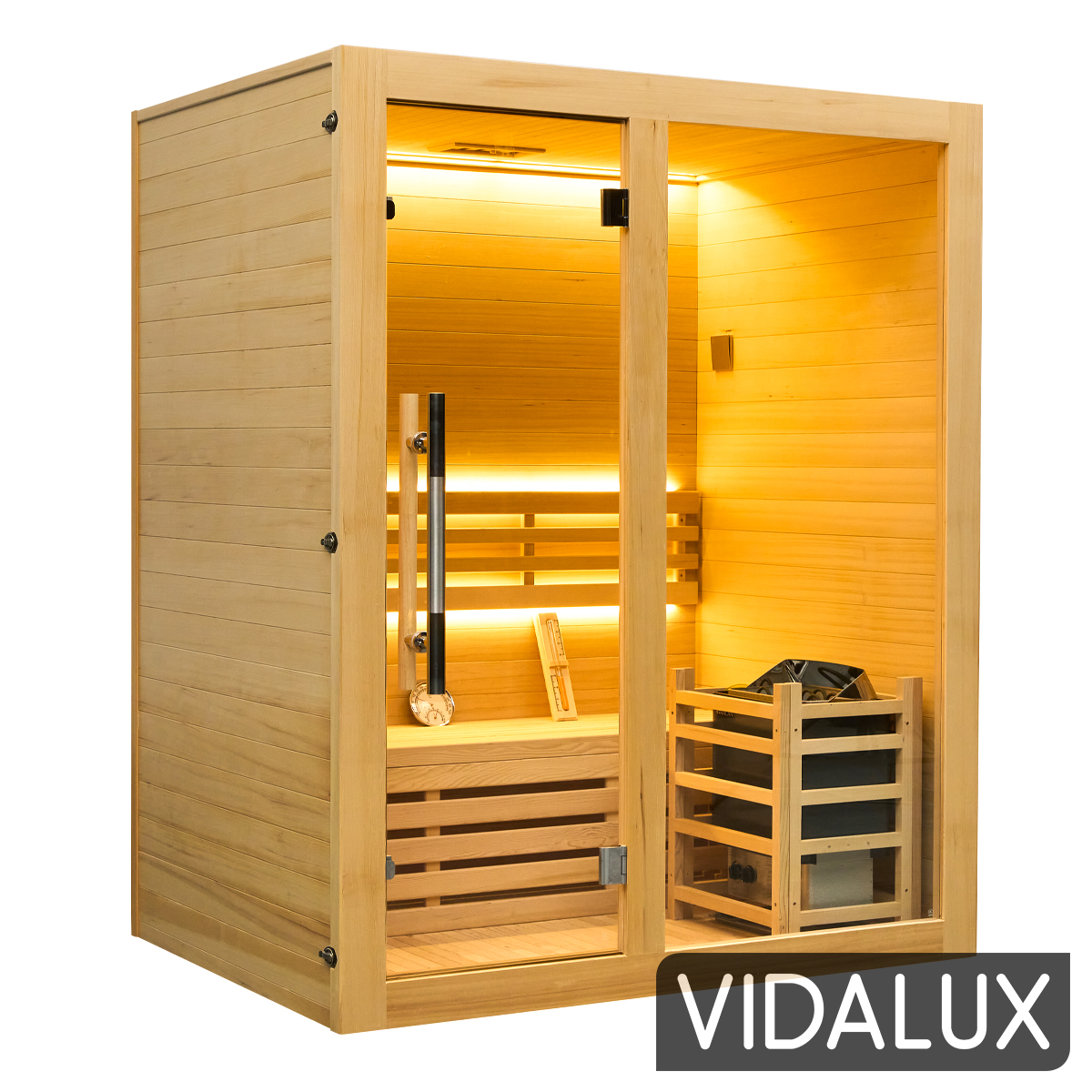
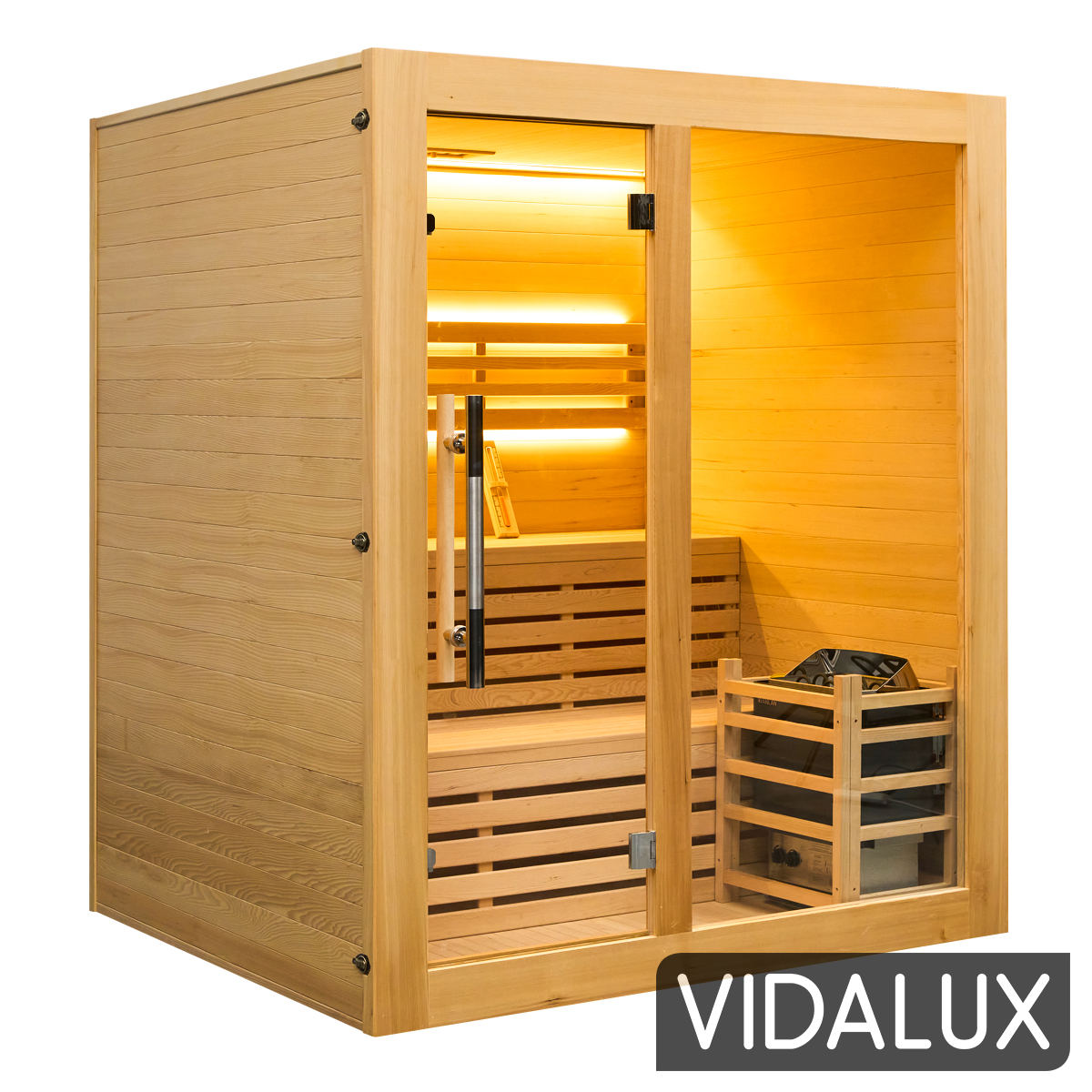
For purists who want the traditional Finnish experience, our Hybrid range delivers it without the wood. A full electric Finnish-style stove with hot rocks for genuine löyly, paired with a full Complete Heat infrared system in the same cabin. Two genuine wellness modes, both electric, both press-and-play. The traditional sensory experience without the kindling, the chimney, or the wet logs in November.
The Complete Heat range delivers full-spectrum infrared – near, mid, and far – with faster warm-up and a gentler heat profile. It is the modern convenience option for people who want the wellness benefit on weeknights as well as weekends.
The point isn’t that wood is wrong.
The point is that the heat source you choose should match the life you actually live, not the life you imagine yourself living. And the wellness research is unambiguous about which life delivers the benefit.
If consistency is what delivers the wellness benefit, choose the system that makes consistency easy. Review the options across our outdoor sauna range or browse the indoor Vidalux electric sauna range to see what fits.
Frequently Asked Questions
Q: How long does a wood-fired sauna take to heat up?
A: A wood-fired sauna typically takes 60 to 90 minutes to reach 70-90°C from cold, longer in UK winter conditions or with damp logs. Electric saunas reach the same temperature in 30 to 45 minutes, which is why frequency of use tends to be higher with electric systems.
Q: Is a wood-fired sauna better than an electric sauna?
A: Wood-fired saunas deliver an authentic sensory experience with radiant warmth and traditional charm. Electric saunas deliver precise temperature control and faster heat-up times. The deciding factor for most owners isn’t authenticity, it’s frequency. The system you actually use four times a week wins.
Q: Do wood-fired saunas need building regulations approval in the UK?
A: Yes. Wood-fired saunas in the UK fall under Approved Document J, covering flue installation, hearth requirements, ventilation, and clearances from combustibles. HETAS-registered installation is the standard route, with the installer self-certifying and notifying Building Control on the homeowner’s behalf.
Q: What are the running costs of a wood-fired sauna in the UK?
A: UK running costs include kiln-dried hardwood at £160-£230 per cubic metre, an annual chimney sweep at £60-£120, and the time cost of sourcing, splitting, and storing wood. An electric sauna’s running cost is straightforward electricity consumption, typically 2-6 kWh per session, depending on model and session length, at the standard Ofgem unit rate.
Q: Can I use a wood-fired sauna in a Smoke Control Area?
A: Only if the appliance is DEFRA-approved and you burn authorised low-smoke fuels. Many UK urban and residential areas are designated Smoke Control Areas with penalties for non-compliance. An electric sauna avoids this restriction entirely, as no combustion is involved.
Q: Can you get the traditional Finnish sauna experience without wood?
A: Yes. A modern electric Finnish-style stove with hot rocks delivers genuine löyly, the steam released when water meets heated stones, at the same temperatures and humidity profile as a wood-fired stove. The Vidalux Hybrid range combines an electric Finnish-style stove with a Complete Heat infrared system in one unit.
- About the Author
- UK’s best-rated?

With over 22 years in the home spa industry, Andrew has overseen every stage of the journey—from initial product design and manufacturing to final installation. An author of multiple technical publications and scientific papers, he founded Vidalux to replace industry hype with engineering-led reliability. His focus remains on delivering gym-quality wellness through honest design and technical truth.
DISCLAIMER: All specifications, claims, and advice relating to any internal or external procedure, practise, product, or service were true at the time of writing. For more accurate and up-to-date details in relation to Vidalux services, please visit the relevant dedicated on-site page. For any product-related information, specifications, or guidance, the information on the product page should be considered the governing source.