Wood-Fired Saunas in UK Smoke Control Areas: What You Actually Need to Know Before You Buy
You’ve been browsing barrel saunas. The Pinterest boards are filling up. There’s a stove in your shopping cart, a quiet patch of garden earmarked for it, and somewhere in the last hour you’ve stumbled on a phrase that’s stopped you mid-scroll: smoke control area.
It’s a fair thing to pause on. Because here’s the honest truth: in most UK cities, the wood-fired sauna you’re picturing isn’t actually legal to run as you’d hoped. The rules are stricter than the internet usually lets on, and the cost of doing it properly is higher than most buyers expect.
But the Finnish heat ritual you actually want, the löyly steam, the rock basket, the deep, authentic sweat, all of that is absolutely available, just not necessarily through wood.
This is the calm, regulation-backed walkthrough we wish more buyers got before they placed a deposit.
What a Smoke Control Area Actually Is
A smoke control area (SCA) is a legally defined zone where you cannot emit smoke from a chimney unless you’re using a DEFRA-approved appliance and authorised fuel. Most of urban England, Scotland, Wales, and Northern Ireland is covered, and councils are tightening, not loosening, the rules.
The framework comes from the Clean Air Act 1993, with enhanced enforcement powers added by the Environment Act 2021. Local councils designate the boundaries, run the enforcement, and issue the penalties. According to the UK government’s smoke control area rules, there are two distinct offences you can commit:
- Emitting smoke from a chimney in a smoke control area: a fixed penalty notice of up to £300
- Buying or using unauthorised fuel in a non-exempt appliance: a fine of up to £1,000
Persistent breaches can lead to criminal prosecution.
How do you find out if your address is covered?
Contact your local council’s environmental health team, or check the official UK government smoke control map. Most major UK cities are partially or fully covered. Camden, for example, became fully smoke-controlled under its London Borough of Camden Smoke Control Order 2025, with the rules applying to every building in the borough, including private homes, businesses, and garden buildings.
Worth noting: a Parliamentary research briefing published in early 2025 confirmed that emissions of particulate matter from domestic wood burning rose 56 per cent in the decade to 2022. That trend is what’s driving the tighter enforcement, and it isn’t reversing.
Why Most Wood-Fired Sauna Stoves Aren’t Allowed in SCAs
Here’s the part most retailers don’t lead with: in a smoke control area, you can only burn wood if your appliance is on the official DEFRA exempt list. And many popular wood-fired sauna stoves aren’t currently listed.
To gain DEFRA exemption, an appliance must emit no more than 5 grams of smoke per hour, plus 0.1 grams per 0.3 kilowatts of output. That’s the bar set by the Stove Industry Association and confirmed in current government guidance, and it’s a high one. Sauna stoves run hot and burn fast for short, intense sessions, which is exactly the operating profile that makes the exempt-appliance threshold hard to clear.
You can verify any specific stove against the live database maintained by DEFRA’s Clean Air Act exempt appliance list. The list updates regularly, so always check the current entry for your specific model before purchasing. If your chosen stove isn’t on the list, it cannot legally burn wood inside a smoke control area.
A common point of confusion: Ecodesign Ready isn’t the same as SCA-exempt.
Ecodesign is a wider European efficiency directive, and most modern stoves meet it. SCA exemption is a separate, stricter test. A stove can be Ecodesign Ready and still be illegal to burn wood in for a London garden sauna.

There’s one more wrinkle. Outdoor barbecues, chimineas, and pizza ovens are exempt from SCA rules. But the moment your sauna stove flues through the roof of any building, including a barrel sauna or garden cabin, the smoke control rules apply in full. The structure makes it a chimney in the eyes of the legislation.
The Real Cost of Doing It Properly
Even if you find a sauna stove that is on the DEFRA exempt list, the compliance cost is what catches most buyers out. A wood-fired garden sauna isn’t just the cabin and the stove. It’s the full installation pathway, and the maths usually surprises people.
Here’s a realistic UK breakdown for a garden sauna with no existing chimney:
- Wood-burning sauna stove: £400 to £1,500
- Twin-wall flue kit and components: £475 to £2,500
- Hearth, heat shielding, backplate, cowl, and CO alarm: £400 to £1,800
- HETAS-registered installer with certificate: £120 to £300
- Local Authority Building Control sign-off (if not using HETAS): £150 to £550
- Annual chimney sweep, ongoing: £80 to £200
Add it up. The compliance overhead on a wood-fired garden sauna installation typically runs £2,000 to £4,000 on top of the cabin and stove themselves.
All of this falls under Approved Document J of the Building Regulations, which governs solid fuel appliances, flue clearances, hearth dimensions, ventilation, and carbon monoxide protection. The HETAS certificate matters for two reasons most buyers don’t realise: your home insurer will ask for it after any claim involving the appliance, and your buyer’s solicitor will ask for it when you eventually sell the property.
Andy at Vidalux puts it like this: “In fifteen years, the call I take most often goes the same way. ‘I’ve already paid for the cabin, can you tell me what flue I need?’ That’s the wrong order. The flue cost is what changes the maths.”
The Neighbour Question (And Why It Matters More Than the Fine)
Even with a fully exempt appliance and the right authorised fuel, you’re still not finished. Smoke from your sauna can still become a legal problem if a neighbour reports it.
Under the Environmental Protection Act 1990, smoke that’s prejudicial to health or causes a statutory nuisance can trigger an investigation regardless of your appliance’s exemption status. Local authorities are legally obligated to investigate complaints. They can issue abatement notices, and in serious cases, escalate to court.
The reality of UK garden density makes this more common than you’d think. Many semi-detached and terraced gardens have boundary distances of 1.8 to 3 metres. Wood smoke during lighting and refuelling, even from a clean-burning Ecodesign-compliant stove, doesn’t stay on your side of the fence. Wind direction, roof geometry, and the height difference between properties all carry it where it isn’t wanted.
This is the part installers don’t always lead with.
A fully compliant wood-fired sauna can still produce visible smoke during start-up and reloading. In a tight urban garden, that becomes a relationship problem long before it becomes a legal one. Insurance complications follow. Property sale friction follows. Once a council letter is on file, it doesn’t quietly go away.
Worth being honest about this before you commit, not after.
The Vidalux Approach: Authentic Finnish Heat Without the Combustion
For UK buyers in smoke control areas, or anyone who simply doesn’t want the flue, the certificate, the chimney sweep, and the neighbour negotiations, there’s a cleaner pathway: an electric Finnish stove.
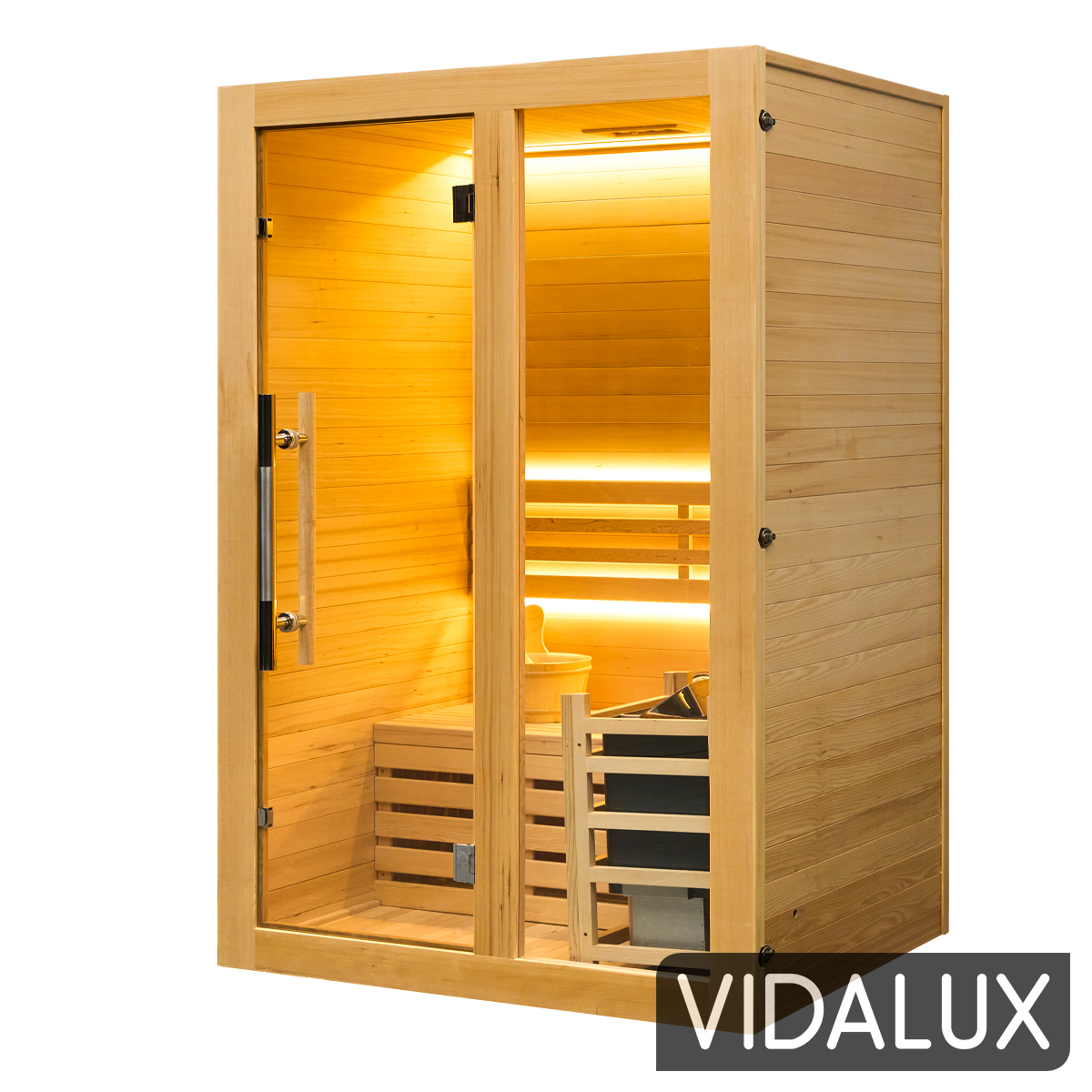
The Vidalux Hybrid sauna range pairs a full electric Finnish stove with a complete Complete Heat full-spectrum infrared system in one cabin. The traditional side runs at 70 to 90 degrees Celsius, with a proper rock basket. You ladle water on the stones, you get authentic löyly steam bursts, you get the deep sweat of a Finnish sauna ritual. The infrared side gives you a separate, gentler full-spectrum experience for daily use. You use one mode at a time, never both together.
Because the heat is electric, none of the Clean Air Act framework applies. There’s no flue. No DEFRA exempt-appliance lookup. No HETAS certificate. No chimney sweep. No smoke for neighbours to complain about. No wood storage, no ash management, no log-drying logistics. The supply is a hardwired single-phase residential, installed by a qualified electrician under Part P of the Building Regulations.
The interior is high-grade Canadian Hemlock, untreated and free of volatile organic compounds when heated, which is what you want in a high-temperature space. Construction integrity, heater placement, and airflow are engineered as a single system, not assembled from off-the-shelf parts.
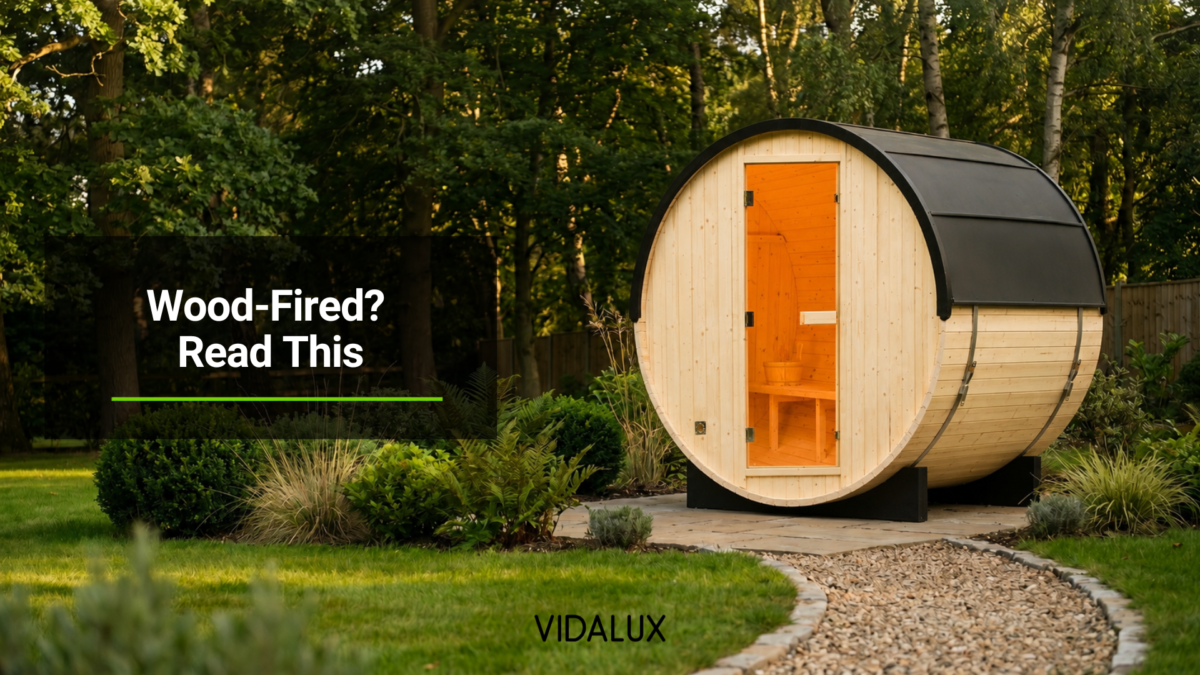
For garden installation, our outdoor saunas include the Barrel Outdoor Sauna range.
The ritual is the same. The compliance overhead is gone.
The real question isn’t “wood or electric?”. It’s “what’s actually possible where I live?”. If your address sits inside a smoke control area, an electric Finnish stove gives you the heat ritual you wanted without the regulatory weight. If you’re rural and unrestricted, wood-fired remains a beautiful tradition worth considering.
Either way, the right move is to check your local council’s SCA status before you buy anything. Compare the options.
Frequently Asked Questions
Q: Can I have a wood-fired sauna in a UK smoke control area?
A: A wood fired sauna in a UK smoke control area is only legal if the stove is on the DEFRA exempt appliance list and you burn authorised fuel. Most sauna stoves are not currently exempt, so an electric Finnish stove is usually the practical legal route.
Q: What happens if I install a non-exempt wood burner in a smoke control area?
A: If a non-exempt wood burner emits smoke from its chimney in a smoke control area, you can be issued a fixed penalty notice of up to £300. Buying unauthorised fuel for a non-exempt appliance carries a fine of up to £1,000. Persistent breaches can lead to criminal prosecution.
Q: How do I know if I live in a smoke control area?
A: To check if you live in a smoke control area, contact your local council’s environmental health department or use the official UK government smoke control map. Most major UK cities are partially or fully covered, and Camden, for example, is now fully smoke-controlled under its 2025 order.
Q: Is a Harvia M3 or similar sauna stove DEFRA exempt?
A: As of 2026, many popular wood-burning sauna stoves are not currently listed on the DEFRA exempt appliance list. The list updates, so verify your specific model on the live DEFRA database before purchasing. If not exempt, the stove cannot legally burn wood in a smoke control area.
Q: What’s the legal alternative to a wood-fired sauna in a UK city?
A: The legal alternative to a wood-fired sauna in a UK city is an electric Finnish stove with a rock basket, which delivers authentic löyly steam bursts at 70 to 90 degrees Celsius without combustion. Vidalux Hybrid saunas combine this with full-spectrum infrared in a single cabin.
Q: Do I need building regulations for a wood fired sauna?
A: Yes, solid fuel sauna stoves fall under Approved Document J of the Building Regulations. Installation typically requires a HETAS-registered installer or local authority sign-off, a compliant flue and hearth, and a carbon monoxide alarm. Without certification, your home insurance may be invalidated.
- About the Author
- UK’s best-rated?

With over 22 years in the home spa industry, Andrew has overseen every stage of the journey—from initial product design and manufacturing to final installation. An author of multiple technical publications and scientific papers, he founded Vidalux to replace industry hype with engineering-led reliability. His focus remains on delivering gym-quality wellness through honest design and technical truth.
DISCLAIMER: All specifications, claims, and advice relating to any internal or external procedure, practise, product, or service were true at the time of writing. For more accurate and up-to-date details in relation to Vidalux services, please visit the relevant dedicated on-site page. For any product-related information, specifications, or guidance, the information on the product page should be considered the governing source.