Bath Filling Slowly? How to Check Your Flow Rate and Fix It
You’ve been thinking about a new bath, maybe a walk-in bath for safer access, maybe a whirlpool for some well-earned comfort. But there’s a nagging thought you can’t shake.
What if it takes forever to fill?
It’s one of the most common concerns we hear. And it’s a fair one. Nobody wants to sit in an empty bath for ten minutes watching water trickle in. The good news? You can check whether your system is up to the job in about 60 seconds. No plumber required, just a jug and a timer.
If your bath is filling slowly, the problem is almost certainly your water system, not the bath itself. Let’s find out where you stand.
How Long Should a Bath Take to Fill?
It depends on two things: how much water the bath holds, and how fast your system can deliver it.
A standard bath holds roughly 150-180 litres. At a decent flow rate, that’s around 5-10 minutes to fill. Walk-in baths work differently because you bathe seated; the water level needed is naturally lower than in a standard bath, which means less time waiting to get warm, and less time waiting to drain before you exit.
The other half of the equation is your hot water system. There are three common setups in UK homes, and each one delivers water at a very different rate:
- Combi boiler — heats water on demand, typically 10-15 litres per minute
- System boiler with hot water cylinder — pre-stores hot water for faster delivery
- Gravity-fed system (tank in the loft) — relies on gravity alone, often under 8 litres per minute
The bath doesn’t control the speed. Your boiler and pipework do.
The 60-Second Flow Rate Test

This is the simplest check you can do before spending a penny on anything.
You’ll need a measuring jug (or a bucket you know the volume of) and a timer on your phone. That’s it.
Turn your hot tap on fully, the one nearest to where your new bath would be installed. Hold the jug under the flow and time exactly 60 seconds. The number of litres you collect is your flow rate in litres per minute.
What do the numbers mean?
- Under 8 litres/min — low flow, likely a gravity-fed system
- 10-15 litres/min — typical combi boiler output
- 15+ litres/min — strong system boiler or mains-pressure unvented cylinder
But what if the flow drops after 30 seconds?
That’s worth paying attention to. If the stream starts strong and then fades, your boiler is struggling to keep up with demand. This is especially common with older or lower-output combi boilers. It doesn’t mean you can’t have a bath; it means you need to understand what you’re working with.
Worth noting: this test takes a minute. But it tells you more about your home’s bath-filling potential than any product specification ever will.
What Your Boiler Type Means for Fill Speed
Not all systems are equal. And the difference matters more than most people realise.
Combi boilers are the most common setup in modern UK homes. They heat water instantly as it passes through, delivering around 10-15 litres per minute depending on the model’s kilowatt rating. That’s perfectly adequate for most baths. The limitation? If someone turns on a tap elsewhere in the house while you’re filling, the flow splits, and slows.
System boilers with a hot water cylinder work differently. They pre-heat and store a tank of hot water, so when you open the tap, you get a strong, fast flow. The trade-off is capacity. Once that cylinder empties, you’re waiting for it to reheat. For a walk-in bath used in a seated position, most reasonably sized cylinders cope comfortably.
Gravity-fed systems are the ones that catch people out. Common in older UK properties, they rely on a cold water tank in the loft feeding a hot water cylinder by gravity alone, no pump, no mains pressure. The result is often under 8 litres per minute, sometimes considerably less if the pipework has bends or junctions that work against the downward flow.
To be clear: the taps on a quality bath aren’t restricting your flow. They’re passive. The issue is always with the water delivery system behind them.
What to Do If Your Bath Is Filling Slowly
A low flow rate doesn’t mean you’re stuck. It means you have options to discuss with your plumber.
Fit a pump. For gravity-fed systems, a twin impeller positive head pump, typically rated at 1.5 bar, can significantly improve your flow rate. Think of it like adding an engine to a bicycle: the infrastructure is the same, but the delivery is meaningfully faster. Your plumber can recommend the right specification for your setup.
Check your pipework diameter. Older homes often have 15mm pipe feeding the bathroom. Upgrading to 22mm pipework allows considerably more water through. This is a plumber job, not a weekend project.
Review your combi’s kW rating. An older 24kW combi delivers noticeably less hot water than a modern 35kW+ model. If you’re due a boiler upgrade, it’s worth factoring bath-filling performance into the decision. According to the Chartered Institute of Plumbing and Heating Engineering (CIPHE), matching your boiler’s output to your home’s hot water demand is one of the most effective ways to improve performance across the whole system.
Time your usage. The simplest fix of all. Avoid filling the bath while the dishwasher, washing machine, or another shower is running. Every open outlet splits your available flow.
How Vidalux Walk-In Baths Are Engineered Around This Problem
Slow filling isn’t just an inconvenience in a walk-in bath, it’s a comfort and dignity issue. Sitting in a cold, slowly filling bath isn’t an experience anyone should have to accept. It’s something we thought about carefully when engineering the range.
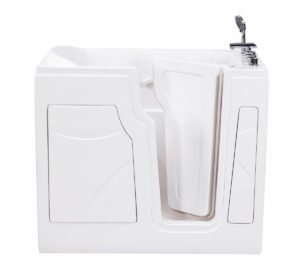
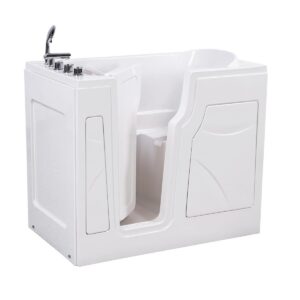
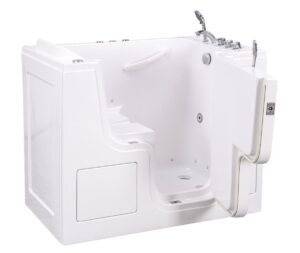
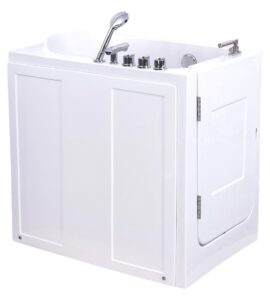
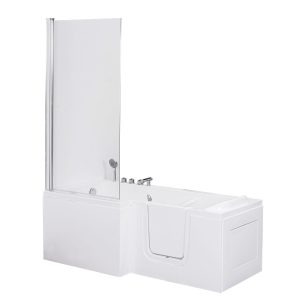
Hi-flow mixer taps are standard across every Vidalux walk-in bath. They’re designed to deliver every litre per minute your plumbing can provide, with nothing restricting the flow. There’s no bottleneck at the tap end.
Because walk-in baths are designed for seated use, the water level needed to bathe comfortably is naturally lower than in a standard bath. That’s a meaningful practical advantage — it translates directly into shorter wait times, both to fill and to drain.
On the drain side, twin 40mm fast-flow waste outlets are built into every model. Dual drains work considerably faster than single-outlet designs, so you’re not sitting cold waiting for the water to empty before the door can be opened.
And for longer sessions, selected whirlpool bath models include an inline heater that maintains water temperature while you soak. It doesn’t heat cold water from scratch; your boiler handles the fill, but it means the water stays comfortable for as long as you want to stay in it.
The 60-Second Summary
Checking your flow rate takes one minute. It tells you whether your system can fill a bath at a reasonable speed, and if it can’t, there are straightforward solutions your plumber can talk you through.
The bath isn’t the bottleneck. Your water system is. Once you know what you’re working with, the right choice becomes clear.
See the full walk-in bath range, designed around how real plumbing systems actually work.
Frequently Asked Questions
Q: How long should a bath take to fill? A standard bath should take roughly 5-10 minutes to fill, depending on your water system. Combi boilers typically deliver 10-15 litres per minute, while gravity-fed systems may manage under 8, making the boiler type the biggest factor in fill speed.
Q: Why is my bath filling slowly? A bath filling slowly is almost always caused by low water pressure or limited boiler output — not the taps themselves. Gravity-fed systems in older homes are the most common cause, and a twin impeller pump can usually resolve it. Your plumber can confirm the right solution for your setup.
Q: How do I check my water flow rate at home? Checking your water flow rate at home takes 60 seconds. Turn the hot tap on fully, hold a measuring jug underneath, and time how many litres fill in one minute. Under 8 litres per minute suggests a gravity-fed system.
Q: Will a walk-in bath take longer to fill than a normal bath? A walk-in bath typically fills faster than a standard bath because you bathe seated, which means the water level needed is naturally lower. Hi-flow mixer taps are standard across the Vidalux range, designed to deliver maximum flow from your existing plumbing.
Q: Can I speed up my bath fill time with a pump? A pump can significantly speed up bath fill time if you have a gravity-fed system. A 1.5 bar twin impeller positive head pump is the most common solution, consult a qualified plumber for the right specification for your home.
- About the Author
- UK’s best-rated?

With over 22 years in the home spa industry, Andrew has overseen every stage of the journey—from initial product design and manufacturing to final installation. An author of multiple technical publications and scientific papers, he founded Vidalux to replace industry hype with engineering-led reliability. His focus remains on delivering gym-quality wellness through honest design and technical truth.
DISCLAIMER: All specifications, claims, and advice relating to any internal or external procedure, practise, product, or service were true at the time of writing. For more accurate and up-to-date details in relation to Vidalux services, please visit the relevant dedicated on-site page. For any product-related information, specifications, or guidance, the information on the product page should be considered the governing source.