Indoor vs Outdoor Home Sauna: Which Is Right for You
You’ve decided you want a home sauna. What you haven’t decided is where it goes.
Indoor and outdoor sauna are not two versions of the same product with different postcodes. They differ in the space they need, how they’re wired, what groundwork they demand, and the kind of session they actually deliver. Get the choice right early and installation is straightforward. Get it wrong and you’re looking at an electrician’s quote that doesn’t match what you budgeted for, or a sauna that never quite fits what you had in mind.
This guide works through the decision the way we’d talk you through it on the phone: space first, electrics second (because it decides more than people expect), then groundwork, heat style, and how each option actually lives in a household. No pitch at the end, just a straight comparison so you can choose with confidence.
Where Can It Actually Go? Space First

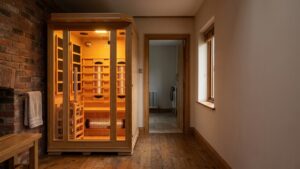
Indoor saunas fit into a spare room, garage conversion, or utility space you already have. Outdoor, go outside…
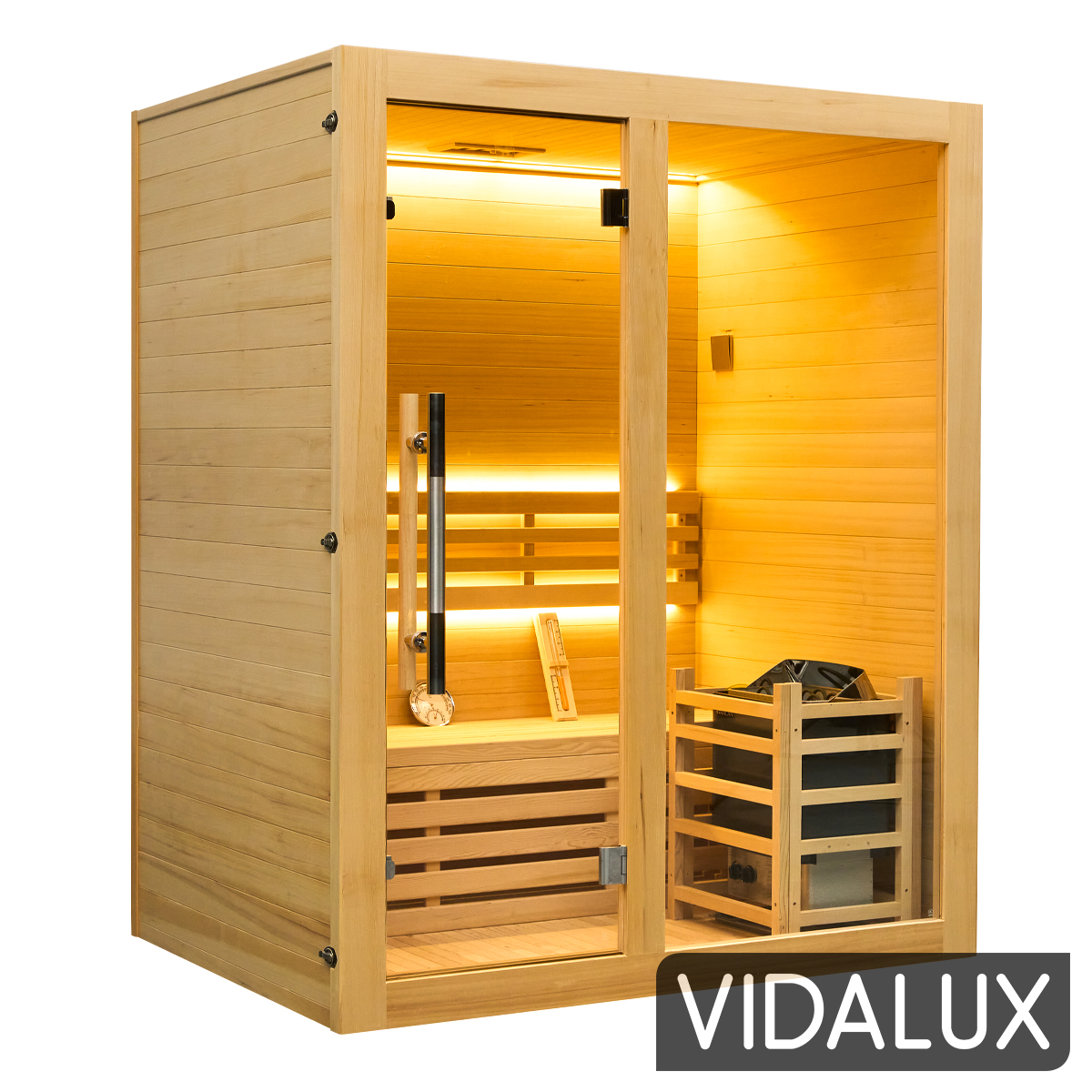
Indoors, you’re working with what the house allows. Vidalux saunas need a smooth, level floor able to take the weight of the cabin in use, and around 40cm of clearance on all sides for fitting (once built it can go against the wall).
Worth noting: the floor sits enclosed and raised inside the cabin, so heat doesn’t reach the floor beneath it. A carpeted spare room is perfectly safe.
Outdoors, space works differently. You’re choosing primarily based on how many people use it at once and how much garden you’re willing to give up, plus room for delivery and build access.
But what if you don’t have a spare room or a big enough garden? Then the decision often makes itself. A cramped garage rules out a larger indoor cabin; a small courtyard garden rules out the six-person barrel. Measure first, decide second.
The Electrical Question (This Decides More Than You’d Think)
Whether your sauna runs from a normal wall socket or needs a dedicated hardwired supply depends entirely on the model.
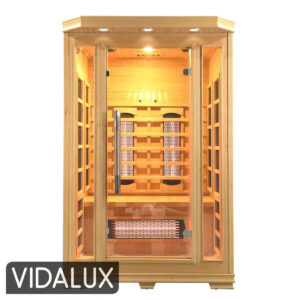
Vidalux’s plug-and-play infrared range covers the 1-3 Person Solara, the Solara 4 Person Corner, the Premier (up to 3 Person), and the Platinum (1-4 Person). These are all infrared-only models under 3000W, and they run from a standard 13A socket on a dedicated circuit. No electrician is needed for the plug itself.
Everything else needs hardwiring by a Part P qualified electrician, and there’s no size or price exception to this. Every traditional stove model (the Klassikko and Nordic ranges) must be hardwired, always, because a stove is a fixed appliance and even a lower-wattage version sits at the top of what a standard socket can handle. Every hybrid model is hardwired too, always fitted with an isolator switch. The larger infrared units also cross the line: the 4 Person Solara (3420W), the 4 Person Premier (3500W) and the 4-5 Person Solara Bench (3550W) all need a dedicated supply. Every outdoor model that uses a traditional stove and also needs hard wiring.
Choosing between the two is a bit like choosing between a kettle and a cooker. One is happy plugged into a socket in the corner. The other needs its own supply built into the house before it can be used at all.
One thing to consider: outdoor units typically need Steel Wire Armoured (SWA) cable buried in a trench running from your consumer unit out to the sauna. That’s a real piece of groundwork, and it’s worth pricing in alongside the sauna itself, not discovering after delivery.
Vidalux is a supply-only company. There are no Vidalux fitters, no pre-installation surveys, and no on-site visits, so the electrical planning, the cable run, and the final connection are down to your own qualified electrician. Book them once the sauna has arrived and you’ve confirmed the model, not before.
Weatherproofing and Groundwork for an Outdoor Sauna

An outdoor sauna needs a solid, level base and a hardwired electrical run before it goes anywhere near assembly. Concrete, paving slabs, or decking all work, as long as the surface is flat and stable.
Let’s be clear: Vidalux’s indoor saunas are built for indoor use, and installing one outdoors voids the warranty. That said, some customers do successfully run an indoor sauna inside a fully enclosed outdoor structure, such as a summerhouse, garage, or covered pergola, at their own risk. The electrics housed in the roof space aren’t weatherproof and need protecting, and the timber is treated but not for direct rain or hard frost, so this route only works if the structure genuinely shields the unit from the elements. In the event that there is excessive breeze or cold, you may also have issues with getting the sauna to a usable temperature.
Outdoor saunas do tend to carry a heftier price tag because they are manufactured differently and, in many cases, from a more robust and thicker wood designed for outdoor temperatures.
That’s a different proposition to the purpose-built Barrel Sauna, which is engineered for outdoor use from the start. If you want a true outdoor sauna rather than an indoor one in a shed, the Barrel range is an exceptional choice.
You generally won’t need planning permission for a domestic garden sauna, but it’s worth a quick call to your home insurer before you commit. Garden structures and new electrical circuits can affect a policy, and it costs nothing to check first.
Heat-Up Habits: What Kind of Session Do You Actually Want?
Indoor infrared saunas run gentle and low, typically 45-60°C and up to around 65°C in a well-insulated cabin, because infrared warms your body directly rather than heating the air around you. That’s what makes long, daily sessions comfortable rather than a chore.
The outdoor Barrel Sauna, being traditional-heater-only, works the opposite way. Expect the classic Finnish range of 70-90°C, with löyly, water poured over the stove’s rocks, to lift the humidity and intensify the heat. Sessions tend to be shorter and more intense rather than long and gentle, closer to the sauna you’d find at a gym or spa than a quiet daily ritual.
Put simply: if you want a long, low, relaxing session most evenings, that points indoors and towards infrared. If you want the hot, dry, ritual-style sauna in short powerful bursts, that’s what the outdoor barrel delivers, and indoors it’s what the Klassikko or Nordic traditional ranges deliver instead.
Privacy and How It Fits Your Household
Indoor saunas live inside your existing walls, so they’re private by default, unaffected by weather, and easy to use without stepping outside on a wet Tuesday in November. That convenience is a big part of why infrared models get used daily rather than a few times a year.
An outdoor sauna is a separate space, and for a lot of people that separation is the whole appeal. Walking out to the garden, sitting through a hot session, then cooling down outside afterwards feels like a proper retreat rather than an extension of the bathroom. It also frees up indoor square footage that a cabin would otherwise take.
Neither is more private in a legal sense. Both are typically fine without planning permission. The difference is how the experience feels day to day, and that’s a genuinely personal call.
Decision Checklist
| Question | Points Indoor | Points Outdoor |
|---|---|---|
| Do you have a spare room, garage, or utility space? | Yes | No, but you have garden space |
| Do you want a standard 13A plug connection? | Yes (on eligible models) | Never available, always hardwired |
| Are you ready for SWA cable trenched to a consumer unit? | Not needed | Required |
| Do you want long, gentle daily sessions? | Yes, infrared | Traditional heat runs shorter and hotter |
| Do you want a separate retreat away from the house? | No | Yes |
| Is your household happy with a fixed indoor footprint? | Yes | You’d rather use that room for something else |
Which Vidalux Range Fits Each
For indoor, plug-and-play infrared covers the 1-3 Person Solara, the Solara 4 Person Corner, the Premier up to 3 Person, and the Platinum 1-4 Person, all run from a standard socket. If you want the deepest infrared performance, Vidalux’s Complete Heat models step up to full-spectrum output as standard, still indoors, still hardwired only on the larger sizes. If it’s dry, high-heat Finnish sauna you’re after without going outside, the Klassikko and Nordic traditional ranges deliver that, always hardwired.
For outdoor, in almost all cases, these are always hardwired with SWA cable run to a consumer unit. This is an absolute if the item uses a traditional stove.
The honest truth? Most people already know which one fits their life once they’ve worked through space and wiring. The rest is preference.
Review the full home sauna range to compare models side by side, indoor and outdoor, before you speak to your electrician.
Frequently Asked Questions
Q: Can I install an indoor sauna outside instead of buying a Barrel Sauna? A: Not recommended. Indoor saunas aren’t designed for outdoor use and doing so voids the warranty. Some customers use them inside a fully enclosed, weatherproofed structure like a summerhouse at their own risk, but that’s different from a purpose-built outdoor sauna.
Q: Do all outdoor saunas need an electrician? A: Almost certainly, yes. This is an absolute if there is a traditional stove involved. It’s true to say that all outdoor saunas would benefit from a SWA cable run to the consumer unit, no matter what the heater type is.
Q: Does Vidalux install the sauna for me? A: No, Vidalux is supply-only. There are no fitters, surveys, or site visits. You’ll arrange your own installer for the build and a qualified electrician for any wiring.
Q: Do I need planning permission for a garden sauna? A: Generally no for typical domestic use, but check with your home insurer beforehand, since garden structures and new electrical circuits can affect a policy.
- About the Author
- UK’s best-rated?

With over 22 years in the home spa industry, Andrew has overseen every stage of the journey—from initial product design and manufacturing to final installation. An author of multiple technical publications and scientific papers, he founded Vidalux to replace industry hype with engineering-led reliability. His focus remains on delivering gym-quality wellness through honest design and technical truth.
DISCLAIMER: All specifications, claims, and advice relating to any internal or external procedure, practise, product, or service were true at the time of writing. For more accurate and up-to-date details in relation to Vidalux services, please visit the relevant dedicated on-site page. For any product-related information, specifications, or guidance, the information on the product page should be considered the governing source.
Ready to choose?
Browse the full Vidalux range of saunas, steam showers, baths and shower cabins, all in one place