Will Installing a Walk-In Bath Devalue My UK Property? The Honest Answer
You need a walk-in bath. Maybe it’s for you. Maybe it’s for a parent. Either way, the same question keeps surfacing: will a walk-in bath devalue my property when I come to sell?
It’s a fair concern. Your home is likely your biggest asset, and the last thing you want is to install something that puts buyers off in five years’ time. If you’ve been reading forums, you’ve probably seen words like “deal-breaker” and “auto no” thrown around.
Here’s the thing. The answer is more nuanced – and more hopeful – than most of those threads suggest. The real question isn’t whether you install a walk-in bath. It’s which one, and how well it’s presented.
What the Forums Actually Say (And What They Get Wrong)
The anxieties are predictable: “It’ll shrink my buyer pool.” “Families won’t want it.” “It screams old person’s home.” “I’ll have to rip it out before we list.”
Some of this is grounded. A badly installed, clinical-looking walk-in bath can narrow your appeal. Buyers see yellowed acrylic and exposed grab rails, and they mentally add the cost of a full bathroom refit to their offer.
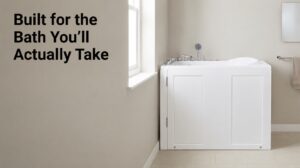
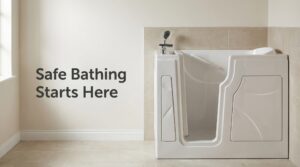
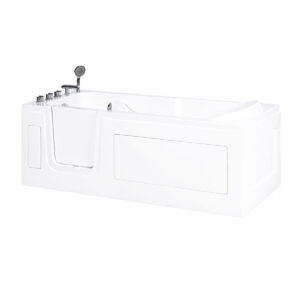
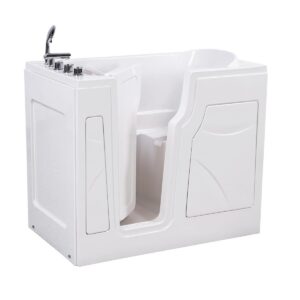
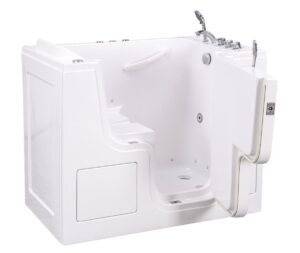
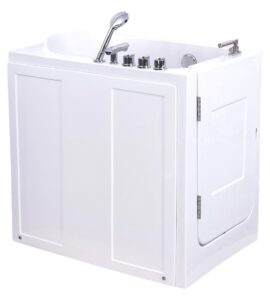
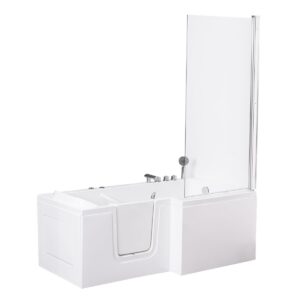
But here’s what the forums nearly always miss. They’re picturing units from 10 to 15 years ago – bulky, off-white, institutional. Modern walk-in baths built from reinforced premium acrylic with steel support frames look nothing like that. The acrylic stays white, resists cracking and yellowing, and is non-porous – warm to the touch and easy to clean. Paired with whirlpool jets and clean contemporary lines, a well-made unit reads as a considered design choice, not a medical adaptation.
The forum fear is real. The forum picture is outdated.
The Gap Between “Clinical” and “Contemporary”
Perception is everything when it comes to property value – and this is where most people get it wrong.
People weighing this up tend to picture one of two things: the dated, clinical unit, or the modern, spa-style version. There’s the “care home” version: plastic panelling, harsh lighting, exposed pipework, grab bars bolted to every surface. And there’s the modern version: clean reinforced acrylic, integrated seating, spa-style jets, proper tiling, warm lighting. One feels like a hospital. The other feels like a considered upgrade.
So what makes the difference? Materials and finish quality. A walk-in bath built from reinforced premium acrylic – non-porous, easy to clean, designed to stay white – looks entirely different from a cheap unit that yellows within a few years. Add a steel support frame for long-term structural integrity, and the bath holds its shape and appearance for the life of the bathroom.
Think of it like kitchen worktops. A laminate surface and a solid stone surface both do the same job – but one adds perceived value and the other invites replacement quotes.
What Estate Agents Actually Think About Walk-In Baths and Property Value
There’s no single rule that says a walk-in bath damages a sale. What matters more is how the room is finished and who’s likely to buy the house. Their advice is more practical than that.
The consistent message: retain at least one standard bath somewhere in the property if possible. If your walk-in bath is in a second bathroom, or you have a standard bath elsewhere, most agents see no issue at all.
Worth noting: agents consistently say that the quality and finish of a bathroom matters more than the specific fixture type. A well-tiled, well-lit room with a modern walk-in bath will sell better than a tired room with a standard bath that hasn’t been touched in 20 years. And in areas with an older population, an accessible bathroom can work in the seller’s favour rather than against it.
The honest summary? A walk-in bath is unlikely to be the reason a sale falls through. Presentation and finish carry far more weight than the fixture itself.
The Reversibility Question

The real fear behind “will it devalue my home?” is usually a more personal one: am I permanently locked into this decision?
The short answer is no. Swapping a walk-in bath for a routine job for any competent bathroom fitter. The plumbing is standard. The waste connections are standard. What does it actually cost? The pipework is straightforward. The real expense is cosmetic – re-tiling and finishing the surrounding surfaces once the old unit is removed. That’s a bathroom refresh, not a structural renovation. Expect hundreds to low thousands, depending on the finish you choose.
It is a reversible decision. That’s worth knowing before you let forum anxiety drive it.
Why Accessible Bathrooms Are Becoming More Normal
The UK population is ageing, and that shift is quietly changing what buyers expect. According to the Office for National Statistics, the proportion of people aged 65 and over in England and Wales rose from 16.4% at the 2011 census to 18.6% in 2021 – more than 11 million people. That’s a steady, decades-long trend, not a blip.
The old worry was that losing a standard tub would tank a sale outright. That fear is losing ground as accessible design becomes more familiar to buyers. Younger buyers increasingly view well-designed accessibility features as modern and thoughtful rather than dated.
The trend is toward inclusive design. Walk-in baths with whirlpool jets and spa-style finishes appeal across age groups – not just those with mobility concerns. That’s a change worth understanding before forum anxiety drives your decision.
The Vidalux Approach – Designed to Look Like a Choice, Not a Compromise
Every Vidalux walk-in bath is engineered around three principles: safety first, fast dignified bathing, and true engineering reliability.
Hi-flow mixer taps minimise fill time, so you’re not sitting in a cooling bath waiting for the water to rise. Dual waste outlets significantly reduce draining time, so you’re not sitting cold waiting to get out. The door system is fully watertight and reinforced with high-grade seals, designed for reliable everyday use over years.
Whirlpool options are available across most of the range, positioning the bath as a genuine wellness feature rather than a purely functional one. Various sizes and door positions mean the bath fits the room, rather than the room being forced to accommodate the bath.
See the full range of Vidalux walk-in bathtubs.
Frequently Asked Questions
Will a walk-in bath devalue my house?
A walk-in bath does not automatically devalue a property. The impact depends on the quality of the unit, how well the bathroom is presented, and the demographics of likely buyers in your area. A modern, well-finished walk-in bath can be neutral or even positive for value.
Do estate agents recommend removing a walk-in bath before selling?
Estate agents generally advise keeping at least one standard bath in the property. If the walk-in bath is in a second bathroom, or the home has an additional standard bath elsewhere, most agents see no need to remove it before listing.
How much does it cost to remove a walk-in bath and fit a standard one?
Removing a walk-in bath and fitting a standard replacement is a routine bathroom job. The main cost is re-tiling and finishing rather than plumbing, which is straightforward. Expect hundreds to low thousands depending on the finish you choose.
Are walk-in baths only for elderly people?
Walk-in baths are designed for anyone who wants safer, easier access to bathing. Modern models with whirlpool jets and spa-style finishes appeal to a wide range of users, from younger adults recovering from injury to older homeowners planning ahead.
Can a walk-in bath look modern and stylish?
A well-designed walk-in bath built from reinforced premium acrylic, with clean lines and optional whirlpool features, can read as a spa-style upgrade. The clinical look people associate with older walk-in baths comes from outdated materials and poor installation, not the concept itself.
- About the Author
- UK’s best-rated?

With over 22 years in the home spa industry, Andrew has overseen every stage of the journey—from initial product design and manufacturing to final installation. An author of multiple technical publications and scientific papers, he founded Vidalux to replace industry hype with engineering-led reliability. His focus remains on delivering gym-quality wellness through honest design and technical truth.
DISCLAIMER: All specifications, claims, and advice relating to any internal or external procedure, practise, product, or service were true at the time of writing. For more accurate and up-to-date details in relation to Vidalux services, please visit the relevant dedicated on-site page. For any product-related information, specifications, or guidance, the information on the product page should be considered the governing source.
Ready to choose?
Browse the full Vidalux range of saunas, steam showers, baths and shower cabins, all in one place