Whirlpool Jets in Walk-in Baths: What Do They Actually Feel Like? (And Who Benefits Most?)
Most people asking this question are researching for someone they care about.
A parent whose joints ache after every shower. A spouse who’s lost confidence getting in and out of a standard bath. Someone who’s been told a walk-in bath is the sensible next step – but who wonders whether the whirlpool upgrade is genuinely useful, or just a selling point dressed up as a benefit.
It’s a fair question. And the honest answer is that whirlpool jets in a walk-in bath feel meaningfully different to a standard soak – if the system has been properly designed. Here’s what to expect, and who’s likely to get the most out of it.
What Do Whirlpool Jets in a Walk-in Bath Actually Feel Like?
Whirlpool jets in a walk-in bath deliver a steady, targeted stream of warm water against the body – firm but measured, sustained rather than aggressive. It’s closer to a professional hand massage than a spa blast. The pressure works on the body quietly and consistently, throughout the soak.
The seated position makes a genuine difference here – and it’s a detail that matters more than it might seem. In a conventional whirlpool bath, you recline. In a walk-in bath, you sit upright, and jet placement has to account for that. Jets designed for a reclining posture will often fire upward when the user is seated, hitting water rather than muscle.
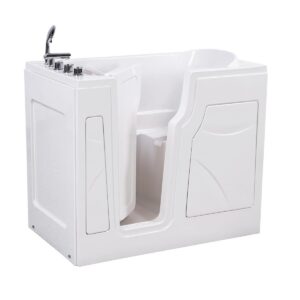
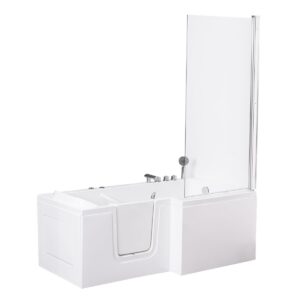
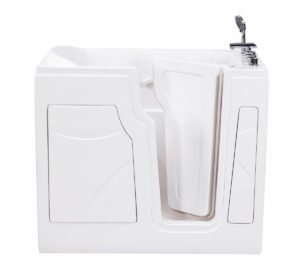
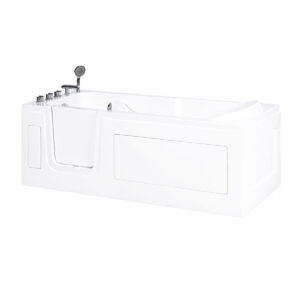
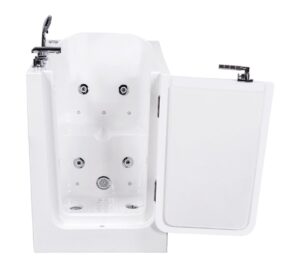
Vidalux positions its two back jets lower specifically to direct pressure toward the back rather than fountaining upward. Ten jets in total are distributed across the bath – compared to the six found in much of the market.
Does the seated position affect how much of the body the jets actually reach?
It does, and it’s worth being honest about that. The leg, lower back, and side coverage is strong. The effect on the upper back depends on the model and water level. For most users – particularly those with hip, knee, or lower-back discomfort – the coverage lands exactly where it’s needed.
On selected models, an air-to-water ratio mixer allows adjustment of the experience. Think of it like adjusting the heat on a hob: the same system, a different intensity. More air gives a lighter, bubblier sensation; less air produces deeper, smoother water pressure. The choice is yours, session by session.
The Wellness Benefits – What the Research Supports
Warm water alone does a lot of work before the jets even switch on.
Immersing the body in warm water supports muscle relaxation, encourages blood flow, and eases the kind of stiffness that builds up over a day. The therapeutic use of warm water is recognised by NHS physiotherapy services as a tool for supporting physical recovery and mobility – that’s the basis on which hydrotherapy has been used clinically for decades, not a marketing claim.
Adding hydro-massage to that warm water base extends the effect. The sustained pressure from whirlpool jets supports the easing of muscle tension, encourages circulation, and creates the kind of deep relaxation that a standard still soak rarely achieves. The combination is associated with better sleep and reduced stress – outcomes consistent with what warm water and reduced physical tension tend to produce.
Worth noting: these are wellbeing benefits, not medical outcomes. Whirlpool jets won’t treat a condition or replace physiotherapy. But as part of a regular bathing routine, the therapeutic benefit is real, consistent, and for most people, noticeable.
Who Benefits Most From Whirlpool Jets in a Walk-in Bath?
The people who benefit most are those with reduced mobility, stiff joints, or persistent muscle tension – particularly anyone who already finds bathing physically tiring.
The seated position is central to this. The jets deliver their effect without the user needing to adjust, reposition, or hold a specific posture. You sit. The warm water and hydro-massage do the rest. For anyone with limited flexibility, that matters enormously.
Older adults who previously used spa pools or leisure centre hydrotherapy will recognise the sensation immediately. For them, the whirlpool walk-in bath is less a new experience and more a way of continuing one they already know works – safely, at home, without the trip.
One honest caveat. If someone wants high-output, powerful jets – the kind found in a full-size spa or dedicated whirlpool bath – the pump in a walk-in bath operates within different constraints. The system is engineered for comfort and accessibility, not intensity. For most users with mobility or comfort needs, that’s precisely what’s required. For anyone expecting a vigorous spa-grade blast, a standard whirlpool bath is the better fit.
That transparency is useful to hear before you buy, not after.
What’s the Difference Between Whirlpool Jets and Airspa?
These are two completely separate systems – and confusing them is the most common mistake buyers make. Whirlpool jets deliver hydro-massage using water; airspa delivers thousands of fine air bubbles. The experience, the mechanism, and the feel are entirely different.
Whirlpool jets draw water in and push it back through the jets under pressure. The effect is targeted and adjustable, designed to work on specific areas of the body.
Airspa works differently. It delivers those thousands of fine air bubbles through jets positioned across the bath floor and sides. The sensation is lighter and more enveloping – a gentle, all-over stimulation rather than directed pressure.
Some users prefer it for its subtlety; others find water jets more effective for muscle tension. The honest truth? They complement each other rather than compete. Some models combine both systems, giving the user the option to choose or blend.
Airspa is only available on models where the under-bath clearance permits the additional pump. It’s a physical constraint, not a product tier – worth confirming for your specific model before deciding.
One important point on care: foaming products – bubble bath, foaming soaps, or anything that produces foam – should not be used with a whirlpool system. Foam places strain on the pump seals over time. Plain warm water is all the system needs, and all it asks for.
Is the Whirlpool Upgrade Worth It?
That depends on what the bath is for.
If the priority is safe, dignified access – and the bath will be used primarily for a comfortable, straightforward soak – the standard model already delivers that well. The whirlpool is a genuine upgrade, not a necessity.
If the bath is also meant to provide relaxation – a daily moment of warmth, ease, and physical relief – the whirlpool addition makes a meaningful difference to the quality of that experience. It’s the most popular upgrade across the walk-in bath range, and it’s not hard to understand why. The combination of safe access and consistent hydro-massage is something very few other products offer in a single unit.
The decision comes down to how often the bath will be used, and whether the warmth and movement matter beyond the safety alone. For many people, they matter quite a lot.
The Vidalux Approach to Whirlpool Walk-in Baths
Vidalux doesn’t treat the whirlpool system as an afterthought.
The 10-jet configuration – above the common market figure of six – reflects a deliberate decision about what meaningful coverage actually requires for a seated user. The lower back-jet positioning reflects an understanding of what happens when jets are placed for a reclining body rather than a seated one: the water fountains upward, and the user gets wet without getting the massage they came for. Pump sizing is matched to each bath model individually, not fitted as a standard component across a range.
These aren’t premium features. They’re engineering decisions made because the alternative – a poorly designed whirlpool bolted onto an access product – creates exactly the scepticism this article set out to answer.
To compare the full range of walk-in baths – with and without whirlpool systems – see the Vidalux collection.
Frequently Asked Questions
Q: What do whirlpool jets feel like in a walk-in bath?
A: Whirlpool jets in a walk-in bath feel like a steady, targeted stream of warm water directed at the body – particularly the back and legs. The effect is firm but not aggressive, more like a sustained massage than a powerful spa blast. The seated position means the jets work around the user’s natural posture.
Q: Are whirlpool jets in walk-in baths actually therapeutic?
A: Whirlpool jets in a walk-in bath are genuinely therapeutic in the wellbeing sense – warm water combined with hydro-massage supports muscle relaxation, eases tension, and encourages circulation. They are not a medical treatment. But for regular use as part of a relaxing, comfortable bathing routine, the benefit is real.
Q: What’s the difference between whirlpool jets and airspa in a walk-in bath?
A: Whirlpool jets deliver hydro-massage using water – targeted, adjustable pressure. Airspa delivers thousands of fine air bubbles for a lighter, more enveloping sensation. They are completely separate systems. Some walk-in bath models combine both; airspa is only available where under-bath clearance allows the additional pump.
Q: Who benefits most from whirlpool jets in a walk-in bath?
A: People with reduced mobility, stiff joints, or aching muscles benefit most – particularly those who already find bathing physically tiring. The walk-in bath’s seated position means the jets work without effort from the user. Older adults who previously used spa or leisure centre hydrotherapy will find the experience familiar and genuinely useful.
Q: Can I use bubble bath or bath salts with a whirlpool walk-in bath?
A: No. Foaming products such as bubble bath or foaming soaps should not be used with a whirlpool system – they can damage the pump seals over time. Bath salts should also be avoided unless specifically confirmed as safe for the system. Plain warm water is all that is needed for the hydrotherapy effect.
Q: Is the whirlpool upgrade worth it on a walk-in bath?
A: For anyone buying a walk-in bath purely for safe access, the standard model is excellent. The whirlpool upgrade is worth considering if you want the bath to be genuinely enjoyable – not just safe – and if warm-water relaxation is something you’ll use regularly. It’s the most popular upgrade across the walk-in bath range.
- About the Author
- UK’s best-rated?

With over 22 years in the home spa industry, Andrew has overseen every stage of the journey—from initial product design and manufacturing to final installation. An author of multiple technical publications and scientific papers, he founded Vidalux to replace industry hype with engineering-led reliability. His focus remains on delivering gym-quality wellness through honest design and technical truth.
DISCLAIMER: All specifications, claims, and advice relating to any internal or external procedure, practise, product, or service were true at the time of writing. For more accurate and up-to-date details in relation to Vidalux services, please visit the relevant dedicated on-site page. For any product-related information, specifications, or guidance, the information on the product page should be considered the governing source.