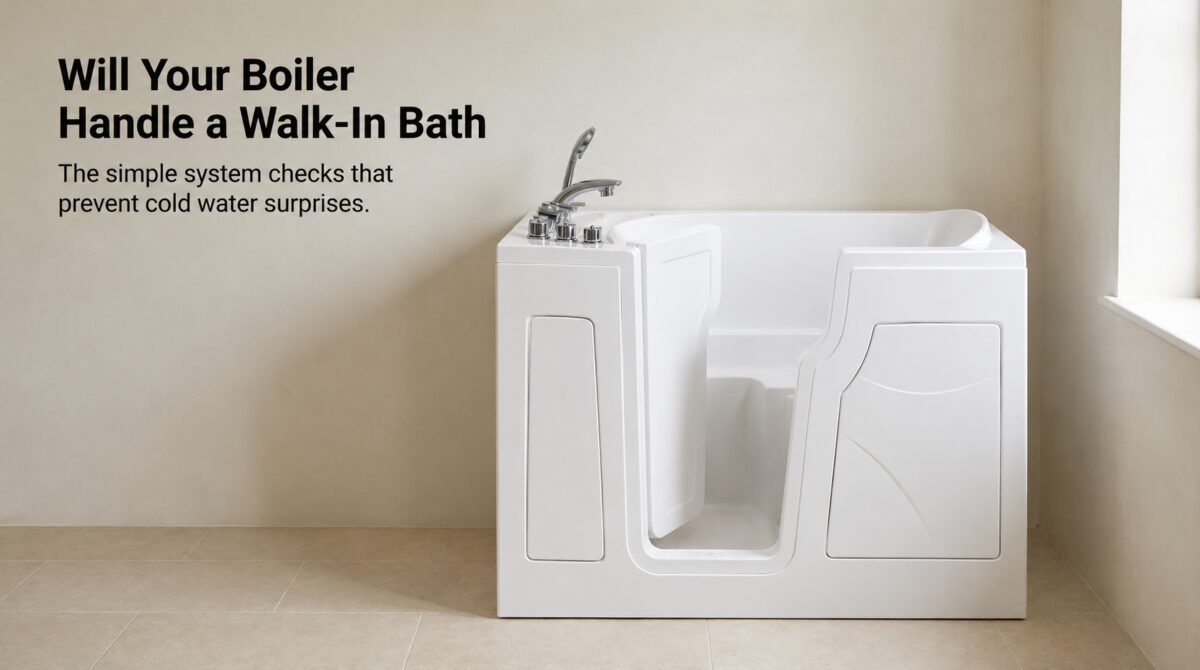
Will Your Boiler Handle a Walk-In Bath? Here’s What to Check Before You Install
You’ve found a bath that could genuinely make a difference – for yourself or someone you care about. And now, before anything else, you’re asking the sensible question.
Will the plumbing actually cope?
It’s the right thing to ask. The fear underneath it is real: committing to an installation, only to discover mid-fill that the water’s gone cold with someone sealed inside. Or being told by a plumber that you need a brand-new boiler – a £2,000 to £4,000 bill – before the bath has even been ordered.
Here’s the thing. For most UK homes, neither of those things needs to happen. The boiler question has a clear answer – and you can find it with a short checklist and one conversation with a qualified plumber.
This is that checklist.
Why Walk-In Baths Ask More of Your Hot Water System Than a Standard Bath
The difference isn’t the water. It’s the timing.
With a standard bath, you fill it first and step in once it’s ready. With a walk-in bath, you step in first, close and seal the door, and then fill. You can’t step out mid-fill if the water runs cold. That changes what good performance actually means.
Fill speed matters – genuinely – because a slow fill on a cold-water system means sitting in a warming bath that never quite gets there. Drain speed matters too: after the soak, the bath must empty before you can open the door and exit.
This is why flow rate – litres per minute reaching your taps – is the number that actually determines your experience, not just static water pressure.
But how much water does a walk-in bath actually need?
Walk-in bath fill volumes vary by model – your installer can confirm the requirement for your chosen bath before installation day. A standard UK hot water cylinder holds approximately 117 litres of usable hot water. Depending on the model you choose, that may be less than the bath requires – your plumber should compare your cylinder capacity against your chosen model’s fill volume before installation begins.
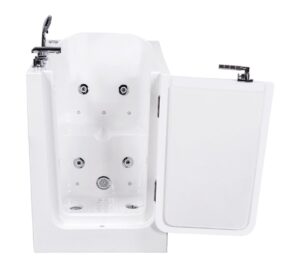
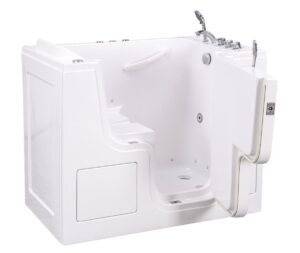
The good news is that Vidalux walk-in baths are designed around this exact problem. Hi-flow mixer taps are factory-fitted as standard on every model, specifically to compress fill time. Dual waste outlets are pre-moulded into the bath shell – two outlets working simultaneously means the bath empties faster than any single-outlet design can manage.
The engineering works to reduce the time the user spends waiting, in both directions.
That said, the bath can only work with what your system delivers. Which brings us to the first check.
Combi Boiler, Gravity-Fed, or Pressurised Cylinder? Know Your System First

The type of hot water system you have determines what, if anything, needs doing before installation. Most UK homes fall into one of three categories – and each has a different answer.
Combi boiler (most common in modern UK homes)
A combi boiler heats water directly from the mains on demand. No storage cylinder, no loft tank. Combi boilers typically deliver pressure within a range that a walk-in bath fill operation can work with – but the deciding factor is hot water flow rate at the tap, not static pressure.
Flow rate is the variable that fills the bath. General industry guidance places a 24kW combi at around nine to ten litres per minute, and a 28kW to 32kW model at around eleven to thirteen litres per minute. Your plumber should measure the actual flow rate at your property – figures vary by mains supply, pipework, and seasonal mains temperature. In winter, when mains water arrives colder, real-world flow rates drop further.
Worth noting: if another hot tap runs while the bath is filling – a kitchen tap, a shower elsewhere in the house – a combi’s available flow rate drops sharply. Your plumber should factor in how the bath will typically be used.
Gravity-fed system (common in older UK homes)
This is the setup with a hot water cylinder in an airing cupboard and a cold tank in the loft.
This is where preparation matters most.
Gravity pressure is determined by the vertical distance between the cold water tank and the tap. In a typical two-storey house, the result is well below the threshold needed for a comfortable walk-in bath fill. A gravity-fed system without a pump is, in most cases, not a suitable setup for a walk-in bath without modification.
Plumbers typically recommend a twin impeller pump rated above 1.5 bar, ideally above 2 bar, fitted on both hot and cold supplies. Your installer will confirm the right specification for your setup. This is a budgeted line item in the project, not a crisis.
On a gravity-fed system, cylinder capacity also needs checking. If your cylinder holds less than your chosen bath’s fill requirement, it may not fill on a single heat cycle. A qualified plumber can confirm the right cylinder capacity for your chosen model.
Unvented pressurised cylinder
Mains-pressure hot water, stored at volume. Typically the best-case scenario for walk-in bath performance is good pressure and good capacity. Check that the cylinder’s litre rating matches your chosen bath’s fill requirement.
How to identify your system: if you have a wall-mounted boiler and no separate cylinder or loft tank, you likely have a combi. If there’s a hot water cylinder in an airing cupboard and a cold tank visible in the loft, you have a gravity-fed system. If in doubt, a plumber can confirm in minutes.
To make sure your installation is done by someone properly registered, you can find an approved plumber via WaterSafe, the UK register of qualified plumbing businesses backed by the water industry regulators.
The Four Checks to Do Before Your Installer Arrives
These aren’t DIY diagnostic steps. They’re preparation – so that your conversation with a qualified plumber is focused, efficient, and based on the right questions.
- Identify your system type. Use the guide above. If you’re still unsure, ask a plumber before going further.
- Check your hot water cylinder capacity (gravity-fed and system boiler homes only). Find the litre rating on the cylinder label. Ask your plumber to compare it against the fill volume of your chosen Vidalux model before installation day.
- Ask your plumber to measure your mains. Static pressure and flow rate at the tap are different measurements, and flow rate in litres per minute is what fills the bath. Your plumber will assess both against the requirements of your chosen model.
- Consider simultaneous demand. Think about when the bath will typically be used, and what else might be running at the same time. A combi boiler’s flow rate drops noticeably when any other hot outlet runs simultaneously. Your plumber should know this before sizing any recommendation.
One thing to consider: isolation valves on the hot and cold incoming feeds are standard practice for any competent plumber – useful for service access and shutting off supply. Worth confirming it’s included in the scope of work.
What the Inline Heater on Deluxe Whirlpool Models Actually Does
Let’s be clear: this is the feature most commonly misunderstood in pre-purchase conversations.
Selected Vidalux Deluxe whirlpool walk-in bath models include a 1.5kW inline heater as standard. Its purpose is to maintain bath water temperature during longer sessions – it slows the rate at which the water cools once you’re settled in.
It does not heat cold water from the mains. It does not replace your boiler, your cylinder, or your hot water supply. If your system delivers insufficient hot water to fill the bath in the first place, the inline heater will not compensate for that.
What it does do – particularly for users who bathe for extended periods, or on borderline systems – is absorb some of the thermal loss that would otherwise occur over time. It’s an engineering refinement that works best when the underlying system is already adequate.
The reason for being direct about this: a customer who expects something the heater can’t deliver loses trust. A customer who understands exactly what it does gains confidence in the product.
So – Do You Actually Need a New Boiler?
For most UK homes: no.
A modern combi boiler in good working order will generally handle a walk-in bath fill without modification, particularly at 28kW and above. If yours is a smaller or older 24kW model, the question to ask is not “should I replace this boiler?” but “what is my actual flow rate at the tap?” That number – measured in litres per minute by your plumber, on your property, on your mains supply – is what determines whether the bath will fill comfortably.
A gravity-fed system needs a pump. That’s a budgeted addition to the project, not a £3,000 replacement.
If the mains supply itself is the limiting factor – which happens in some older properties with undersized incoming pipework – your plumber should measure flow rate at the point of entry, not just at the tap. If the mains caps the flow below useful levels, pipe sizing may need attention. This is less common, but it’s the sort of thing that a proper system assessment catches before installation, not after.
If a company recommends a new boiler before they’ve assessed your system, get a second opinion.
The diagnosis should follow evidence – measured pressure, measured flow rate, cylinder capacity, pipe sizing. Not the other way around.
The honest summary: a walk-in bath asks no more of your hot water system than a standard bath filled quickly with good taps. Vidalux baths are engineered to be less demanding than many comparable products – because faster fill time directly reduces peak demand on whatever system you have.
The risk isn’t the bath. The risk is installing any bath without checking the system first.
How Vidalux Baths Are Engineered Around This Problem
The engineering philosophy behind every Vidalux walk-in bath starts from the same point: fill fast, drain fast, protect the user from cold exposure at both ends of the session.
Hi-flow mixer taps are factory-fitted as standard across the range. They’re not a premium upgrade – they’re a baseline requirement, because fill time is a safety consideration, not a comfort preference, when the user is sealed inside.
Dual waste outlets come pre-moulded into the bath shell on every model. Two outlets working simultaneously means faster drainage – and less time sitting in cooling water waiting to exit.
For Deluxe whirlpool models, the 1.5kW inline heater adds a layer of thermal maintenance during the session – particularly useful for users who bathe for extended periods, or for systems filling at the lower end of the comfortable range.
The result is a bath that works with most UK water systems, not against them – and that gives your existing boiler or cylinder the best possible chance of performing well.
For most homes, this is not a complex problem. It’s a one-visit assessment and a clear conversation with a qualified plumber. For gravity-fed homes, add a pump to the budget. For borderline combi homes, confirm flow rate before committing. The bath itself is engineered to make the most of whatever system you have.
The check just makes sure nothing is left to chance.
Frequently Asked Questions
Q: Do I need a new boiler for a walk-in bath?
A: For most UK homes, no. A modern combi boiler in good working order will generally handle a walk-in bath fill without modification, particularly at 28kW and above. Gravity-fed systems need a pump added to the project budget – not a full boiler replacement. Have a qualified plumber measure your actual flow rate before deciding anything.
Q: What water pressure is needed for a walk-in bath?
A: A qualified plumber should measure your actual flow rate in litres per minute at the tap and assess it against the requirements of your chosen model. Static pressure and flow rate are different measurements, and flow rate is what fills the bath. Your installer will confirm the figures specific to your Vidalux model and your home’s supply.
Q: Can a combi boiler supply a walk-in bath?
A: Yes. Modern combi boilers handle walk-in bath fill operations without modification in most installations. A plumber’s assessment of your actual mains flow rate – measured in litres per minute – will confirm whether any modification is needed. Remember that flow rate drops if another hot outlet runs at the same time.
Q: What if I have a gravity-fed hot water system?
A: A gravity-fed system will almost certainly need a pump for satisfactory walk-in bath performance. Gravity alone produces pressure well below the level a comfortable fill requires. Plumbers typically recommend a twin impeller pump rated above 1.5 bar, ideally above 2 bar. Cylinder capacity should also be checked against your chosen bath model’s fill requirement.
Q: How much hot water does a walk-in bath hold?
A: Fill volumes vary by model. A standard UK hot water cylinder holds approximately 117 litres of usable hot water, which may be less than your chosen bath requires. Your installer can confirm the fill volume for your specific model before installation day – this is the number to check against your cylinder capacity.
Q: Does the inline heater on Vidalux Deluxe whirlpool baths replace my boiler?
A: No. The 1.5kW inline heater maintains bath water temperature during longer sessions, slowing heat loss once you’re settled in. It does not heat cold mains water and cannot compensate for an inadequate hot water supply. Your hot water system must still deliver adequate temperature and flow rate. It is a comfort refinement, not a water heating system.
Q: What pre-installation checks should I do?
A: Before installation, identify your system type (combi, gravity-fed, or unvented), check your hot water cylinder capacity against your chosen bath’s fill volume, and ask a qualified plumber to measure your actual mains flow rate in litres per minute. Your installer should formally confirm system suitability before fitting begins.
Q: Why do walk-in baths need good water pressure more than standard baths?
A: Walk-in bath users step in before filling and exit after draining – they cannot step out if water runs cold mid-fill. This makes fill speed and temperature consistency directly relevant to user safety, not just comfort. System checks protect the experience the bath was purchased to provide.
- About the Author
- UK’s best-rated?

With over 22 years in the home spa industry, Andrew has overseen every stage of the journey—from initial product design and manufacturing to final installation. An author of multiple technical publications and scientific papers, he founded Vidalux to replace industry hype with engineering-led reliability. His focus remains on delivering gym-quality wellness through honest design and technical truth.
DISCLAIMER: All specifications, claims, and advice relating to any internal or external procedure, practise, product, or service were true at the time of writing. For more accurate and up-to-date details in relation to Vidalux services, please visit the relevant dedicated on-site page. For any product-related information, specifications, or guidance, the information on the product page should be considered the governing source.
Ready to choose?
Browse the full Vidalux range of saunas, steam showers, baths and shower cabins, all in one place