Walk-in Bath vs. Walk-in Shower vs. Shower-Bath Combo: A Practical Comparison for Safer Bathing
Walk-in bath. Walk-in shower. Shower-bath combo.
If you’ve been researching safer bathing – for yourself or someone you care about – you’ve probably seen all three recommended. Sometimes almost interchangeably.
Here’s the thing. They’re not the same.
Each one solves a different problem, suits a different level of mobility, and involves different trade-offs. Choosing the wrong format means living with a compromise you didn’t expect – or worse, paying to rip it out and start again.
This is a straightforward walk-in bath vs walk-in shower comparison. No hype. No push toward the most expensive option. Just the honest differences, so you can choose the one that actually fits your situation.
What Each Option Actually Is (And Who It’s Really For)
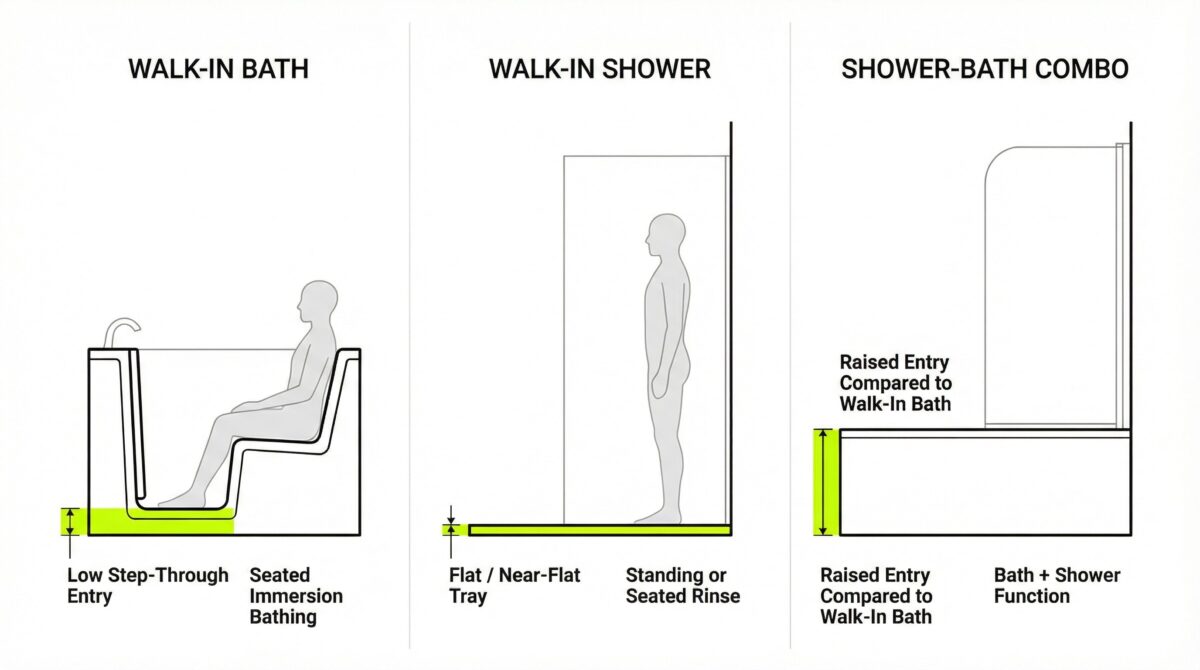
The confusion starts because all three products use the word “walk-in.” But the way you enter, sit, and bathe in each one is fundamentally different.
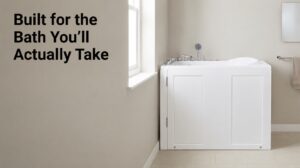
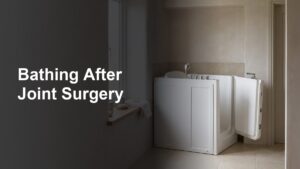
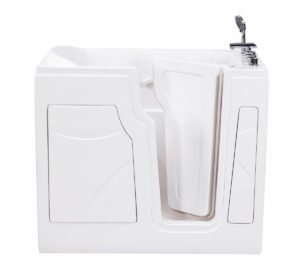
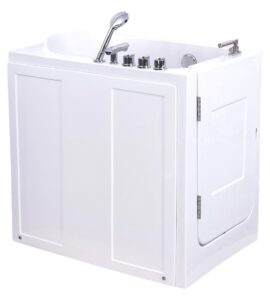
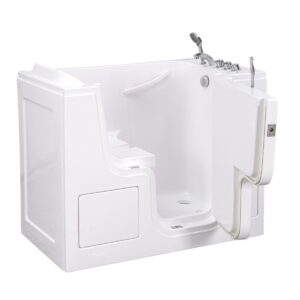
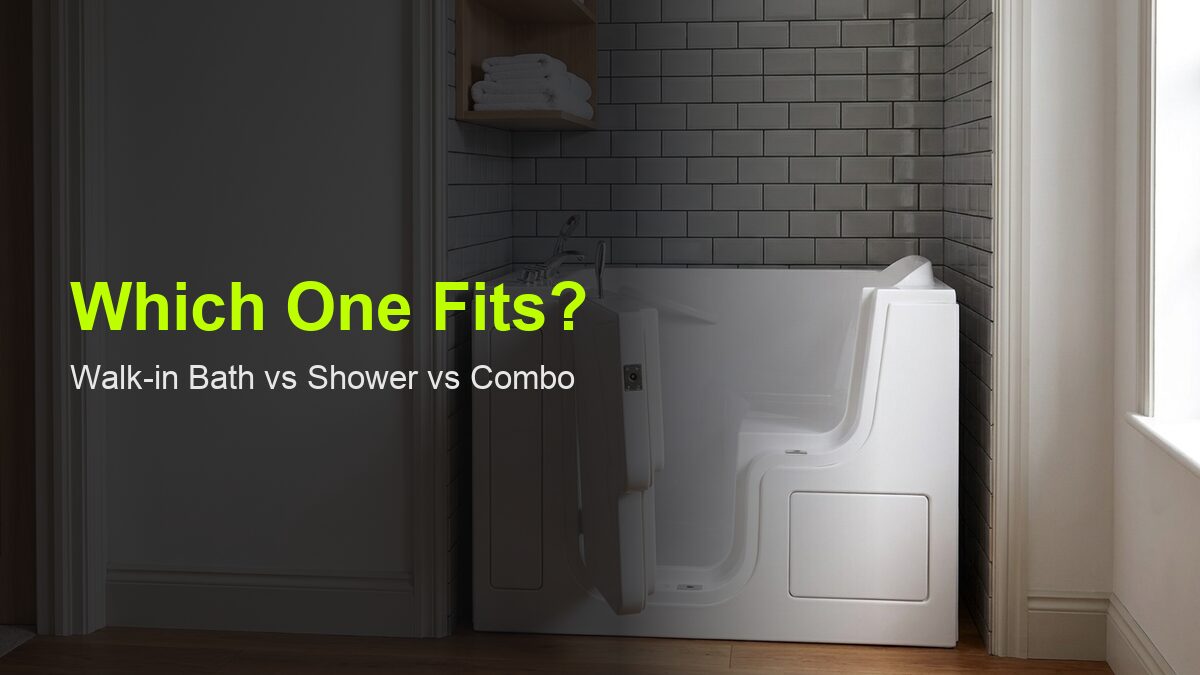
A walk-in bath has a watertight door built into the side. You open it, step through onto a low threshold, sit down on the built-in seat, close the door, and then fill the bath around you. When you’re done, you wait for the water to drain before opening the door again. It’s designed specifically for people who cannot safely climb over a standard bath rim.
Every Vidalux walk-in bath door is reinforced with high-grade seals, engineered for minimal force and no awkward twisting – because ease of access is the entire point.
A walk-in shower has a flat or near-flat tray. You step – or wheel – straight in. There’s no door seal to manage, no fill time, and no drain wait. It’s the fastest, simplest daily wash for anyone who can stand with or without support.
So what about the shower-bath combo?
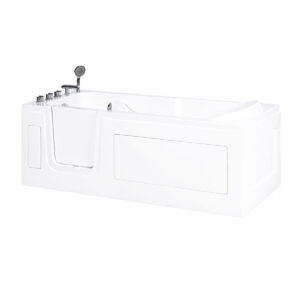
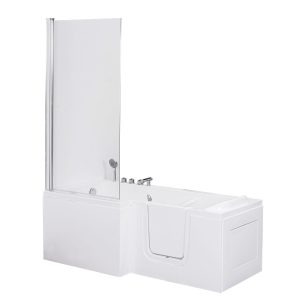
This is where it gets misunderstood. A combo unit – like the Coniston 1700, a standard-size walk-in shower bath with a pivoting screen – combines a watertight door with both bathing and showering functions. It sounds like the best of both worlds.
But it still has a higher entry point than a dedicated walk-in bathtub.
Let’s be clear: if you or your loved one is searching for a walk-in bath, it’s usually because stepping over any raised threshold is the problem. A combo doesn’t eliminate that barrier. It reduces it – but not to the same level as a true walk-in bath.
The Honest Comparison – Access, Comfort, and Practicality
The right choice comes down to four practical factors.
Entry height. A walk-in bath offers the lowest door threshold – you step through, not over. A walk-in shower has a flat or near-flat tray, which is the lowest overall. A combo sits between the two, but its entry point is noticeably higher than a dedicated walk-in bath.
Bathing style. Walk-in baths provide full seated immersion in warm water. Showers give a standing or seated rinse. Combos offer both options, but the bathing depth may not match a dedicated walk-in bath.
But won’t I sit there cold while the bath fills?
This is the most common concern – and a fair one. Walk-in baths require you to sit inside while the water fills and again while it drains. Hi-flow mixer taps and dual waste outlets – standard on every Vidalux model – significantly reduce both times. Think of it like having two exit points instead of one: dual waste drains the bath considerably faster than single-outlet designs. Showers and combos avoid the fill-and-drain process entirely. You step in, wash, and step out.
Therapeutic value. Warm-water immersion supports comfort for tired muscles, joint comfort, and general relaxation. Walk-in baths deliver this – with optional whirlpool and airspa upgrades for hydromassage. Showers provide quick refreshment but not the same depth of warmth. Combos offer some immersion, though access remains the deciding factor.
How to Decide – Match Your Mobility to the Right Product
Forget features for a moment. Start with your body.
If you cannot step over a bath rim or raised threshold at all – a walk-in bath is the clear answer. Lowest entry, watertight sealed door, seated bathing. Models like the Denton 1300 are specifically designed for wheelchair-accessible use.
If you can stand with support and prefer a quick daily wash without immersion – a walk-in shower or steam shower with a flat tray is the practical choice.
If your mobility is moderate and fluctuates – and you can manage a slightly higher step – a shower-bath combo may offer flexibility. But be honest about access. If stepping over a raised threshold is the barrier, a combo is NOT a suitable alternative to a walk-in bath.
One thing to consider: speak with an occupational therapist or physiotherapist before committing. A professional assessment of your range of movement takes the guesswork out entirely.
What Vidalux Builds Differently
Most walk-in baths on the market look similar from the outside. The differences are in the engineering you don’t see.
Every Vidalux walk-in bath – from the compact Ashford 1200 to the larger Abberton 1700 – is built on a steel support chassis with reinforced premium acrylic. That acrylic is warm to touch, non-porous, resistant to cracking and yellowing, and easy to clean. The steel frame prevents flexing, which matters when you’re sitting in a filled bath every day for years.
The slip-resistant textured base, built-in seated position, and easy-grip door handle are all designed around one principle: safe, dignified, independent bathing with no unnecessary complexity.
What about long-term support? We stock spare parts for current and legacy models. If something needs replacing in five years, the part is available. That matters more than most people realise at the point of purchase.
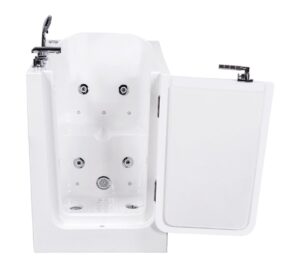
Optional whirlpool and airspa upgrades are available across the range – where under-bath clearance allows – adding hydromassage and gentle bubble therapy for comfort and relaxation.
There is no single “best” option. There’s only the right one for your situation – and once you understand the real differences, that choice becomes clear.
Review the options. Compare the details. Choose with confidence.
See the full range of Vidalux walk-in bathtubs.
Frequently Asked Questions
Q: What is the difference between a walk-in bath and a walk-in shower?
A walk-in bath has a watertight door that lets you step into a seated tub and bathe in filled water. A walk-in shower has a flat or low tray for standing washes. Walk-in baths suit users who cannot climb over a standard bath rim.
Q: Is a shower-bath combo easier to get into than a walk-in bath?
No – combo units still have a higher entry point than dedicated walk-in baths, which feature the lowest step-in threshold. Walk-in baths are specifically designed for users with severely limited mobility who cannot manage a raised step.
Q: How long does a walk-in bath take to fill and drain?
Fill and drain time depends on your water pressure and plumbing setup. Vidalux models include hi-flow mixer taps and dual waste outlets as standard, significantly reducing both fill and drain times compared with single-outlet designs.
Q: Can you get whirlpool jets in a walk-in bath?
Yes. Vidalux offers whirlpool and airspa upgrades across the walk-in range, providing hydromassage and gentle bubble therapy for relaxation and comfort – where under-bath clearance allows.
Q: Which is safest for someone who has had a hip replacement?
The safest option after a hip replacement depends on your range of movement. A walk-in bath offers seated, low-entry bathing with no climbing. A flat-tray shower suits those who can stand. Speak to your occupational therapist for personal guidance.
- About the Author
- UK’s best-rated?

With over 22 years in the home spa industry, Andrew has overseen every stage of the journey—from initial product design and manufacturing to final installation. An author of multiple technical publications and scientific papers, he founded Vidalux to replace industry hype with engineering-led reliability. His focus remains on delivering gym-quality wellness through honest design and technical truth.
DISCLAIMER: All specifications, claims, and advice relating to any internal or external procedure, practise, product, or service were true at the time of writing. For more accurate and up-to-date details in relation to Vidalux services, please visit the relevant dedicated on-site page. For any product-related information, specifications, or guidance, the information on the product page should be considered the governing source.
Ready to choose?
Browse the full Vidalux range of saunas, steam showers, baths and shower cabins, all in one place