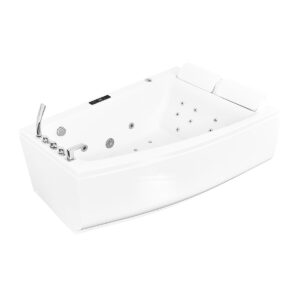
Jets vs. Air: Understanding the Hydro-Massage Mechanics of a Vidalux Spa Bathtub
You’ve been scrolling through bathroom websites for an hour, and the same words keep appearing in different orders. Spa bath. Whirlpool. Jacuzzi. Hot tub. Air tub. Each page defines them slightly differently, and none quite explain what’s happening inside.
Choosing a spa bathtub is a five-figure commitment for many households. Here’s the thing: underneath the terminology fog, there are only two hydro massage technologies in play. Water jets and air jets. They feel different, they’re built differently, and on a well-engineered bath, you can mix them. This article explains both jet types, plain and clear.
What a “Spa Bathtub” Actually Is (and Isn’t)
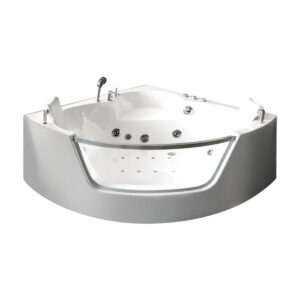
A spa bathtub is an indoor bathtub fitted with a built-in massage system – either water jets, air jets, or both. It replaces a standard bath, fills per use, and drains afterwards. It is not a hot tub.
That distinction matters. A hot tub is an outdoor freestanding unit that holds water continuously, recirculates and reheats it for days, and seats several people. A spa bathtub is a single-use indoor bath – different category, different engineering, different price.
What about Jacuzzi? Jacuzzi is a brand name, not a category – the same way Hoover became shorthand for vacuum cleaners. The Jacuzzi family invented one of the early hydromassage systems in the 1950s, and the name now gets used for any whirlpool bath, regardless of who made it.
In trade terminology, what most people call a spa bathtub is more accurately a whirlpool bath or, when both systems are fitted, a whirlpool and airspa bath.
How Water Jets Work (The Hydro System)

Water jets work by recirculating bath water at pressure. The working principle is simple: a pump draws water through a suction fitting, pressurises it, and pushes it back through nozzles aimed at the body – delivering deeper, targeted massage that releases muscle tension.
The suction fitting sits low on the side wall, toward the foot end. It carries an anti-vortex cover – a safety feature that stops anything (hair, a flannel) being drawn against the inlet. Water travels through dedicated pipework to the pump, around 1HP on most Vidalux models, sized to match the bath rather than over-specified for marketing. The pump returns it through a series of jets set into the inner shell.
But what about jet counts – isn’t more always better?
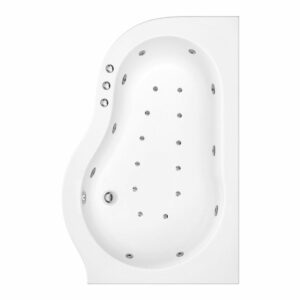
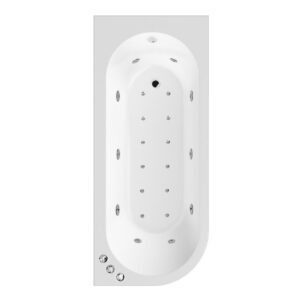
No – and this is the most common misconception in the category. Vidalux uses 6-10 whirlpool jets rather than the standard four or 6 on cheaper baths, but the count alone isn’t the point. The placement is.
Most whirlpool baths use four back jets. Vidalux deliberately uses two back jets, placed lower down, closer to the base. Jets sitting too high in the back-rest area direct water upwards rather than at the body – what installers call fountaining. Lowering and reducing them keeps flow against the lower back, where you actually want it.
Each jet face is directional and adjustable. The eyeball insert in the centre rotates to aim flow up, down, left or right. The face itself rotates to open or close the nozzle, dialling pressure up or down at that point.
Worth noting: water-jet systems recirculate, not refresh. The same bath water passes through the pump and pipework repeatedly during a session – which is why hygiene engineering matters as much as massage engineering.
You should also consider that 20 jets placed on a bath with inefficient pipework and a lower-powered pump will not work as well as six strategically placed and tested jets on a well-engineered system. More jets do not equate to a better system or experience, and in most cases, result in the opposite.
How Airspa Works (The Air System)

Airspa works on a completely separate system. A blower forces warm air through approximately 8 to 10 small openings around the base of the bath, releasing thousands of fine bubbles that rise through the water for a gentle, all-over massage.
No bath water passes through the airspa pipework. That’s the most important fact about it.
The blower is mounted under the bath, pushing warm air through a sealed channel that branches into the outlets, each a few millimetres across. As you sit in filled water, those outlets release thousands of tiny air bubbles that travel upwards across your skin.
The sensation is completely different from water jets. Forum users describe it as full-body, gentle, and effervescent rather than directional and firm. People with sensitive skin or conditions where firm pressure is uncomfortable often prefer it – the all-over bubble field doesn’t concentrate force on any one spot.
Because the airspa pipework only ever carries air, biofilm has nowhere to grow – it’s inherently easier to keep clean than a recirculating water-jet circuit.
One thing to consider: airspa is standard on selected Vidalux models, optional on others, and not available on every model. The limiting factor is under-bath clearance for the blower – always check the individual product listing.
The Air-to-Water Mixer (The Detail Most Articles Miss)

Most Vidalux whirlpool baths include an air-to-water ratio mixer on the main jets. A dial on the rim controls how much air is drawn into the main whirlpool system water stream as it passes through each jet, letting you blend pure water massage with aerated, frothier flow.
This is not the same as airspa. This is air being mixed inside the water jet itself, not delivered through a separate system.
As pressurised water passes through each whirlpool jet, it crosses a small opening connected to the air above the bath – a venturi-style port. The fast-moving water creates suction that draws air into the flow. The control dial restricts or opens that port.
Turn it one way for firm, water-rich pressure. Turn it the other for a lighter, frothier, more subtle massage with the same jets running. One bath, multiple massage characters from the same nozzles.
This is the detail most spa bathtub buying guides skip. They show you a jet count and a price, not the fact that on most Vidalux models, every whirlpool jet has a tunable air mix.
The aeration also explains a quirk new owners notice. A whirlpool bath cools faster than a still soak, because the air being pulled in is at room temperature. Selected models include an inline heater to maintain temperature during longer sessions – though to be clear, an inline heater maintains heat; it doesn’t reheat a cold bath.
Which System Suits You
Choose water jets for firm, targeted pressure on sore muscles. Choose airspa for gentler, all-over stimulation, easier maintenance, or sensitive skin. Choose both for flexibility, plus the mixer for tunable intensity.
Put simply:
- Active lifestyle, post-workout recovery, sore back – water jets are the priority
- Stress relief, gentle relaxation, sensitive joints or skin, lower maintenance – airspa is the priority
- You want to choose per session – a whirlpool and airspa model with the mixer dial
A peer-reviewed trial published in BioMed Central found that hydrotherapy facilitated cardiovascular recovery and reduced perceived fatigue after exercise – evidence that supports what regular users notice in their own circulation and recovery.
As the NHS notes in its general stress-management guidance, building genuine relaxation into your week matters for everyday wellbeing – and a warm soak with hydromassage is one straightforward way to do it.
If accessibility is a factor, the same hydro engineering principles apply across our walk-in bathtubs range, paired with safe-entry door technology rather than a step-over rim.
The Vidalux Approach
Vidalux engineers the two systems as separately optimised circuits – not compromised into a shared pipe network.
Two pieces of proprietary engineering address the hygiene question directly. Truedrain is a fully draining design that empties every drop after use, so no warm residual water sits in jet lines waiting for bacteria. Truecare is hygienic internal pipe routing that keeps the system cleaner between uses and reduces deep-cleaning frequency. Together they mean occasional cleaning rather than a constant routine.
The shells are built from reinforced premium-grade acrylic on a steel support frame. Acrylic is warm to the touch, well-insulated, and dimensionally stable for the life of the product. It also weighs far less than stone or metal alternatives – meaning standard UK domestic flooring carries it without reinforcement.
The honest truth? Not every Vidalux model includes airspa. Some bath geometries don’t leave clearance for the blower, and we publish that on each product listing rather than implying every bath has every feature.
What every model does have is the same engineering philosophy – quiet, properly-matched pumps, accessible pipework, long-term spares, and the air-to-water mixer where geometry allows.
Review the Vidalux whirlpool bath range, check which models include airspa, and choose the configuration that matches how you actually want to use the bath.
Frequently Asked Questions
Q: What is a spa bathtub? A: A spa bathtub is a bathtub fitted with massage jets – either water jets, air jets, or both – that turn an ordinary bath into a hydrotherapy experience. Unlike an outdoor hot tub, it’s filled per use, drained afterwards, and installs indoors as a direct replacement for a standard bath.
Q: What is the difference between water jets and air jets in a spa bathtub? A: Water jets recirculate bath water through a pump and shoot it back at high pressure, delivering deeper, targeted massage. Air jets push warm air through small openings around the base, releasing thousands of fine bubbles for a lighter, all-over sensation. They are entirely separate systems.
Q: Can you adjust the intensity of the massage in a Vidalux spa bathtub? A: Yes. Most Vidalux whirlpool baths include an air-to-water ratio mixer on the main jets, allowing you to dial more air for a lighter, frothier massage or less air for deeper water pressure. Each jet face also rotates to fine-tune flow.
Q: Is a whirlpool bath the same as a Jacuzzi? A: Functionally, yes – but Jacuzzi is a brand name, while whirlpool is the generic term for any bathtub with water-recirculating jets. The same way Hoover became shorthand for vacuum cleaners, Jacuzzi became shorthand for whirlpool baths in everyday speech.
Q: Are spa bathtubs hard to keep clean? A: Cleaning effort depends on engineering. Water-jet systems retain residual water in pipework by design, which is why some older systems develop biofilm. A well-engineered system with full drainage and hygienic pipe routing – like Vidalux’s Truedrain and Truecare – minimises this and reduces cleaning to occasional rather than constant.
Q: Why does the water in my whirlpool bath cool down faster than a regular bath? A: A whirlpool bath aerates the water as the jets run, drawing room-temperature air into the flow. This cools the bath faster than a still soak. Selected Vidalux models include an inline heater to maintain temperature during longer sessions – though it maintains, it doesn’t reheat from cold.
- About the Author
- UK’s best-rated?

With over 22 years in the home spa industry, Andrew has overseen every stage of the journey—from initial product design and manufacturing to final installation. An author of multiple technical publications and scientific papers, he founded Vidalux to replace industry hype with engineering-led reliability. His focus remains on delivering gym-quality wellness through honest design and technical truth.
DISCLAIMER: All specifications, claims, and advice relating to any internal or external procedure, practise, product, or service were true at the time of writing. For more accurate and up-to-date details in relation to Vidalux services, please visit the relevant dedicated on-site page. For any product-related information, specifications, or guidance, the information on the product page should be considered the governing source.