Whirlpool and Air Jets in Walk-in Baths: Are They Worth the Extra Cost for Arthritis Relief?
You’ve probably already asked yourself the question.
You’re researching whirlpool walk-in baths, you’ve seen the price difference between a standard model and a jet version, and somewhere in the back of your mind is a very reasonable thought: is this genuinely better for arthritis, or is it just what they want me to think?
It’s the right question to ask. And it deserves a straight answer – not a sales pitch.
The honest answer isn’t “yes, always upgrade to jets,” and it isn’t “no, they’re a gimmick.” It’s more useful than both of those. Once you understand what jets actually do and how they differ from each other, the right choice for your situation becomes clear.
Let’s work through it.
Why Warm Water Does Most of the Work
Warm water immersion is doing the majority of the therapeutic work, regardless of whether jets are running.
When you lower yourself into a warm bath, two things happen immediately. Buoyancy reduces the effective load on your joints – the water takes the weight your knees, hips, and lower back normally carry. And the gentle compression of water against the body supports circulation and can ease swelling and stiffness.
As Versus Arthritis notes, the warmth of the water allows muscles to relax and eases pain in the joints, while the water itself supports your weight – relieving pressure and increasing range of movement.
Heat adds muscle relaxation on top. Warmth increases blood flow, reduces tension in the muscles surrounding stiff joints, and helps the body generally feel more settled and comfortable.
Worth noting: this is why even a standard walk-in bath – with no jets at all – provides genuine wellbeing benefits for people with joint stiffness. The warm water and the safe, dignified access to it are doing real work. A jet upgrade sits on top of that foundation. It doesn’t replace it.
So if someone tells you a plain soak in a warm bath helps their arthritis, they’re right. They’ve got the baseline. The question is whether active massage adds enough on top of that baseline to be worth the cost for you specifically.
What Jets Actually Add – Active Massage vs. Passive Soaking
There’s a meaningful difference between sitting in warm water and having warm water directed at your body under pressure.
Think of it like the difference between resting in a warm room and having someone work on a tense muscle. The room helps. The hands help more – but only in the places that need it.
Passive soaking delivers warmth and buoyancy uniformly across the body. Active massage – what jets provide – creates targeted movement in the water around specific areas. That movement engages soft tissue and muscles directly, not just at the surface. For people whose primary complaint is muscular tension around joints – tight lower back muscles, stiff shoulders, or leg tension – jets can deliver noticeably more comfort than soaking alone.
But does that mean jets always help more?
Not necessarily. The principle is consistent across hydrotherapy practice: buoyancy, warmth, and gentle movement in water are the core mechanisms. Powered jets are an adjunct – a meaningful one for the right person, but not essential for basic arthritis comfort.
The honest framing is this: if your body responds well to massage – if firm pressure on tense muscles brings you relief rather than discomfort – then a whirlpool walk-in bath is a considered upgrade. If pressure on your joints feels painful or overwhelming, the answer looks different. Which brings us to the most important distinction most buyers don’t know about.
Whirlpool Jets vs. Air Jets – Two Completely Different Systems

This is where a lot of people get caught out.
Whirlpool jets and air jets are not variations of the same thing. They are separate systems, with separate pumps, separate pipework, and a fundamentally different sensation. Confusing the two – or assuming they’re interchangeable – is how people end up with the wrong bath.
Whirlpool jets (hydro-massage) push water through directional nozzles at pressure. The result is targeted, firm, deep massage – and you can adjust the jet direction. For people who enjoy the sensation of a strong back massage or who have muscle tension in the lower back, legs, or shoulders, whirlpool jets are the appropriate choice.
Air jets (Airspa) work entirely differently. Thousands of fine air bubbles are introduced through the base and sides of the bath, creating a lighter, all-over sensation – more like a gentle effervescence than a directed massage. The pressure on your body is considerably softer. For people with sensitive or inflamed joints, where direct water pressure can feel uncomfortable, the Airspa system is the more considered choice.
One practical note: the Airspa blower motor does produce audible noise during operation – comparable to a household appliance running in the background. It’s worth being aware of if noise sensitivity is a factor.
On selected models, an air-to-water ratio mixer allows you to blend both – dialling from pure air bubbles through to pure water-jet pressure, or any point between. This is particularly useful when joint sensitivity varies day to day, as it often does with arthritis.
The Hygiene Question – Why Some People Stop Using Their Jets
Stagnant water in jet pipework is the real cause of hygiene problems – and it’s avoidable with the right drainage design.
With any jet system, water passes through internal pipework. If that water sits stagnant in the pipes after use, it can – over time – cause biofilm, odour, and in poorly maintained systems, genuine hygiene concerns. This isn’t a myth. It’s a legitimate issue with systems that aren’t properly engineered or maintained.
The answer isn’t to avoid jets. The answer is to understand how the pipework drains and what the maintenance routine involves.
Vidalux walk-in baths use a gravity V-drain system – the pipework empties by design after the bath is drained, so water doesn’t sit stagnant in the lines. For the air system, an auto-purge (blow dry) function clears residual moisture from the air pipework with a one-minute run of the blower after use. That removes the primary cause of hygiene anxiety: the water never gets the chance to sit and cause trouble.
Beyond that, occasional cleaning is sufficient – not the intensive post-use disinfection routine some poorly designed systems require.
So – Is the Jet Upgrade Worth It? (The Honest Answer)
It depends on what your body needs, not on what a brochure tells you.
Here’s a clearer way to think about it.
If your primary need is safe, warm, accessible bathing – a standard walk-in bath delivers that reliably. Buoyancy, warmth, and dignified access are already part of the design. The jet upgrade isn’t essential.
If muscle stiffness and tension around your joints is a significant daily issue – and you respond well to massage – whirlpool jets are a meaningful upgrade. The active massage engages soft tissue that passive soaking doesn’t reach.
If your joints are sensitive, touch-tender, or inflamed, the Airspa system is the considered choice. Lighter sensation, gentler on the body, less aggressive than directed water pressure.
If your needs vary day to day – as is common with arthritis – models with the air-to-water ratio mixer give you the flexibility to adjust on the day. More air on a difficult morning. More water pressure when you want a deeper result. One bath, two systems, your choice in the moment.
The question to ask yourself is this: when a physio or massage therapist works on my tense muscles, does it bring relief – or does it feel like too much? That answer tells you more than any specification sheet.
The Vidalux Approach – Built for Reliable Daily Use
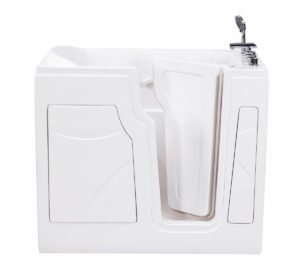
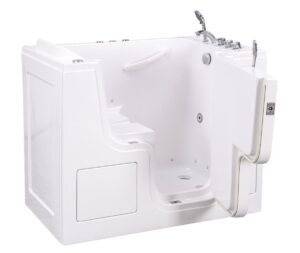
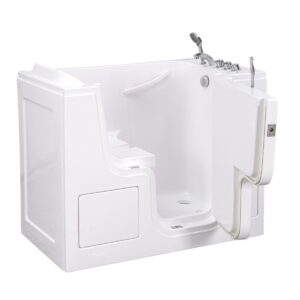
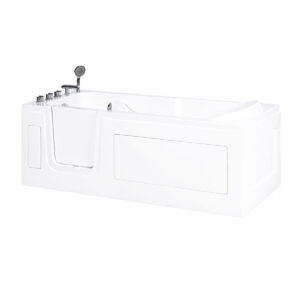
Vidalux whirlpool walk-in baths aren’t designed as an add-on to a standard model. Every bath in the range has a corresponding whirlpool variant, with pump sizing properly matched to the bath dimensions. Smaller bath, smaller pump – correctly specified, not squeezed in as an afterthought.
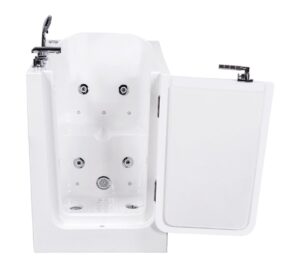
The 10 hydro-massage jets in the whirlpool system are positioned with placement in mind, not just quantity. The back jets sit deliberately low, closer to the base, so water pressure reaches your back rather than fountaining upward above the water line. That’s the kind of detail that makes the difference in daily use.
The reinforced premium acrylic shell and steel support chassis ensure no flex, no instability when you’re seated and the jets are running. And long-term spare parts are held in stock – this isn’t a product that becomes unsupportable three years after purchase.
Hi-flow mixer taps and dual waste outlets mean you’re not sitting in the bath for long periods waiting for it to fill or drain. That matters more than most buyers realise – the faster the drain, the less time spent sitting cold and waiting to exit.
Explore the full range of Vidalux walk-in baths to compare whirlpool, Airspa, and standard models.
Making the Decision
Most people who research this topic arrive with scepticism. That scepticism is reasonable – there’s a lot of vague “spa experience” language in this category, and not enough plain explanation of what different systems actually do.
The honest summary: warm water and buoyancy aid recovery from joint stiffness and support circulation, whether or not jets are running. Whirlpool jets add active, targeted massage for muscle tension – meaningful for the right person. Air jets add a lighter, gentler alternative for sensitive joints. A well-engineered system drains properly and doesn’t become a hygiene headache.
Choose based on how your body responds to pressure. Not on the spec list. Not on the price difference alone.
Review the options. Compare the details. Choose assured wellness.
Frequently Asked Questions
Q: Do whirlpool walk-in baths actually help arthritis?
A: Whirlpool walk-in baths can support comfort and aid recovery from joint stiffness – but warm water and buoyancy do most of the therapeutic work. Jets add active massage on top of that baseline, which some people find meaningfully helpful for muscle tension around the joints.
Q: What is the difference between whirlpool jets and air jets in a walk-in bath?
A: Whirlpool jets and air jets are completely separate systems. Whirlpool jets deliver targeted, directional water pressure – firmer and deeper. Air jets produce thousands of fine bubbles for a lighter, gentler, all-over sensation. For sensitive or inflamed joints, many people find air jets more comfortable.
Q: Are air jets or whirlpool jets better for arthritis?
A: Air jets are generally the gentler choice for touch-sensitive or inflamed joints, offering a soft, bubbly sensation rather than directed pressure. Whirlpool jets suit those who find firm massage beneficial for muscle stiffness. Selected models with an air-to-water ratio mixer allow you to blend both.
Q: Is a walk-in bath with jets worth the extra cost?
A: A jet upgrade is worth the cost if you respond well to massage for muscle tension and stiffness. If warmth and safe bathing access are your primary needs, a standard walk-in bath delivers those reliably. The honest answer depends on whether active massage genuinely helps your body.
Q: Do walk-in bath jets cause hygiene problems?
A: Poorly engineered systems can leave stagnant water in the jet pipework, which may cause odour or biofilm. Vidalux walk-in baths use a gravity V-drain system and an auto-purge (blow dry) function that clears the lines after use, removing the primary cause of this issue.
Q: Can walk-in bath jets be adjusted for sensitive joints?
A: On selected Vidalux models, yes. An air-to-water ratio mixer allows you to dial between pure air bubbles, full water-jet pressure, or any blend of the two. This is particularly useful when joint sensitivity varies day to day, as is common with arthritis.
- About the Author
- UK’s best-rated?

With over 22 years in the home spa industry, Andrew has overseen every stage of the journey—from initial product design and manufacturing to final installation. An author of multiple technical publications and scientific papers, he founded Vidalux to replace industry hype with engineering-led reliability. His focus remains on delivering gym-quality wellness through honest design and technical truth.
DISCLAIMER: All specifications, claims, and advice relating to any internal or external procedure, practise, product, or service were true at the time of writing. For more accurate and up-to-date details in relation to Vidalux services, please visit the relevant dedicated on-site page. For any product-related information, specifications, or guidance, the information on the product page should be considered the governing source.