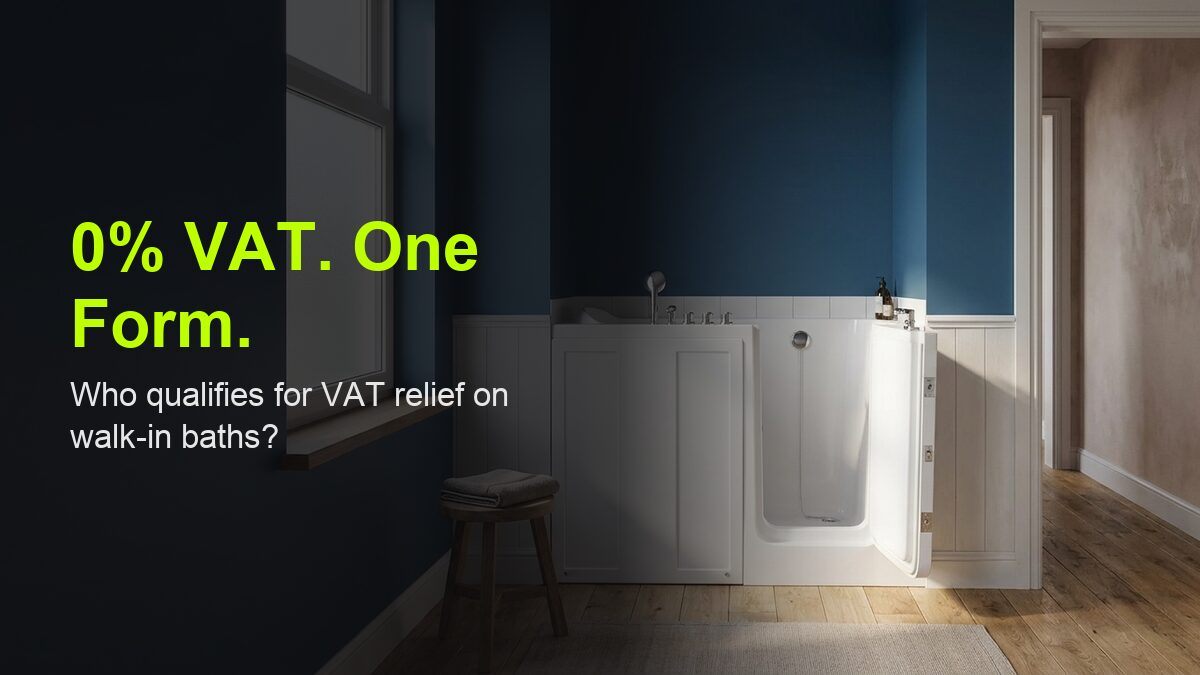
Walk-In Bath VAT Exemption: Who Qualifies and How to Claim It
Twenty percent of three thousand pounds is six hundred pounds.
That’s how much VAT adds to a typical walk-in bath purchase. And for many of the people buying them – those living with arthritis, chronic pain, or reduced mobility – it’s money they’re legally entitled to save.
VAT exemption for walk-in baths isn’t a promotional discount or a loophole. It’s a tax relief built into UK law to make essential bathroom adaptations more affordable for people who genuinely need them.
The problem? Almost nobody explains the rules clearly. People who qualify never claim, because the process feels confusing, risky, or just too much effort to figure out.
This guide sets that straight.
What Is VAT Relief on Walk-In Baths – and Why Does It Exist?

The relief isn’t new. It’s been part of UK VAT law for years.
Under HMRC VAT Notice 701/7, goods designed for use by a chronically sick or disabled person can be zero-rated – meaning the standard 20% VAT is removed entirely. The product must be for domestic and personal use, and it must be supplied to a qualifying individual.
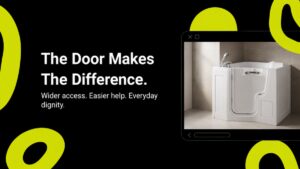
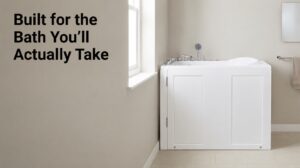
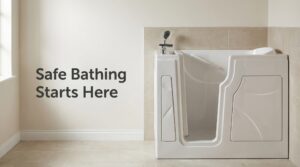
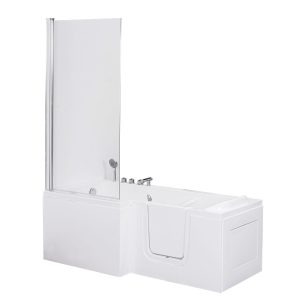
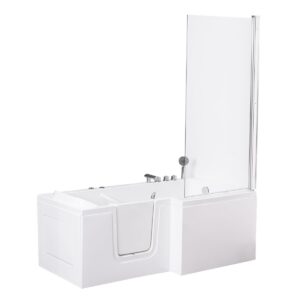
Walk-in baths fall squarely within this. They are bathroom adaptations specifically designed for people who cannot safely use a standard bath.
But isn’t this a benefit or scheme you apply for?
No. It’s a VAT classification. There’s no application to a council, no waiting list, no means test. If you meet the eligibility criteria and sign a declaration, the VAT is removed at the point of sale.
Who Qualifies? The HMRC Definition Explained
This is where most people get stuck.
Online forums are full of the same question: “Am I disabled enough to claim?” The honest truth? The definition is far broader than most people assume.
HMRC defines a qualifying person as someone with a physical or mental impairment that has a long-term and substantial adverse effect on their ability to carry out everyday activities.
It doesn’t require a wheelchair or a registered disability. It requires a chronic condition that meaningfully affects daily life – and specifically, that makes standard bathing difficult or unsafe.
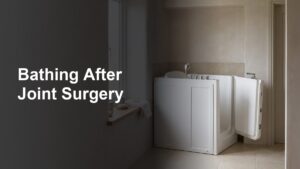
Conditions commonly associated with eligibility include arthritis, osteoporosis, chronic back pain, fibromyalgia, COPD, Parkinson’s disease, multiple sclerosis, and post-surgical mobility limitations.
What if I’m just getting older and finding the bath harder to use?
Here’s the distinction. “Old age” on its own does not qualify. But osteoarthritis diagnosed at 72? Chronic joint stiffness that makes stepping over a bath rim painful? That’s a chronic condition affecting daily activities – and it does qualify.
Worth noting: you don’t need to use the word “disabled” to be eligible. If your condition is long-term and it substantially affects how you manage everyday tasks, you’re very likely covered.
Do You Need a GP Letter or Medical Proof?
No. And this is perhaps the most misunderstood part of the entire process.
VAT relief for walk-in baths is based on a self-declaration. You do not need a GP letter, a formal diagnosis document, or medical records.
The process requires you (or someone acting on your behalf) to sign a VAT Relief Declaration – a short form confirming that you have a qualifying condition and that the product is for your personal, domestic use. Think of it like a tax self-assessment: you declare your circumstances honestly, and the relief is applied on that basis.
But what if HMRC disagrees later?
HMRC does include a warning that fraudulent declarations carry penalties. That’s a standard legal safeguard – not a threat aimed at genuine claimants. If you have a chronic condition that makes standard bathing difficult, and you sign the form honestly, you are doing exactly what the system is designed for.
How Much Can You Save?
Let’s be specific.
VAT at 20% adds up quickly. On a £2,000 bath, that’s £400. On a £3,000 bath, £600. On a £4,000 bath with whirlpool features, £800.
For many customers – particularly those on fixed incomes or managing the cost of adapting their home around a disability – that’s the difference between being able to proceed and having to wait.
One thing worth noting: consumer discussions consistently show that people discover they were eligible only after they’ve already paid full price. By then, reclaiming the VAT is far more complicated than having it removed at the point of sale.
The lesson is straightforward. Check eligibility before you order, not after.
The Vidalux Approach – How We Handle VAT Relief
Not every retailer makes this easy. Customers are regularly left to figure out the process alone – phoning HMRC, chasing installers, or simply paying full VAT because nobody could give them a clear answer.
Vidalux handles it differently.
Our walk-in bath prices are shown excluding VAT, because the majority of our customers qualify for relief. When you place an order, you’ll be prompted to complete the VAT Relief Declaration form. Once the signed form is returned, your order is processed and prepared for dispatch – at the zero-rated price. If you determine you’re not eligible, the VAT amount is simply paid before dispatch. No chasing HMRC. No guesswork.
Why isn’t it applied automatically at checkout?
Because HMRC doesn’t allow it. VAT relief requires a signed declaration – it cannot be removed automatically. What we can do is make the process as simple as possible. Our team understands the eligibility criteria, knows the form inside out, and handles it as a routine part of every order.
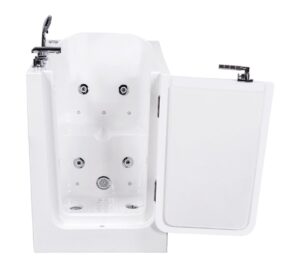
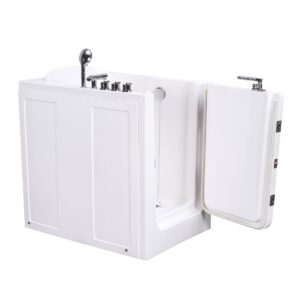
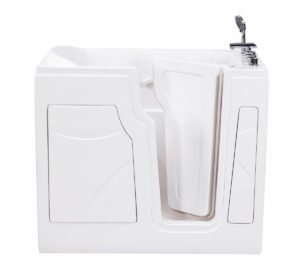
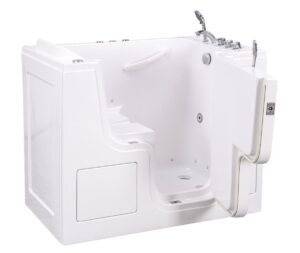
Every Vidalux walk-in bath is engineered for exactly the people this relief is designed to help. Hi-flow mixer taps for fast filling. Dual-waste outlets so you’re not sitting cold waiting to drain. Fully watertight doors. Reinforced acrylic on a steel support frame. Slip-resistant internal surfaces.
The product is built for safety and dignity. The VAT process should match.
Review the full range of Vidalux walk-in baths to see what’s available.
Claiming VAT Relief: A Simple Summary
If you live with a condition that makes standard bathing difficult or unsafe, you are very likely eligible for 0% VAT on a walk-in bath. The process is a single signed form – not a medical assessment or a mountain of paperwork.
Check your eligibility. Ask us about the declaration. Let us handle the rest.
Review the options. Compare the details. Choose with confidence.
Frequently Asked Questions
Do I qualify for VAT exemption on a walk-in bath?
You may qualify if you have a chronic illness or disability that substantially affects your everyday activities – including conditions like arthritis, osteoporosis, or reduced mobility.
Do I need a GP letter to claim VAT relief on a walk-in bath?
No GP letter is needed. The process requires a signed self-declaration form confirming your condition – no formal medical evidence is necessary.
How much VAT can I save on a walk-in bath?
VAT relief removes the full 20% VAT from the price. On a £3,000 walk-in bath, that represents a saving of £600.
Does arthritis qualify for VAT exemption on bathroom adaptations?
Arthritis commonly qualifies because it is a long-term condition that substantially affects everyday activities, including safe bathing – which is the core HMRC eligibility criterion.
How do I claim VAT relief when ordering a walk-in bath from Vidalux?
After placing your order, you’ll be prompted to complete the VAT Relief Declaration form. Once signed and returned, your order is prepared for dispatch at the zero-rated price.
Can I claim VAT relief just because I’m elderly?
Old age alone does not qualify. However, if you have a chronic condition associated with ageing – such as osteoarthritis or reduced mobility – you may well be eligible under HMRC rules.
Do I need to be registered as disabled to claim VAT relief?
No registration is required. The HMRC definition covers any long-term condition that substantially affects daily activities – it is not limited to people with a formal disability registration.
- About the Author
- UK’s best-rated?

With over 22 years in the home spa industry, Andrew has overseen every stage of the journey—from initial product design and manufacturing to final installation. An author of multiple technical publications and scientific papers, he founded Vidalux to replace industry hype with engineering-led reliability. His focus remains on delivering gym-quality wellness through honest design and technical truth.
DISCLAIMER: All specifications, claims, and advice relating to any internal or external procedure, practise, product, or service were true at the time of writing. For more accurate and up-to-date details in relation to Vidalux services, please visit the relevant dedicated on-site page. For any product-related information, specifications, or guidance, the information on the product page should be considered the governing source.