Building a Steam Room From Scratch vs. Buying a Cabin: The Real Cost Comparison
Steam shower cabin. Custom steam room build. DIY generator install.
If you’ve been researching how to get a proper steam experience at home, you’ve probably seen all three discussed – often in the same breath, sometimes as if they’re interchangeable. They’re not.
Here’s the thing. The decision you make between a prefab steam cabin and a custom steam room build will affect your budget, your bathroom, and your daily routine for years. Getting it wrong is expensive. Not catastrophically, necessarily – but in the specific, frustrating way that comes from spending real money on something that doesn’t quite do what you expected.
This guide is written for people who want the straight answer before they commit. We’ve seen both routes done well and done badly. What follows is an honest account of what each one actually demands.
What We’re Actually Comparing
The terminology causes genuine confusion, so let’s clear it up before anything else.
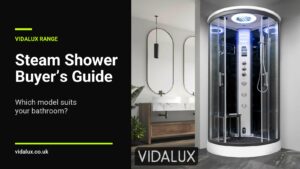
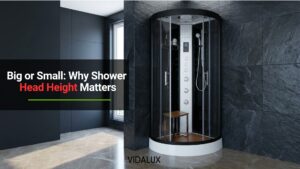
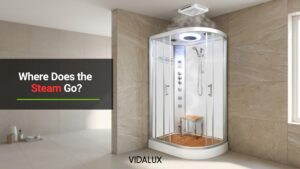
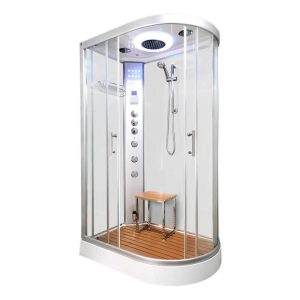
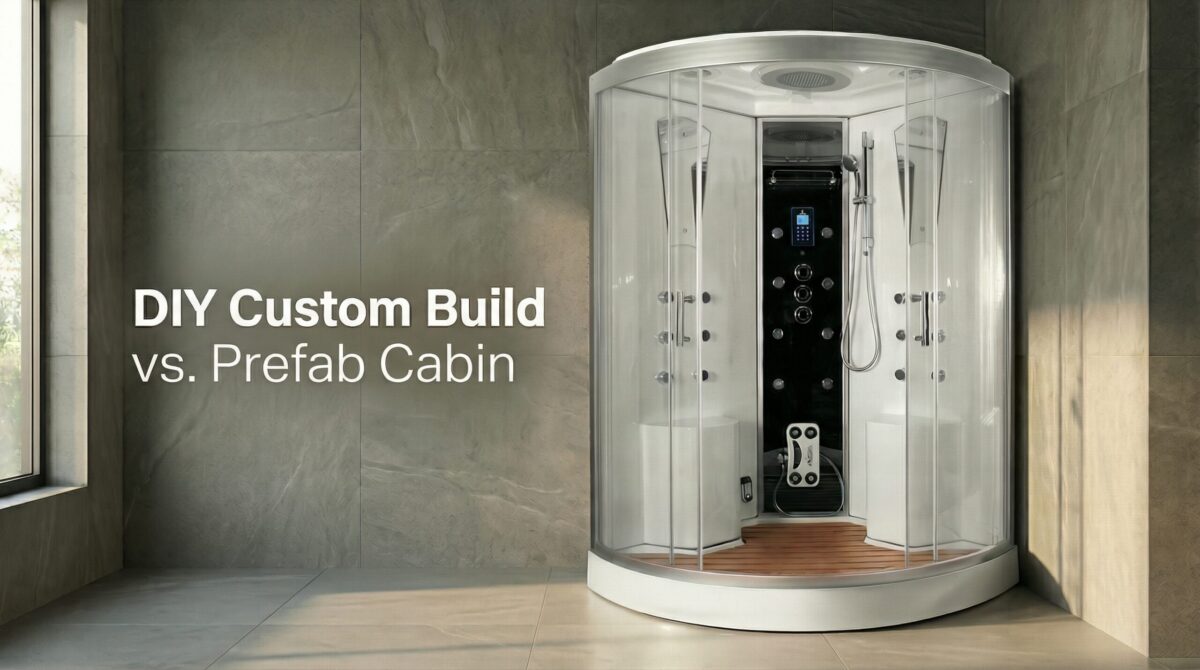
A prefab steam cabin – sometimes called a steam shower cabin or prefabricated steam enclosure – is a self-contained unit. It arrives flat-packed and assembles into a complete steam shower: generator, controls, glass enclosure, frame, drainage, and all features built in. You don’t design it. You install it.
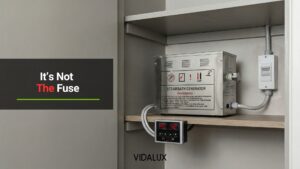
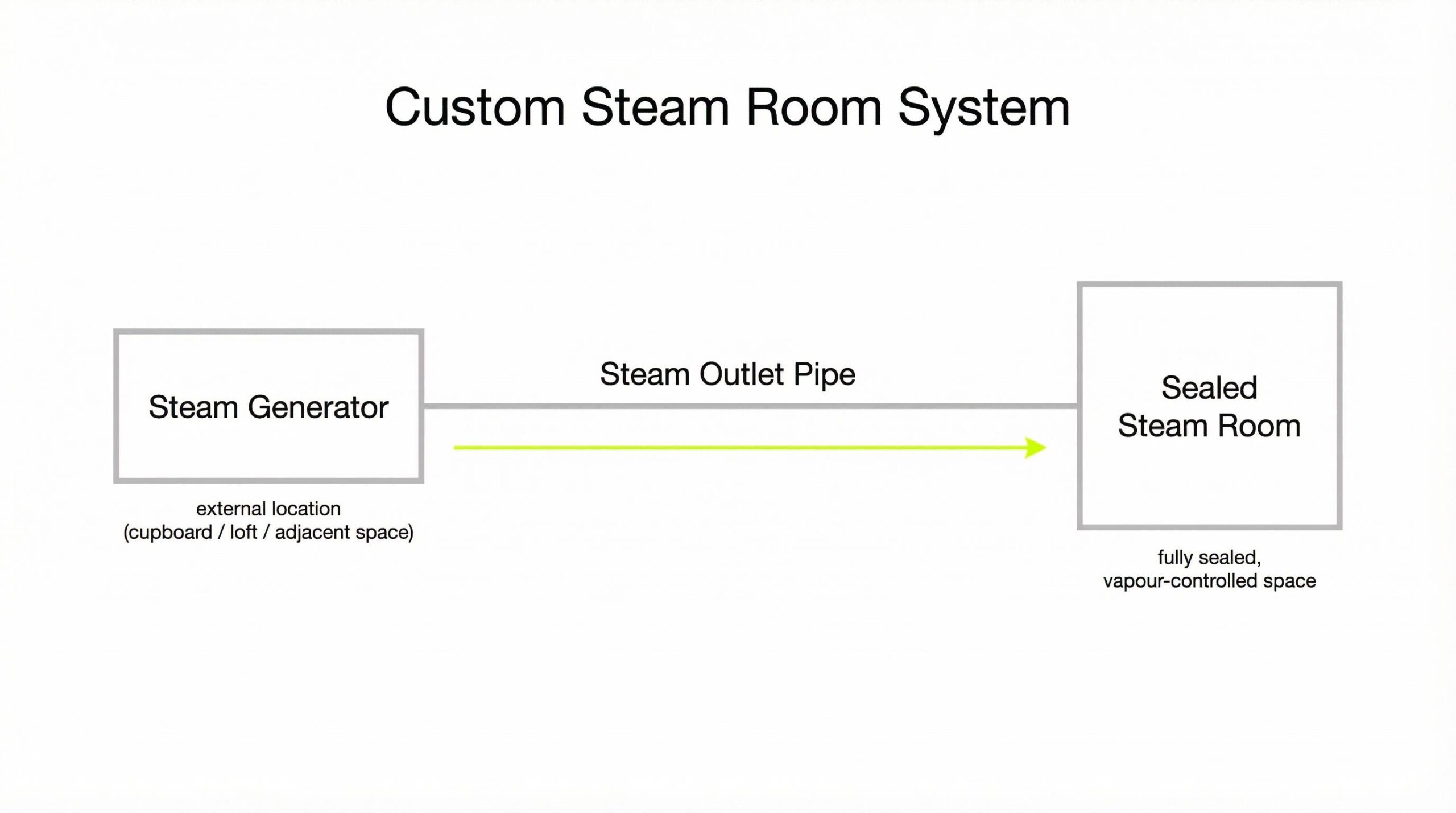
A custom steam room build is different in almost every respect. You construct a room – or convert an existing shower space – using suitable materials, then pair it with a standalone steam room generator that lives outside the steam area. The room is yours to design. The generator is the engine that makes it work.
Both routes deliver the same thing at the end: a genuine steam experience at home, without paying for a gym membership or a hotel stay.
Worth noting: Vidalux produces both products. So when we walk through the strengths and weaknesses of each route here, there’s no agenda. The right answer genuinely depends on your space, your situation, and what you’re prepared to take on.
The Case for a Prefab Steam Cabin
The most common criticism of flat-pack steam cabins – “glorified furniture with plumbing and a few LEDs” – is fair when aimed at the wrong product. It’s not fair as a blanket verdict.
The people writing those forum posts are usually describing cheap, poorly engineered cabins that were never built to perform. The engineering problems are real. The conclusion that all cabins are like that is not.
What separates a well-engineered prefab steam cabin from a frustrating one comes down to a handful of design decisions that most buyers don’t know to ask about.
The leak question is the big one.
The most common reason steam cabins fail – and the most common reason they get ripped out – is water finding its way behind the tray and into the structure. On cheaper units, this is largely a matter of when, not if. The tray seals with silicone, the silicone ages, water gets in, and by the time you notice the damage it’s already in the wall.
Vidalux cabins use Leak-Seal technology: a compression-sealed structure with no water behind walls. In the event that water bypasses the seals at all, the tray has return channels that redirect it back inside – rather than outward into your bathroom floor. There’s no exposed silicone on show, which also means no mould, no peeling, and no annual resealing ritual.
It’s a bit like having two exit doors instead of one. The water has somewhere to go that isn’t your joists.
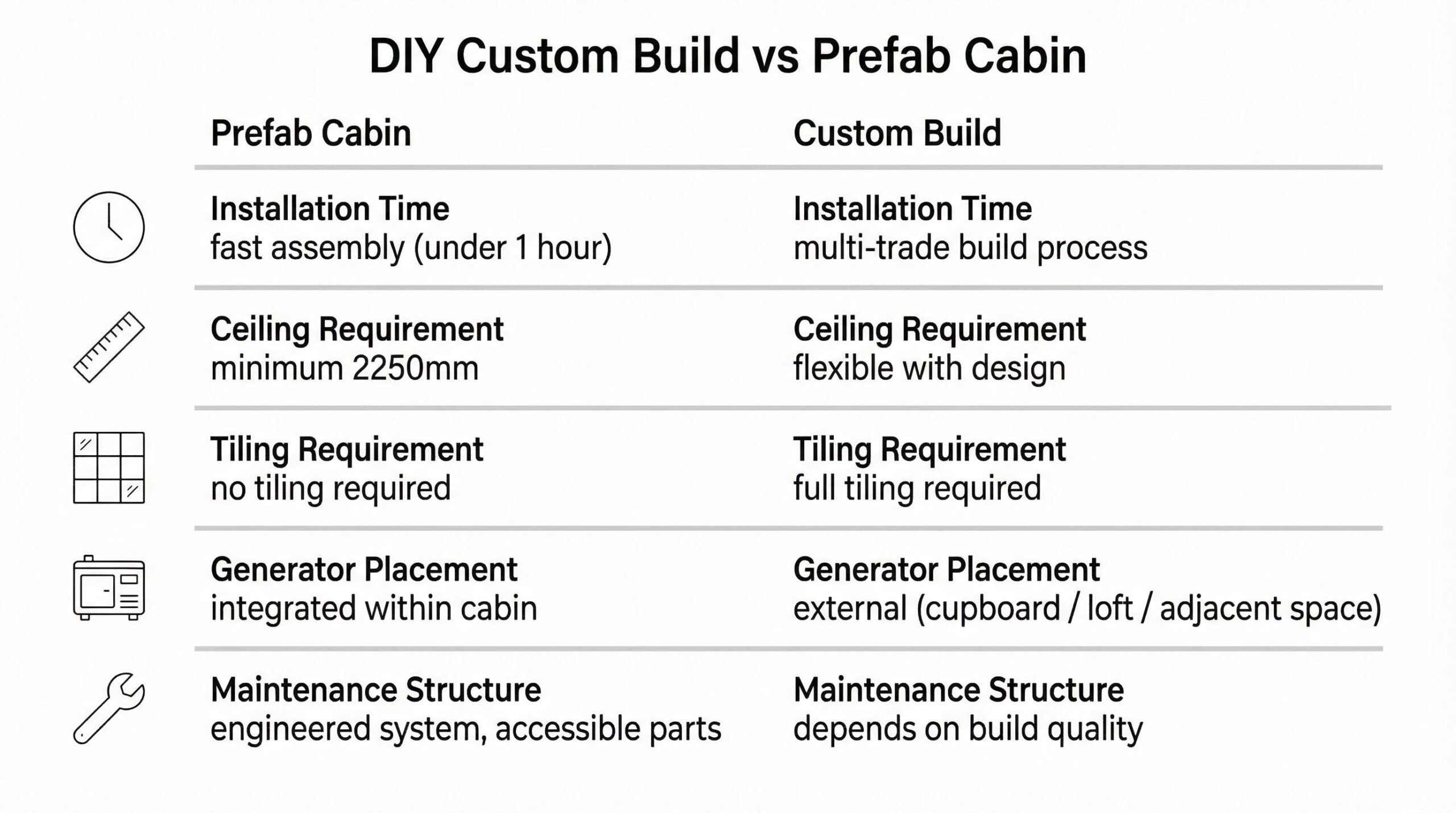
The other practical advantage of a well-designed cabin is installation speed. Vidalux’s Quick-Build system allows an experienced installer to assemble the main structure in under an hour. Many models use a screwless fast-fix framework, and – critically – no tiling is required. That removes an entire trade from the job, along with the time and cost that comes with it.
But what does a prefab cabin actually include?
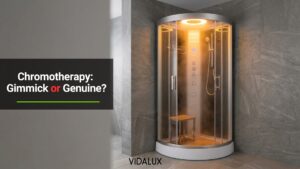
A Vidalux steam shower cabin comes with the steam generator built in, a touchscreen control centre, monsoon showerhead, hand shower, massage jets, aromatherapy capability, chromotherapy mood lighting, and an audio system – FM radio on standard models, Bluetooth on premium models. All of it engineered, all of it connected, all of it arriving in one delivery.
That’s the honest best case for the cabin route. One supplier. One installer. One product to understand and maintain.
The constraints are equally honest. Standard ceiling height requirement is a minimum of 2250mm. Footprints are fixed – standard sizes only, no custom dimensions. Water pressure needs to be 1-3 Bar. If your bathroom doesn’t meet those parameters, the cabin route may not be available to you.
The Case for a Custom Steam Room Build
Forums are full of cautionary tales about custom builds – mould farms, rooms that never hit temperature, “indoor rain” from flat ceilings, and rebuilds that cost more than the original project. Every one of those failure stories is real.
But so is the other side of the ledger. When a custom steam room is done properly, it’s harder to argue with. It fits the space it’s in, it looks like part of the architecture, and it performs like a gym steam room because, structurally, it essentially is one.
The reason custom builds fail is almost never the idea. It’s the execution – specifically, people treating steam like a cosmetic upgrade rather than a building-physics problem.
Steam is not a very hot shower. It’s warm, saturated vapour that fills an enclosed space and puts continuous pressure on every surface, joint, and material in that room. Standard plasterboard doesn’t survive it. Standard tile backer without a vapour membrane doesn’t survive it. A flat ceiling turns into a cold drip source. A poorly fitted door bleeds your steam out before the room ever reaches temperature.
One thing to consider: the room material you build with directly affects the generator size you need. Glass, stone, and large volumes all require more power to heat. Getting the kW wrong – too small and the room never steams properly, too large and you’re wasting energy – is one of the most common reasons custom builds underperform.
Vidalux steam generators run from 3kW up to 15kW, covering compact enclosures through to large domestic rooms. The approximate coverage ranges are: 3kW for very small spaces, 4.5kW for 4-7 m³, 6kW for 6-9 m³, 9kW for 9-13 m³, and 12-15kW for larger rooms. The generator must be located outside the steam area – in a cupboard, loft, or adjacent room – and needs its own dedicated electrical circuit.
That means a certified electrician, not a standard socket. As NICEIC notes, Part P of the Building Regulations covers electrical installation work in dwellings and requires notifiable work to be carried out by a registered competent person. Getting this signed off properly protects both your installation and your home insurance.
The upside of getting this right is genuine. A well-executed custom build works in spaces a prefab cabin can’t reach – lower ceilings, unusual layouts, alcoves, converted rooms. A sloped ceiling (strongly recommended) stops condensation from dripping back on bathers. The design is entirely yours. And if something needs repair years down the line, the components are standard plumbing and electrical – not proprietary to one brand.
The honest trade-off is complexity. You’re coordinating a plumber, an electrician, a tiler, possibly a builder. Each trade introduces a point of failure if the spec isn’t followed correctly. That’s manageable. It just needs to be planned for.
The Decision Framework – Four Questions
Put simply, the choice between a prefab steam cabin and a custom steam room build comes down to four practical questions. Answer them honestly and the right route usually becomes clear.
What is my ceiling height?
Prefab steam cabins require a minimum clearance of 2250mm. If your bathroom falls short of that, a custom build with a lower-profile design becomes the more realistic route. Don’t assume you can make it work by trimming a few millimetres – check the exact specification of any cabin you’re considering.
How much trade coordination can I manage?
A cabin is one installer, one product. A custom build is multiple trades working to a shared specification. If you’re confident managing a building project – or have a trusted contractor who can oversee it – the custom route is entirely achievable. If you want a simpler process, the cabin wins.
Do I have space for the generator outside the steam area?
Custom builds require the generator to live somewhere accessible and separate from the room itself. A cupboard, loft, or adjacent space all work well. If there’s genuinely nowhere to put it, a self-contained cabin removes the problem entirely.
How important is long-term maintainability?
A Vidalux cabin has known engineered components, with parts available via Vidalux’s spares partner. A custom build’s long-term reliability depends heavily on how well it was constructed in the first place. Both can last for many years. The cabin’s maintenance path is more predictable.
Where Vidalux Fits Both Routes
This is not a section designed to sell you something. It’s here because the decision framework above genuinely points some people toward a cabin and others toward a standalone generator – and Vidalux makes both.
For the cabin route, Vidalux steam showers are the best-reviewed in the UK. Engineering-led design, installer-friendly construction, and parts available via a dedicated spares partner – meaning problems get solved rather than products getting replaced.
For the custom build route, Vidalux steam generators are ISO9001 and CE certified, built with a stainless-steel chassis, and designed for long-term domestic use. They’re not cheap units with a premium sticker. The engineering is the same philosophy applied to a different product category.
Whether the cabin or the generator is right for you, the underlying standard is the same: no shortcuts, no guesswork, built to work reliably and quietly for years.
Whether you’re planning a full custom build or want a cabin that goes in this week, the right steam experience is a decision worth making carefully. When you’re ready, the range is here.
Frequently Asked Questions
Q: What is the main difference between a prefab steam cabin and a custom steam room build?
A: A prefab steam cabin is a self-contained unit with the generator, controls, and enclosure built in. A custom steam room uses a separately installed generator in an external location to fill a properly sealed, constructed room with steam. Both deliver a genuine steam experience – the difference is in installation complexity and space requirements.
Q: Do prefab steam cabins require tiling?
A: Prefab steam cabins do not require tiling – they work with untiled walls, which reduces both labour and installation time. The cabin’s structure is engineered to be self-sealing, with no exposed silicone and no water behind the walls by design.
Q: What ceiling height do I need for a prefab steam shower cabin?
A: The minimum ceiling height for steam shower cabin installation is 2250mm. If your space has less clearance, a custom steam room build using a standalone generator may be a more suitable approach, as the room dimensions can be tailored to your available space.
Q: Where does the steam generator go in a custom build?
A: In a custom steam room build, the generator must be located outside the steam area – in a cupboard, loft, adjacent room, or under seating with accessible clearance. It cannot be placed inside the steam room itself and requires a dedicated electrical supply wired by a certified electrician.
Q: Is a prefab steam cabin or a custom build cheaper?
A: The answer depends heavily on your specific project. A prefab cabin typically reduces trade costs through faster installation and no tiling requirement. A custom build can involve plumber, electrician, and tiler coordination alongside higher materials costs, but offers greater design flexibility. A full project assessment is needed for an accurate comparison.
Q: Can I add a steam generator to an existing shower space?
A: A standalone steam generator can convert an existing enclosed shower into a steam room, provided the enclosure is fully sealed, uses steam-resistant materials, and has adequate drainage. A dedicated electrical circuit for the generator’s kW rating must be installed by a qualified certified electrician.
- About the Author
- UK’s best-rated?

With over 22 years in the home spa industry, Andrew has overseen every stage of the journey—from initial product design and manufacturing to final installation. An author of multiple technical publications and scientific papers, he founded Vidalux to replace industry hype with engineering-led reliability. His focus remains on delivering gym-quality wellness through honest design and technical truth.
DISCLAIMER: All specifications, claims, and advice relating to any internal or external procedure, practise, product, or service were true at the time of writing. For more accurate and up-to-date details in relation to Vidalux services, please visit the relevant dedicated on-site page. For any product-related information, specifications, or guidance, the information on the product page should be considered the governing source.