Gravity Fed vs Combi Boiler: Will a Steam Shower Work in Your Home?
You’ve picked the steam shower, measured the corner and checked the ceiling height. Then someone asks what kind of boiler you have, and the plan stalls.
Gravity fed vs combi boiler is the plumbing question most steam shower buyers reach late, and it decides whether the shower can run on your supply as it is or needs a pump fitted first. Your boiler type rarely rules a steam shower out. It decides what goes in alongside it.
This guide covers the pressure each set-up gives, why a gravity fed home needs a twin impeller pump, which pump type Vidalux’s guidance names, and the mistakes that cause pressure trouble even after a pump is in.
Gravity Fed vs Combi Boiler: Which Set-Up Do You Have?
If you have a cold water tank in the loft and a hot water cylinder in the airing cupboard, you have a gravity fed supply. If you have a boiler on the wall, no tanks and hot water on demand, you have a combi.
Your plumber can confirm which one you have in a minute if you’re not sure.
The difference comes down to where the pressure comes from. In a gravity fed home, the only thing pushing water to the shower is the height of the tank above it. A combi takes its water straight from the mains, so the shower gets mains pressure.
Height doesn’t buy much pressure. The cold water tank in a typical house sits about three to five metres above the shower, which gives roughly 0.3 to 0.5 bar. To get a single bar from gravity alone, the tank would need to sit around ten metres above the outlet, and few homes have that kind of height to offer.
Picture a water butt with a hose on its tap: the water flows, but only as hard as the height of the butt allows. A gravity fed supply works on the same principle.
What Water Pressure Does a Steam Shower Need?
A Vidalux steam shower runs on 1 to 3.4 bar at the unit, or 3 bar for the Pure range, and 1.5 to 2 bar is the sweet spot for best results. It also needs a flow of around 14 litres per minute.
That pressure has a lot to drive. The overhead monsoon, the hand shower and the body jets all draw on the same supply, and the steam generator fills from it too. Below 1.5 bar, the steam generator may struggle to fill and the massage jets will feel weak. Above the 3.4 bar maximum, the shower can be damaged and the warranty is invalidated, so a home with high mains pressure needs a pressure-reducing valve.

Set that against the 0.3 to 0.5 bar a gravity fed supply gives and the gap is plain to see. A combi boiler typically provides the 1 to 3 bar a steam shower needs to operate correctly.
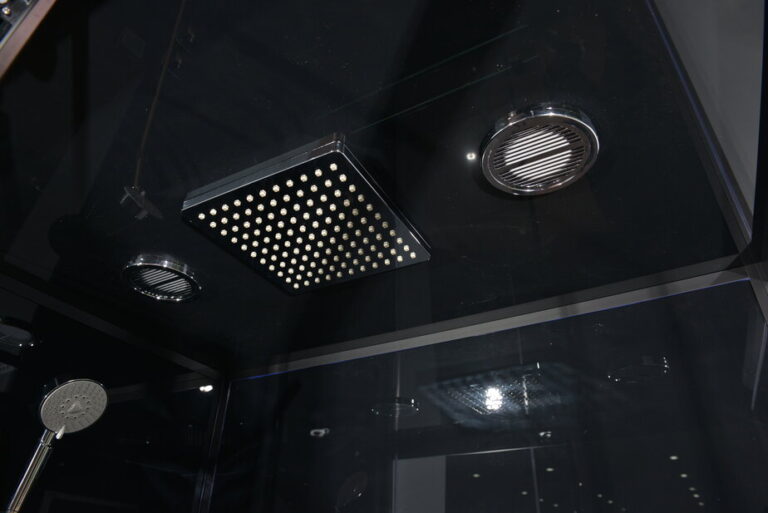
The jets and the monsoon head are where low pressure shows first, which is why our guide to what a real monsoon shower needs is worth a read if the overhead shower matters most to you.
Combi Boiler? You’re Usually Ready to Go
A combi boiler usually runs a steam shower with no pump and no extra valves. Vidalux’s guidance is that a steam shower needs 1 to 3 bar to operate correctly, which combi boilers typically provide.
You won’t need a Pressure Equalising Valve (PEV) with a combi either. The thermostatic cartridge in the shower valve handles unbalanced pressures itself, so the hot and cold supplies don’t need matching by an extra fitting.
The Fusion Steam 1200 is a good example. Its listing describes it as fully compatible with combi boilers with no need for a pressure equalising valve, and it fits a 1200 x 900mm footprint at 2150mm tall.
What if I’m not sure my combi gives enough pressure?
Ask your plumber to measure the pressure, and the flow, where the shower will go before you order. Vidalux’s guidance is 1 to 3.4 bar at the unit (3 bar for the Pure range), with 1.5 to 2 bar the sweet spot and a flow of around 14 litres per minute. Below 1.5 bar the steam generator may struggle to fill. If the reading is higher than the maximum, a pressure-reducing valve brings it back into range.
Gravity Fed Supply? You’ll Need a Shower Pump
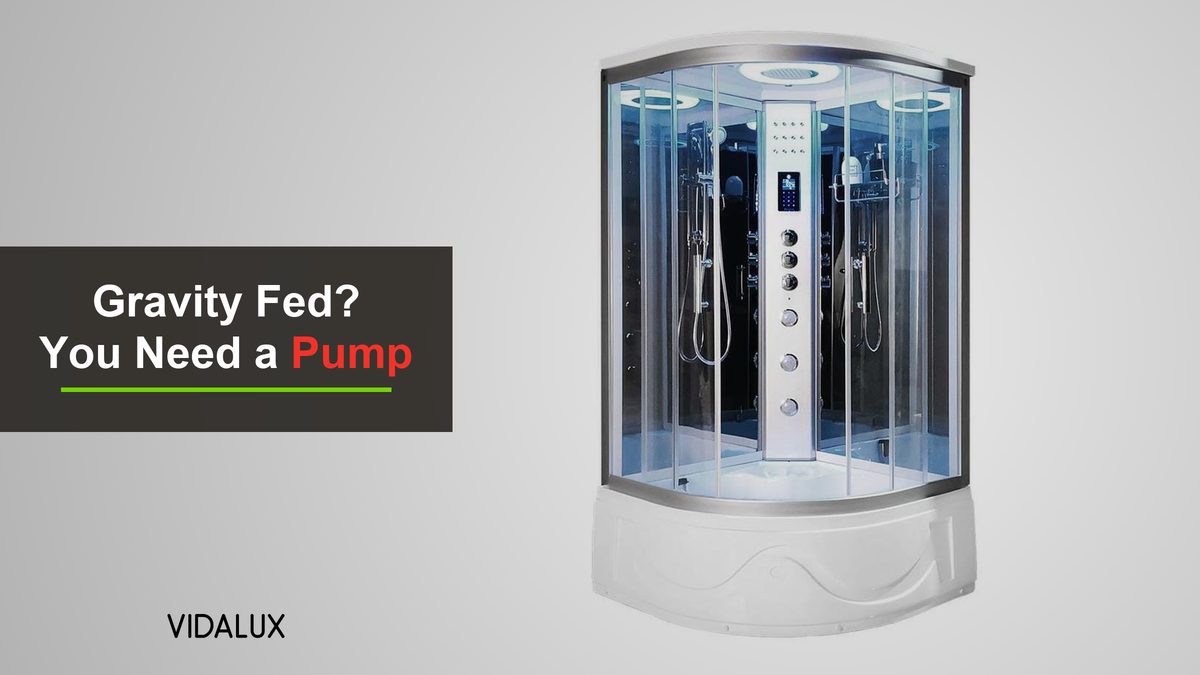
A gravity fed supply will run a steam shower once a shower pump is fitted, and it won’t run one properly without it. Vidalux’s guidance is firm on this: with a tank in the loft, you MUST install a pump.
The pump Vidalux’s guidance names is typically a twin impeller positive head pump. Its installation guidance recommends a pump rated over 1.5 bar, and ideally over 2 bar, for a gravity fed home, with a twin impeller to keep the pressure balanced on the hot and cold supplies.
A twin impeller pump boosts the hot and the cold supply together. Keeping the two feeds balanced keeps the thermostatic valve steady, so the water holds its temperature while the jets and monsoon run.
The steam side relies on the pump as well. A steam generator fed at gravity pressure may struggle to fill, so the pump serves the whole cabin, steam included.
Every Vidalux steam shower is compatible with any external pump, and no shower enclosure on the market comes with a pump built in. That makes the pump a separate item, chosen and fitted by your plumber. Vidalux supplies the shower only and doesn’t install, so the pump and its fitting sit with whoever plumbs the shower in.
Where does the pump go?
Somewhere dry and ventilated, such as an airing cupboard or under the bath. Shower pumps aren’t waterproof and they need air around them, so a pump placed under the shower tray risks water damage from a leak and overheating.
Which Pump Type Does Vidalux’s Guidance Name?
For a home with the cold water tank in the loft, Vidalux’s guidance names a positive head pump, typically a 1.5 bar twin impeller model. That’s the type to ask your plumber about first.
Your plumber confirms the pump type and its rating before ordering, once they’ve seen how your tank, cylinder and shower are laid out.
Three Mistakes That Cause Pressure Problems Even With a Pump
A pump fixes low pressure, but three common errors can still leave the shower running badly.
The first is mismatched feeds. If the hot water comes from a gravity cylinder and the cold comes from the mains, the two arrive at different pressures and the thermostatic valve can run hot and cold intermittently. Vidalux’s guidance is that a pump is needed to balance them, which is the job a twin impeller pump does on both supplies.
The second is pulsing water. Vidalux’s fault-finding guidance links pulsing, where a pump is fitted, to the non-return valves inside the valve connections at the rear of the shower, and notes that pulsing can also mean there’s air in the pipework if the pump hasn’t been fully commissioned. Your plumber can check both.
The third is putting the pump in the wrong place. A pump under the tray is exposed to any leak and can overheat, so it belongs in a dry, ventilated space such as an airing cupboard.
All three are avoidable with a plumber who understands the setup.
According to the Water Supply (Water Fittings) Regulations 1999, every water fitting must be installed “in a workmanlike manner”. A pump and its pipework are part of your water supply, so it makes sense to have your plumber fit them.
How Vidalux Steam Showers Handle Both Set-Ups
The same Vidalux steam shower suits either set-up. With a combi it typically runs on the supply as it is, and with a gravity fed supply it runs once the pump is in, within the same 1 to 3.4 bar range at the unit.
Vidalux steam showers include a thermostatic valve, and every thermostatic valve has a factory-set safety stop at 38°C. A steady supply on both feeds is what lets that valve hold the temperature you set.
Every cabin is also designed to be freestanding and movable. It’s never fixed to the wall or the floor, so it can slide away from the wall for service access, which helps your plumber reach the connections later.
You can compare sizes, layouts and features across the full steam shower range.
If you’re still at the planning stage, there’s more on pressure, layout and running costs in our steam shower guides. For a cabin without steam, our guide to checking water pressure for a hydro shower walks through the same question.
Frequently Asked Questions
- About the Author
- UK’s best-rated?

With over 22 years in the home spa industry, Andrew has overseen every stage of the journey—from initial product design and manufacturing to final installation. An author of multiple technical publications and scientific papers, he founded Vidalux to replace industry hype with engineering-led reliability. His focus remains on delivering gym-quality wellness through honest design and technical truth.
DISCLAIMER: All specifications, claims, and advice relating to any internal or external procedure, practise, product, or service were true at the time of writing. For more accurate and up-to-date details in relation to Vidalux services, please visit the relevant dedicated on-site page. For any product-related information, specifications, or guidance, the information on the product page should be considered the governing source.
Ready to choose?
Browse the full Vidalux range of saunas, steam showers, baths and shower cabins, all in one place