Shower Cubicle vs Tiled Enclosure: The True Cost of Waterproofing a UK Bathroom
A homeowner on MoneySavingExpert recently described a familiar nightmare: a wet room installed in July, cracks in the grout by autumn, water leaking through the living-room ceiling, and an insurance claim refused because “the grout had failed.” The final quote to fix it properly involved ripping the whole thing out and starting again.
Tiled shower enclosures can be beautiful. They can also go wrong in ways that are slow, expensive, and invisible until the damage is done. A self-contained shower cubicle is a different kind of product entirely – a factory-engineered unit with its waterproofing built in, not painted on afterwards.
This is an honest cost-and-risk comparison between the two. No hype. Just the numbers, the regulations, and the failure points that matter when you’re deciding how to spend four to seven thousand pounds on a bathroom.
What “Waterproofing” Actually Means in a UK Bathroom
Tiles and grout are not waterproof. They resist splashing, but they do not form a watertight layer – and British Standards have been explicit about this since 2018.
Under BS 5385-1:2018, clause 6.1.1.3, all substrates in domestic wet areas should be waterproofed before tiling. BS 5385-4:2015 goes further: “the basic structure behind the tiles should be watertight and should be tanked. Water-resistant materials should be used throughout. Plaster and plasterboard would be unsuitable in frequently wetted areas.”
The actual waterproof layer is called tanking. It is either a liquid membrane painted onto the walls and floor before tiling, or a sheet membrane bonded to the substrate. As BAL Adhesives notes, citing BS 5385 Part 4, “the use of a ceramic tile together with an impervious tile grout and tile adhesive are not a substitute for a tanked shower or wet room installation.”
A tiled shower enclosure therefore depends on three layers working together: the tanking membrane behind the tiles, the adhesive and grout between them, and the silicone at the movement joints where tray meets wall. If any single layer fails, water finds its way into the structure behind.
So what’s the alternative?
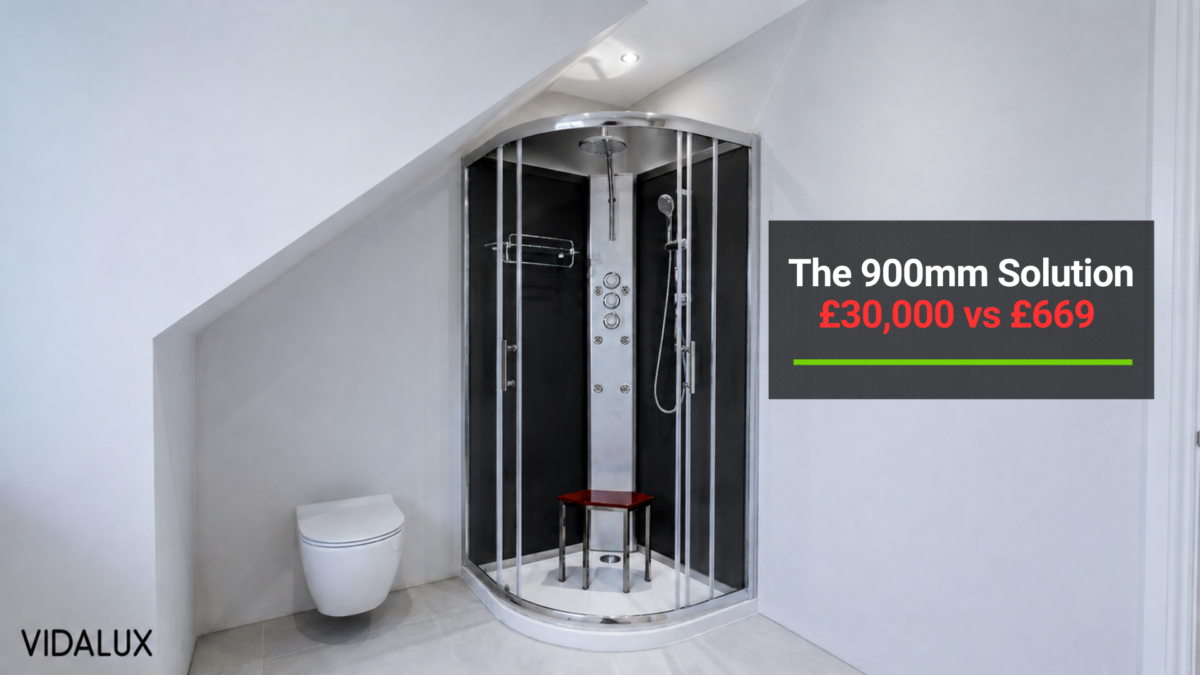
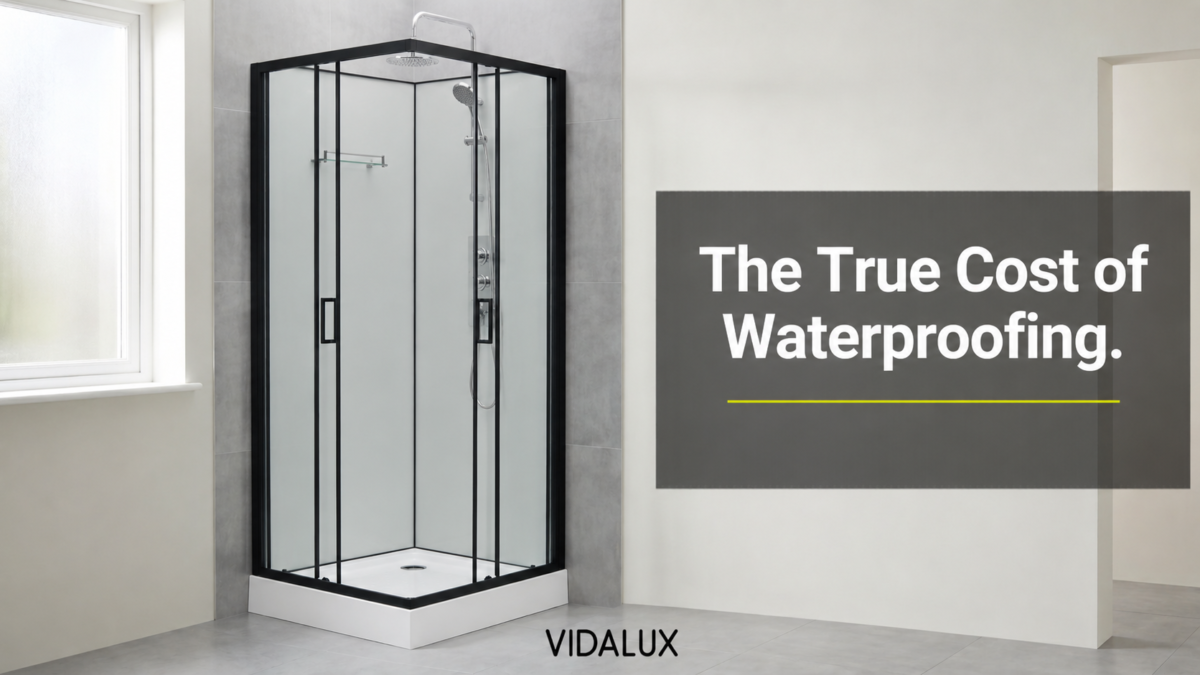
A self-contained shower cubicle moves the waterproofing out of the wall and into the product itself. The cabin is the water barrier. The walls behind it don’t need tanking, because the water never reaches them.
The True UK Cost of a Tiled Shower Enclosure in 2026
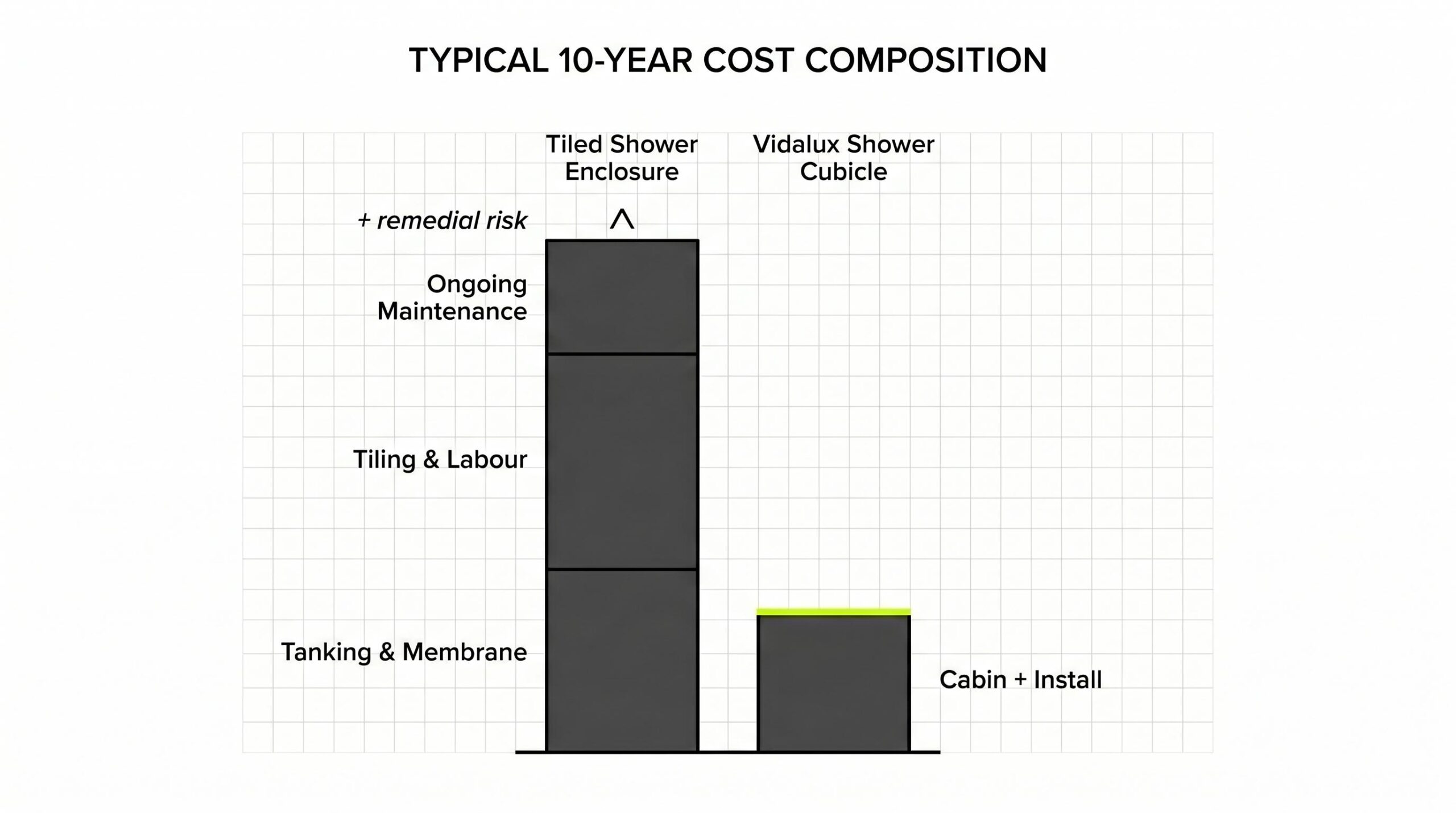
A tiled shower enclosure in the UK typically costs between £3,000 and £7,000 installed, depending on size and finish – and that figure doesn’t include the long-term maintenance cycle that begins the moment the tiler leaves.
Here’s the cost-stack according to current UK trade data:
- Tanking – professional labour runs at around £30-£40 per square metre, and the tanking kit or membrane itself adds £130-£300. A bonded waterproofing system with labour typically costs £500-£650 on top of tiling.
- Bathroom tiling – installed cost is £70-£160 per m² in 2026, with waterproofing adding a further £200-£400 to that figure according to Checkatrade’s cost guide.
- Each additional square metre adds roughly £500-£900 to the total.
- Ongoing maintenance – grout sealer needs reapplying every one to three years in a shower environment. Silicone at the tray-to-wall joint typically requires replacement within five years. A full regrout becomes necessary at 8-15 years depending on ventilation.
Then there is the cost nobody quotes for: remedial work when something fails. Plasterboard replacement, ceiling repair in the room below, mould remediation, and the possibility – as several forum threads show – of a home insurer refusing the claim on the grounds that “sealant or grout failing to work properly” is excluded from cover.
Worth noting: the difference between a £4,000 wet room and a £7,000 wet room is rarely what you can see on day one. It is the quality of the invisible work – the tanking, the adhesive grade, the floor gradient – that determines whether the installation lasts five years or twenty-five.
Why Tiled Enclosures Fail (The Three Failure Points Installers Rarely Advertise)
Tiled enclosures don’t fail in one dramatic moment. They fail slowly, in predictable sequence, at three specific points.
The first is the tanking membrane itself. Tanking is unforgiving. A single pinhole, a missed corner, a poorly taped pipe penetration, or a cheap sealant around the drain is enough to breach the layer. The leak doesn’t appear straight away – water tracks through the substrate for weeks or months before it shows up as a damp patch on the ceiling below.
The second is grout degradation. Good grout, in a well-ventilated shower, lasts eight to fifteen years. Grout sealer, though, needs topping up every one to three years. When the seal fails, water starts working into the porous grout line, then into the adhesive bed, then into the wall. In power showers and bathrooms with weak extraction, this timeline shortens considerably.
The third is the silicone joint where the tray meets the wall. This is the single most common failure point. Silicone is not structural – it’s a movement joint handling the flex between two different materials. It goes mouldy within twelve months, discolours within two years, and often requires full replacement within five.
What makes any of this worse?
A suspended timber floor. Once water reaches the joists, repair costs escalate quickly. Floor rot, plasterboard replacement, ceiling damage in the room below, and mould remediation can easily add £2,000-£5,000 to a failed installation – before anyone has even started replacing the shower itself.
The Vidalux Approach – Engineering the Leak Out
A Vidalux shower cubicle approaches the problem from the opposite direction. Rather than building a waterproof wall and hoping it holds, the unit itself is the waterproof system.
At the heart of this is Leak-Seal™ Technology. The cabin is compression-sealed at every join, and the tray is engineered with return channels that redirect any water that bypasses the seals back into the cabin, not into the wall behind it. In practice, this means the cabin can be installed against untiled walls – there’s no tanking membrane required in the shower zone, because water never reaches it.
The glass used in our hydro shower cabins meets BS EN12150 safety standards, with our Pure range using 6mm glass and other cabin ranges typically using 5mm. Both are toughened safety glass – the choice of thickness is about balance and smooth door glide over years of daily use, not structural strength.
Then there’s the Quick-Build System. Think of it as flat-pack engineering designed by people who install showers for a living – standardised UK fittings, a screwless fast-fix framework on many models, and main structure assembly in under an hour. Compare that to the three to four working days a tile-and-tray installation typically takes, and you understand why some builders now specify cubicles on time-critical projects.
One honest caveat: silicone is still required during installation, per the fitting manual. The difference is that it’s not visible on show after the cabin is built – so it doesn’t go mouldy, doesn’t discolour, and doesn’t need annual resealing.
Installers are also required to carry out a pre-fit water test – running the unit and checking all pipework for leaks before final completion. It’s the kind of step that only exists when a product has been refined through years of real-world installation feedback.
The Smart Builder’s Choice – Why Trade Professionals Specify Cubicles for Certain Jobs
Here’s the honest truth about builders and shower cubicles: the good ones know exactly when to specify one, and they’re not apologetic about it.
A cubicle reduces a three-to-four-day tiled installation to a structural assembly that can be completed in an afternoon. Plumbing connections and commissioning add to that, but the overall labour reduction is significant. Fewer trades involved, fewer days on site, fewer things that can go wrong.
Where cubicles genuinely win:
Rental properties and landlord portfolios, where low maintenance and predictable longevity matter more than bespoke aesthetics
- En-suites and second bathrooms where the budget is working hard
- Retrofit jobs where the subfloor integrity is uncertain and a tiled wet room would carry real risk
- Time-critical projects where a three-day tiling job isn’t practical
Where a tiled enclosure still wins: genuine one-off bespoke aesthetics, unusual footprints, and main-bathroom installations in premium renovations where a specialist tiler can deliver a result a standard cubicle footprint simply cannot match.
One thing to be clear about: Vidalux is supply-only. We don’t offer fitters, installation, surveys, or removal of old fittings. Every cabin is delivered in kit form and installed by your own qualified installer. If the unit includes an integrated electric shower, the final connection must be made by a Part P-certified electrician to maintain warranty validity. That’s a legal requirement, not a preference.
For smaller bathrooms and time-sensitive retrofits, the electric shower cabins in the Pure E range offer an integrated solution with an 8.5kW or 9.5kW electric shower built in – removing the need for a separate mixer installation entirely.
The Real Comparison
The honest cost comparison isn’t £500 versus £5,000. It’s the ten-year total cost of ownership, including the maintenance cycle, the regulatory overhead, and the risk of remedial work if the tanking or silicone fails.
A well-installed bespoke tiled enclosure is a beautiful, legitimate choice. A well-engineered shower cubicle is a different product – factory-controlled, faster to install, and designed to remove the failure points that cause most bathroom leaks.
For many UK homes – particularly rentals, retrofits, second bathrooms, and jobs where the budget needs to stretch further – the cubicle is the grown-up choice, not the compromise.
Compare the Vidalux range and see how the engineering compares to what you’ve been quoted.
Frequently Asked Questions
Q: Is a shower cubicle cheaper than a tiled shower enclosure?
A: A shower cubicle is typically cheaper than a tiled shower enclosure once full tanking, tiling, grouting, and long-term resealing costs are included. A full tiled installation in the UK ranges from £3,000-£7,000 for materials and labour, while a self-contained cubicle removes the tanking requirement entirely.
Q: Do shower cubicles leak?
A: A well-engineered shower cubicle is designed to be leak-free when installed correctly. Vidalux cabins use Leak-Seal™ Technology, where the tray includes return channels that redirect any water back into the cabin, eliminating the most common failure point in cheaper enclosures.
Q: Do I need to tank the walls behind a shower cubicle?
A: No, tanking is not required behind a Vidalux shower cubicle. The cabin is designed to install against untiled walls because Leak-Seal™ Technology seals the unit internally, removing the need for a separate waterproof membrane in the shower zone.
Q: How long does a tiled shower enclosure last before it needs resealing?
A: Grout in a tiled shower enclosure typically lasts 8-15 years with good ventilation, but grout sealer needs reapplying every one to three years. Silicone at the tray-to-wall joint is the most common failure point and often requires replacement within five years of installation.
Q: Does Vidalux install shower cubicles?
A: Vidalux is supply-only and does not offer fitters, installation, or surveys. Cabins are delivered in kit form and must be installed by your own qualified installer; any electrical connections must be completed by a certified electrician to preserve warranty validity.
Q: Is a shower cubicle a good choice for a rental property or small bathroom?
A: A shower cubicle is often the practical choice for rental properties, en-suites, and compact bathrooms. Cubicles assemble in hours rather than the three to four days typical for a tiled enclosure, reduce warranty callbacks, and work well where subfloor integrity is uncertain.
- About the Author
- UK’s best-rated?

With over 22 years in the home spa industry, Andrew has overseen every stage of the journey—from initial product design and manufacturing to final installation. An author of multiple technical publications and scientific papers, he founded Vidalux to replace industry hype with engineering-led reliability. His focus remains on delivering gym-quality wellness through honest design and technical truth.
DISCLAIMER: All specifications, claims, and advice relating to any internal or external procedure, practise, product, or service were true at the time of writing. For more accurate and up-to-date details in relation to Vidalux services, please visit the relevant dedicated on-site page. For any product-related information, specifications, or guidance, the information on the product page should be considered the governing source.