Why Your Home Needs a ‘Decompression Zone’ – And Why a Bathtub Doesn’t Count
You know the feeling. You walk through the front door, drop your bag, sit down – and the tension doesn’t leave. Your shoulders are still locked. Your mind is still running tomorrow’s schedule. You’re home, but you haven’t actually landed.
Most of us don’t have a decompression zone. We have a sofa we collapse onto. A bath that takes 20 minutes to fill. A phone screen, we scroll until our eyes blur. But none of these are designed to tell your body one clear thing: stop. Let go. This is yours now.
Here’s the thing. A decompression zone isn’t a wellness buzzword reserved for spa hotels and Instagram influencers. It’s a practical concept – and your home is almost certainly missing one.
What Is a ‘Decompression Zone’ (And Why Does It Matter)?
The term sounds clinical. It isn’t.
A decompression zone is simply a dedicated space in your home where your body and mind get consistent, unmistakable signals that it’s time to switch off. Enclosed warmth. The sound of water. Low light. No interruptions. No shared purpose.
It’s the difference between collapsing in front of the TV and stepping into a space that exists for one reason only – letting the day fall away.
Why does a dedicated space change anything?
Because your body responds to environmental cues. When you walk into the same room where you argue about homework, pay bills, and brush your teeth, your nervous system doesn’t magically register “relaxation.” It registers “bathroom.” A space with a single, clear purpose – stress relief at home – works differently. It becomes part of your daily wellness routine, not an afterthought squeezed into someone else’s schedule.
The principle of setting aside intentional time and space to wind down is well established. As the NHS notes in its guidance on stress and self-care, building regular relaxation habits into daily life supports both mental wellbeing and recovery from the demands of work (https://www.nhs.uk/mental-health/feelings-symptoms-behaviours/feelings-and-symptoms/stress/).
People who’ve built this kind of space describe it the same way: a genuine haven. A place they rely on to reset, unwind, and find peace. Not a luxury. A necessity they didn’t realise they were missing.
Why a Bathtub Isn’t a Decompression Zone
This isn’t a dig at baths. A good soak can be wonderful.
But let’s be honest about what a bathtub actually is in most UK homes. It’s where the kids splash about at 6pm. It’s where the laundry basket sits when nobody’s put it away. It’s surrounded by half-empty shampoo bottles, a rubber duck, and a toothbrush that’s been there since March.
Can you really decompress in that environment?
Then there’s the practical reality. Running a bath takes 15 to 20 minutes. By the time it’s full, you’ve been interrupted twice. The water starts cooling the moment you get in. And there’s a fair chance someone will knock on the door within ten minutes asking if you’re nearly done.
A bathtub is a shared, multi-purpose space. It does many things adequately. But it doesn’t do the one thing a decompression zone needs to do – give you permission to switch off completely.
Think of it like the difference between eating lunch at your desk and sitting down at a proper table. Same food. Completely different experience. Your body knows when a space is dedicated to you – and when it’s just borrowed time in someone else’s room.
So if a bathtub doesn’t quite get there, what does a proper home spa decompression zone actually look like?
What a Proper Decompression Zone Looks Like
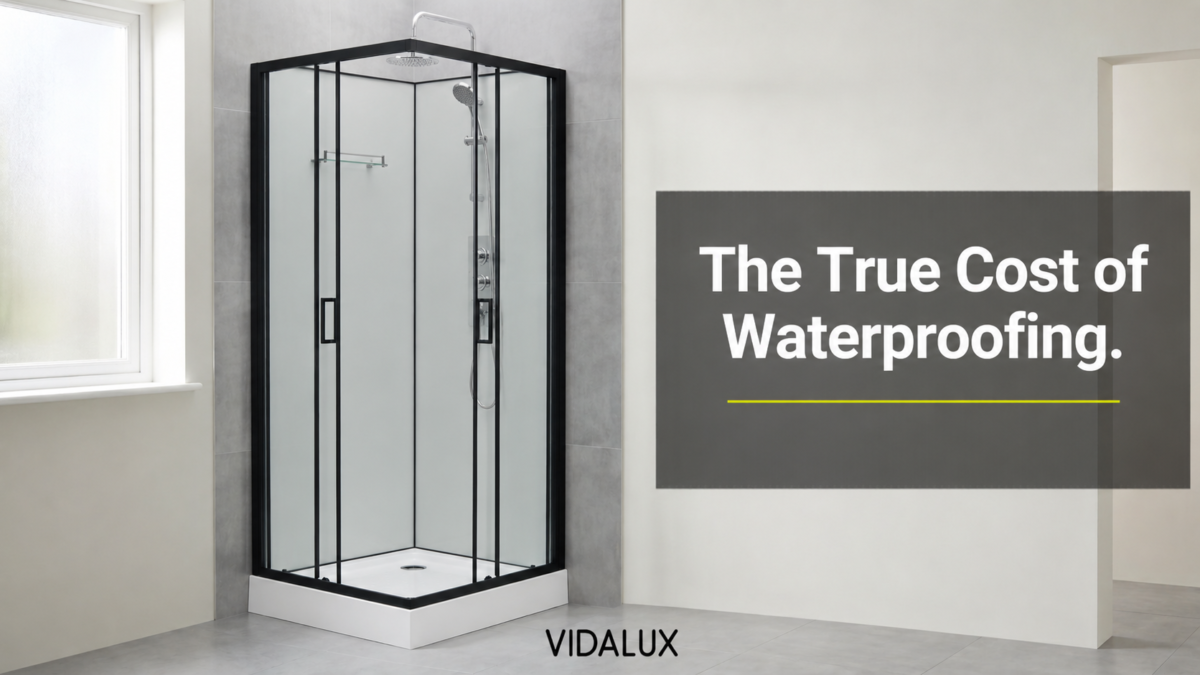
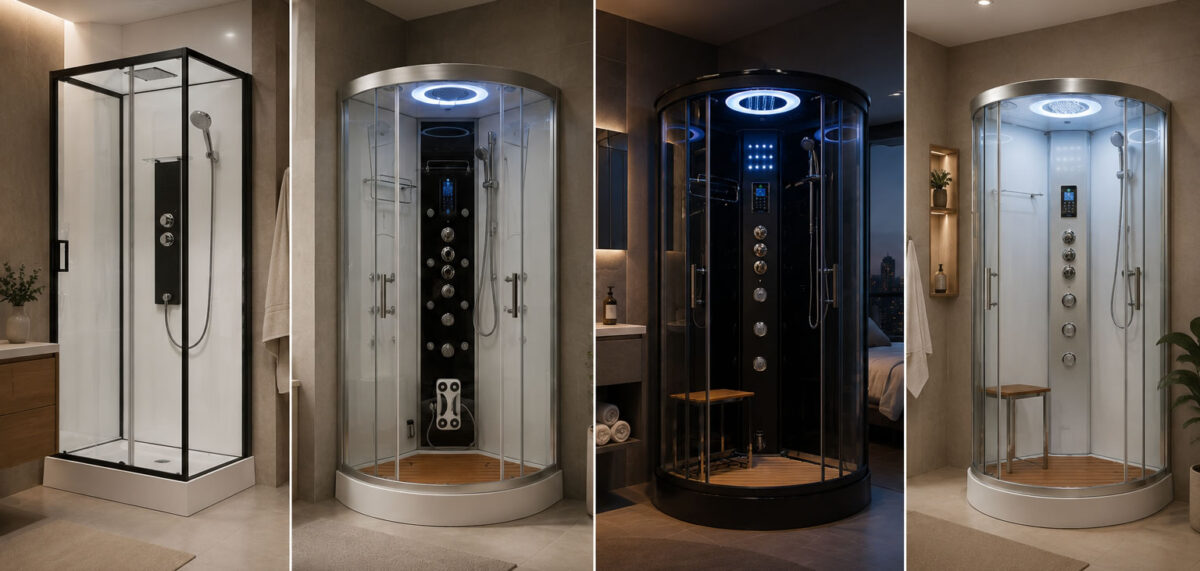
Step inside an enclosed shower cabin and something shifts immediately.
The glass walls close around you. There’s no draft. No clutter in your peripheral vision. No toothbrush holder reminding you of the morning routine. Just you, enclosed warmth, and water.
A rainfall shower overhead delivers steady, gravity-driven pressure across your shoulders and back. It’s passive – you don’t have to do anything. Just stand there and let it work.
Body massage jets target the spots where tension sits – lower back, shoulders, sides. Adjustable, direct, and designed for smooth, powerful water pressure exactly where you need it.
What about the rest of your senses?
On electrical models, chromotherapy mood lighting shifts through colour cycles – warm tones to calm you down, cooler tones to gently energise. It’s subtle, not dramatic. Lighting that works with your body rather than demanding your attention.
Bluetooth audio means you choose the soundtrack. A podcast. A playlist. Or nothing at all – just the sound of water.
And here’s the practical difference that matters most: there’s no fill time. No waiting. No water cooling while you sit there. You step in, switch on, and the decompression starts immediately. On models with thermostatic control, the temperature stays exactly where you set it throughout the entire session.
Worth noting: if you want to add scent to your bathroom routine, Vidalux aromatherapy essences (https://vidalux.co.uk/aromatherapy/) can enhance the overall atmosphere. And for those who want to go deeper into heat-based wellness with steam-delivered aromatherapy, steam showers (https://vidalux.co.uk/steam-showers/) take the concept further with a built-in steam generator.
How Vidalux Hydro Cabins Create a Decompression Zone
Most enclosed cabins look similar in photographs. The engineering underneath is where they differ.
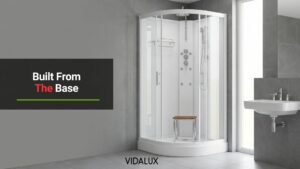
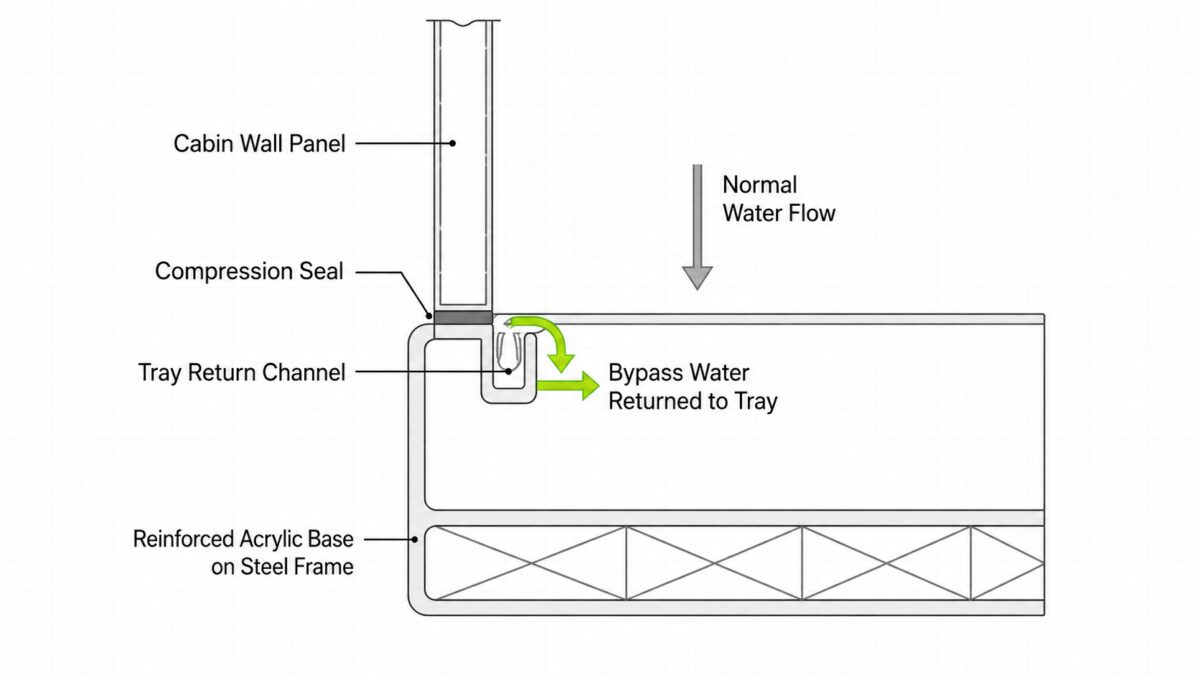
Vidalux hydro shower cabins are built on the same platform as our steam showers – the same reinforced acrylic base on a steel frame, the same precision assembly, the same attention to where water goes and where it doesn’t.
What does that actually mean day-to-day?
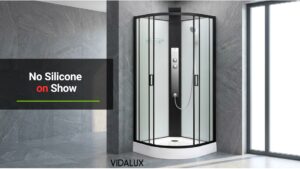
It means Leak-Seal technology. Every cabin uses compression seals with tray return channels that capture any water and direct it back inside. No water behind walls. No hidden damp. No silicone on show – which means no mould, no staining, and no annual resealing. The cabin stays hygienic without constant maintenance.
The range comes in two clear versions. Electrical models include chromotherapy lighting, Bluetooth audio, digital controls, and an ozone hygiene function. Non-electrical models strip back to pure water performance – rainfall head, hand shower, body jets, and nothing else. Both share the same build quality and leak-free engineering.
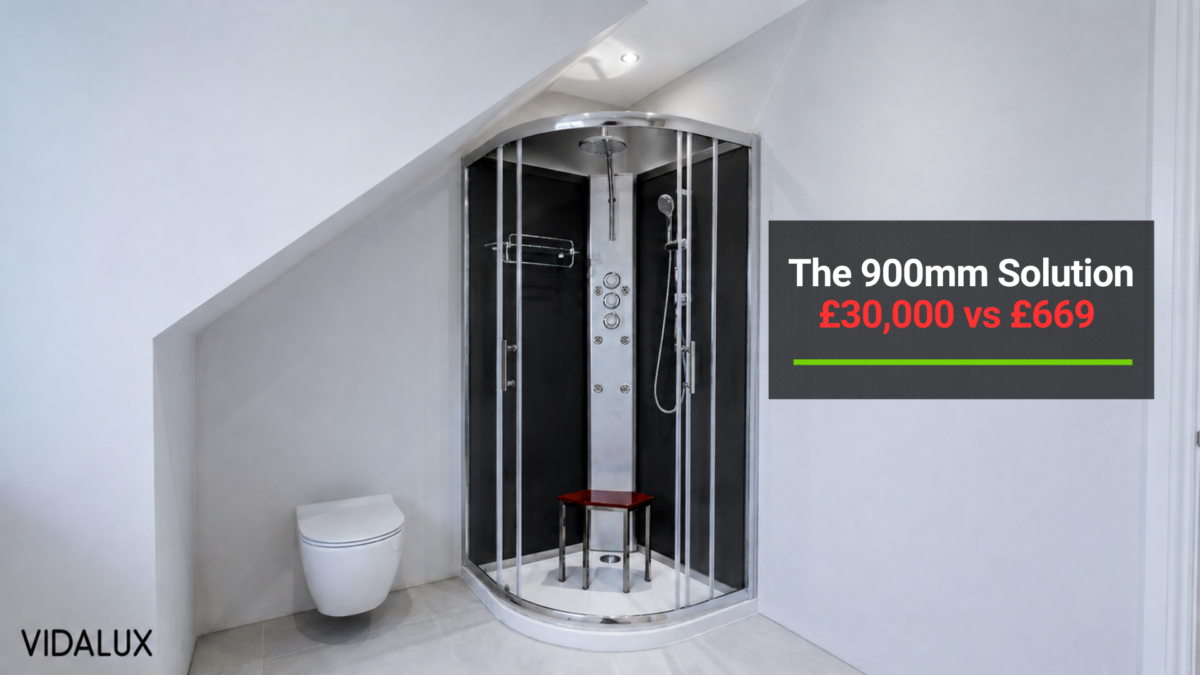
One thing to consider: these cabins are freestanding. They don’t need wall fixings. They can sit against untiled walls, which means no tiling costs and no structural changes to your bathroom. An installer can assemble the cabin build in under an hour using the quick-build screwless framework.
Put simply: a dedicated decompression zone, engineered to last, that fits into the space you already have.
Explore the full range of hydro shower cabins: https://vidalux.co.uk/hydro-shower-cabins/
What to Consider Before Creating Your Decompression Zone
You don’t need a large bathroom to make this work.
Hydro cabins are available in compact sizes – check the product pages for dimensions that fit your bathroom footprint. If you have space for a standard shower enclosure, you likely have space for an enclosed cabin.
Water pressure matters. For the body jets to perform properly, you’ll want between 1 and 3 bar, with above 2 bar recommended for the best jet performance. If you have a gravity-fed system with a tank in the loft, a standard twin impeller shower pump will bring you into range.
Electrical or non-electrical?
If you want lighting, audio, and digital controls, go electrical – these models need a standard 13A connection. If you prefer simplicity and don’t want any wiring involved, the non-electrical models deliver premium water performance without a single electrical connection.
Both options are leak-free and built to the same standard. Installation is straightforward for a competent tradesperson – no specialist skills required for non-electrical models. You can also browse Vidalux accessories (https://vidalux.co.uk/accessories/) for extras like floor inserts and stools.
The honest truth? The hardest part isn’t the installation. It’s giving yourself permission to carve out a space that’s just for you.
Your Decompression Zone Starts with a Decision
Stress doesn’t disappear because you know you should relax. It eases when your environment gives you the right signals – enclosed, warm, consistent, and yours.
A decompression zone isn’t about spending more. It’s about being deliberate with the space you already have.
Review the options. Compare the details. Choose with confidence.
See the quality: https://vidalux.co.uk/hydro-shower-cabins/
Frequently Asked Questions
Q: What is a decompression zone in a home?
A: A decompression zone is a dedicated space designed specifically for stress relief and relaxation. Unlike a shared bathroom, it uses sensory elements – enclosed warmth, water pressure, lighting, and sound – to signal your body that it is time to switch off.
Q: Can a shower cabin help with stress?
A: A shower cabin can support stress relief through body massage jets, warm rainfall water, and an enclosed environment that blocks distractions. Vidalux hydro cabins combine these features in a self-contained, leak-free unit that fits a standard UK bathroom.
Q: What is the difference between a hydro shower and a steam shower?
A: A hydro shower provides massage jets, rainfall showering, and optional features like chromotherapy and Bluetooth – but no steam. A steam shower adds a built-in generator that fills the cabin with hot steam for deeper heat-based wellness.
Q: Do you need a big bathroom for a hydro shower cabin?
A: You do not need a big bathroom for a hydro shower cabin. Vidalux models are available in compact sizes and are freestanding, so they fit into most standard UK bathrooms without structural changes or wall tiling.
Q: What water pressure do hydro shower jets need?
A: Hydro shower jets need water pressure between 1 and 3 bar, with above 2 bar recommended for optimum performance. Homes with gravity-fed systems may require a shower pump – any standard twin impeller pump is compatible.
- About the Author
- UK’s best-rated?

With over 22 years in the home spa industry, Andrew has overseen every stage of the journey—from initial product design and manufacturing to final installation. An author of multiple technical publications and scientific papers, he founded Vidalux to replace industry hype with engineering-led reliability. His focus remains on delivering gym-quality wellness through honest design and technical truth.
DISCLAIMER: All specifications, claims, and advice relating to any internal or external procedure, practise, product, or service were true at the time of writing. For more accurate and up-to-date details in relation to Vidalux services, please visit the relevant dedicated on-site page. For any product-related information, specifications, or guidance, the information on the product page should be considered the governing source.