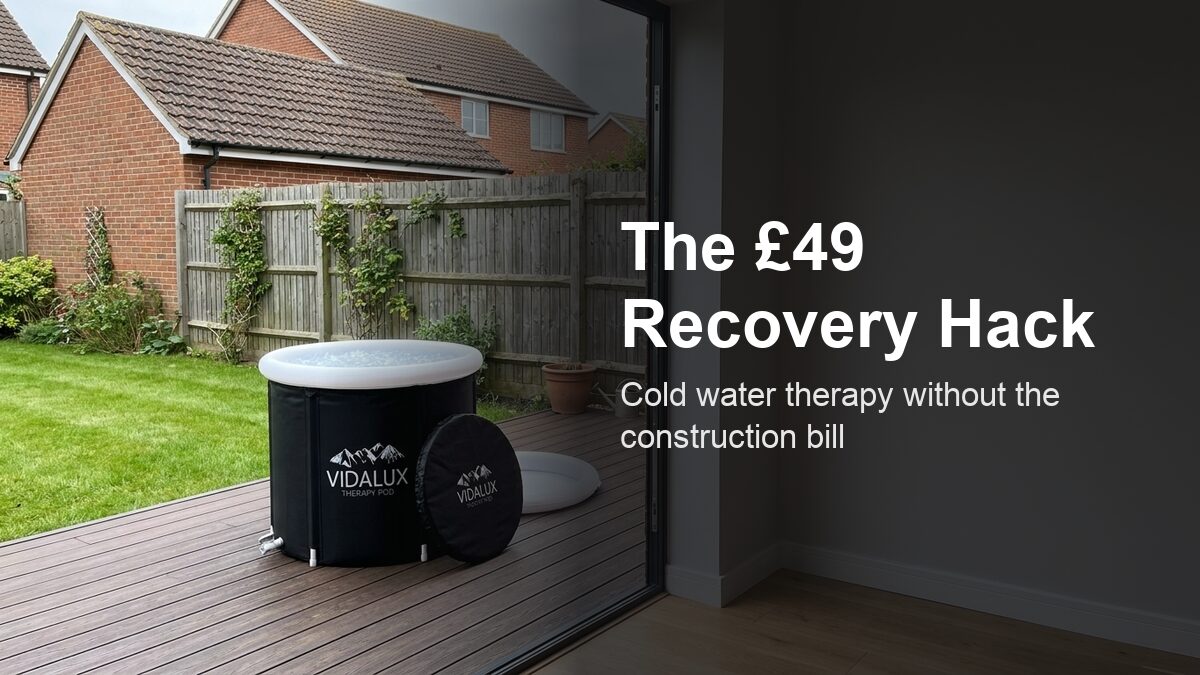
Portable Ice Bath vs. Plunge Pool: The £49 Recovery Hack
If you’ve been searching for a plunge pool, you’ve probably noticed the same pattern. Beautiful Instagram photos. Sleek garden designs. And then the quotes come in – £15,000, £20,000, sometimes north of £30,000 before the first drop of cold water hits your skin.
The appeal of cold water therapy is real. The science behind it is growing. But the assumption that you need a permanent, in-ground installation to benefit from it? That’s worth questioning.
Here’s the thing. A portable ice bath costing £49 delivers the same cold water immersion as a pool costing hundreds of times more. The difference isn’t in the therapy – it’s in the infrastructure you’re paying for around it.
This article breaks down the real numbers, the real science, and the real options – so you can make a decision based on facts, not fantasy.
What a Permanent Plunge Pool Actually Costs in 2026
A fully installed permanent plunge pool in the UK costs between £10,000 and £35,000 in 2026 – and most people underestimate the total by at least half.
The pool itself is just the beginning. Excavation runs £1,500 to £3,000 depending on soil type and access. Concrete reinforcement and shell installation can add £5,000 to £15,000. Then there’s the electrical supply and plumbing – another £2,000 to £5,000, which must be completed by qualified tradespeople.
Filtration systems cost £500 to £2,000 upfront. Chemicals, servicing, and winterisation add £500 to £1,000 every year after that.
But what about the simpler “off-the-shelf” pools?
Even the most basic in-ground plunge pool, fully installed, rarely comes in under £10,000 in the UK. And that’s before you factor in the weeks of garden disruption, skip hire for excavation waste, and the very real possibility of hitting unexpected drainage or utility lines.
The total range, according to trade pricing guides published in 2026, sits between £10,000 and £35,000 for a fully installed domestic plunge pool.
That’s a significant commitment for something that – let’s be honest – many people use less than they expected once the novelty settles.
The Planning Permission Question Nobody Answers Clearly
Most garden plunge pools fall under permitted development and don’t need formal planning permission – but the conditions are strict and local authority checks are often still required. That grey area is precisely the problem.
Many garden plunge pools fall under permitted development rights, meaning you don’t need formal planning permission. But “permitted development” comes with conditions: the pool can’t cover more than 50% of your garden, it must sit within the property boundary, and it shouldn’t be in front of the principal elevation.
Worth noting: even when planning permission isn’t required, building regulations compliance often is. Electrical work needs Part P certification. Drainage connections may need local authority approval. And if you share a boundary wall, party wall agreements could add both cost and delay. According to the Planning Portal, outdoor pools are generally permitted development under Class E, but conditions vary by property and location.
The confusion alone puts people off – or worse, leads them to start work and discover mid-project that they’ve missed a step.
What Cold Water Therapy Actually Does (And Doesn’t Do)
Cold water immersion at 15 degrees or below supports perceived muscle recovery and subjective mood improvement – and the research broadly backs this up. A 2025 network meta-analysis published in Frontiers in Physiology, reviewing 55 randomised controlled trials, found that cold water immersion at 11-15 degrees for 10-15 minutes reduced muscle soreness and creatine kinase levels – a key marker of muscle damage.
People who practise regular cold exposure frequently report improved alertness, better mood, and a sense of mental clarity. These subjective benefits are consistent across forums, studies, and personal accounts.
Does it reduce inflammation?
This is where the science gets more cautious. Some studies show modest effects, but the evidence doesn’t consistently separate cold water immersion from active recovery as a tool for reducing measurable inflammation. The honest position: cold water therapy supports your recovery routine. It doesn’t replace medical treatment, and anyone claiming guaranteed results is overstating the evidence.
Put simply: it works well enough that athletes, fitness enthusiasts, and wellness-focused individuals use it daily. It doesn’t work so miraculously that you should remortgage your house for a permanent pool to do it in.
Which raises the obvious question – what’s the minimum you actually need?
What £49 Gets You: The Portable Ice Bath
The Vidalux Portable Ice Bath and Recovery Pod strips the concept down to what matters – insulated cold water immersion, without the infrastructure.
It measures 800mm in diameter and 750mm in height, holds 320 litres of water, and weighs just 3.5kg empty. Three layers of thermal insulated TPE keep the water temperature stable, and a UV-resistant PVC inner lining means it handles outdoor exposure without degrading.
The kit includes a thermo-insulated lid (which creates a thermal bridge between the water and the elements), an all-weather cover, a hand pump, an inflatable seat and headrest, a carry bag, and a repair kit. Everything you need to set up in your garden in roughly five minutes.
Do you need to add ice?
Not necessarily. The product page states that cold water therapy benefits begin at 15 degrees or below – a temperature UK outdoor water reaches naturally for much of the year. In winter, you may not need ice at all. In summer, a bag or two brings the temperature down. Compare that to the filtration, chemicals, and chiller units that permanent pools require year-round.
It comes with a 12-month warranty and sits in the accessories range of a brand – Vidalux – that’s been engineering home wellness products since 2009. They’re the UK’s most well-reviewed shower and sauna manufacturer on Trustpilot. This isn’t a nameless import from a marketplace listing. It’s a product from a company that stakes its reputation on wellness equipment working properly.
For broader context on the benefits of home-based wellness routines, our wellness articles cover the research across heat, water, and recovery therapy.
The Vidalux Approach
We don’t pretend a £49 portable pod is the same product as a £20,000 in-ground pool. They serve different purposes, different lifestyles, and different budgets.
But here’s what we do believe: the barrier to starting cold water therapy should be low. Not everyone has the garden space, the budget, or the appetite for months of construction work. And the therapeutic benefit of cold immersion doesn’t scale with how much you spent on the container.
If you’re serious about recovery, you don’t need serious construction. You need consistent cold exposure, done safely, at the right temperature.
Vidalux has spent over 15 years building wellness products – saunas, steam showers, hydrotherapy baths – that make proven routines accessible at home. The Recovery Pod follows the same principle: remove the barriers, keep the quality, and let the routine do the work.
Take a look at the recovery pod and see what’s included.
Frequently Asked Questions
Q: How much does a plunge pool cost in the UK?
A: A permanent plunge pool in the UK typically costs between £10,000 and £35,000 installed, including excavation, concrete, electrical work, and filtration. Annual maintenance adds £500 to £1,000 per year.
Q: Do you need planning permission for a plunge pool?
A: Planning permission depends on pool size, garden coverage, and proximity to boundaries. Many qualify as permitted development, but building regulations compliance and local authority checks are often still required.
Q: Does cold water therapy actually work?
A: Cold water immersion at 15 degrees or below supports perceived muscle recovery and subjective mood improvement. Research confirms reduced soreness after exercise, though inflammation and immunity claims remain less certain.
Q: What temperature should an ice bath be?
A: Cold water therapy benefits are generally associated with temperatures of 15 degrees or below. The Vidalux Recovery Pod reaches this naturally when set up outdoors in typical UK conditions, often without added ice.
Q: How big is the Vidalux Portable Ice Bath?
A: The Vidalux Recovery Pod measures 800mm in diameter and 750mm in height with a 320-litre capacity. It weighs 3.5kg empty and includes a thermo lid, all-weather cover, and carry bag.
- About the Author
- UK’s best-rated?

With over 22 years in the home spa industry, Andrew has overseen every stage of the journey—from initial product design and manufacturing to final installation. An author of multiple technical publications and scientific papers, he founded Vidalux to replace industry hype with engineering-led reliability. His focus remains on delivering gym-quality wellness through honest design and technical truth.
DISCLAIMER: All specifications, claims, and advice relating to any internal or external procedure, practise, product, or service were true at the time of writing. For more accurate and up-to-date details in relation to Vidalux services, please visit the relevant dedicated on-site page. For any product-related information, specifications, or guidance, the information on the product page should be considered the governing source.