The ‘Nordic Cycle’ at Home: Pairing Your Sauna with an Ice Recovery Pod
You’ve watched the videos. The gasping, the breathwork, the £4,000 chiller plunge in someone’s pristine garden. You already own a sauna, or you’re about to, and now there’s this nagging question: do you really need to spend another four grand to “do it properly”?
Here’s the honest truth. The Nordic cycle at home, pairing your sauna with an ice recovery pod, doesn’t require a five-figure budget. The combination of sauna and ice bath is older than the wellness industry currently selling it back to you. It’s a centuries-old Scandinavian and Finnish tradition, and what makes it work has nothing to do with how much your equipment costs.
This guide cuts through the hype. Real protocols, honest UK costs, the evidence we have, and a practical home setup that pairs your sauna with even our low-cost £49 portable ice pod. No chiller. No DIY chest freezer disasters. Just the cycle, properly understood.
What The Nordic Cycle Actually Is
The Nordic cycle is contrast therapy. You alternate periods of intense heat with brief cold immersion, and you repeat the cycle two or three times.
It’s been practised in Finland and Scandinavia for centuries, where the tradition of an avanto – a hole cut into a frozen lake after a sauna session – is woven into the culture. The point was never the cold alone, and it was never the heat alone. The point is the contrast.
What the wellness industry has done over the last five years is rebuild this old practice as a premium product category. Chiller-equipped cold plunges. Smart-app temperature controls. Stainless steel tubs with a monthly subscription to Watercare. None of it is what the Finns were doing for the last thousand years, and none of it is what the research is actually testing.
So what does the research test?
Standard sauna sessions at 80 to 90°C, followed by short cold immersions at around 10 to 15°C, repeated in cycles. That’s it. The protocol that built this entire wellness category is, fundamentally, simple.
Vidalux has been engineering UK home saunas for over 15 years. The cycle works because of what happens to your body during the contrast – not because of the brand of plunge tub you bought.
Why The Cycle Works (The Vascular Pump)
When you sit in a sauna, your blood vessels dilate. Heart rate rises. Blood flows outward toward your skin to release heat. Step into cold water and the opposite happens, fast: vessels constrict, blood retreats to your core to protect vital organs, and your nervous system fires.
Repeat that cycle two or three times, and you’ve trained your vascular system through what researchers describe as a “pump” effect. According to a PLOS ONE systematic review on contrast water therapy, this contrast reduced muscle soreness compared to passive recovery at both 24 and 48 hours after exercise, and lowered creatine kinase levels – a marker associated with muscle damage.
That’s the mechanism. What about the benefits people actually feel?
Cold immersion triggers a sharp release of norepinephrine, with peak release occurring in the first two to three minutes. Norepinephrine is the hormone behind the “alertness shift” people describe after a plunge – the mental clarity, the mood lift, the sense that something has reset.
Heat exposure activates heat shock proteins linked to cellular repair. Cold exposure activates cold shock proteins associated with reduced inflammation and metabolic adaptation. Regular cold also recruits brown adipose tissue, the metabolically active fat that helps regulate body temperature.
Worth noting: the research base for sauna-with-plunge specifically is still limited and mixed in quality. The honest position is that the mechanisms are well-supported, the benefits are promising, and the consistency of practice matters more than the specific product you’re using.
Think of it like training. You don’t get fitter from one workout. You get fitter from showing up.
The Right Protocol (Without The Hype)

Most evidence-based protocols look like this. Sauna for 10 to 15 minutes at 65 to 85°C. Cold plunge for two to three minutes at 10 to 15°C. Repeat the cycle two or three times.
That’s the whole protocol.
A few details worth getting right. Hot first, always – heating the body before cold exposure increases that norepinephrine release and primes your nervous system for the contrast. Finish on cold if you want alertness afterwards. Finish on heat if you want to sleep well that night.
For cold duration, the sweet spot is two to five minutes. Peak benefit lands in the first two to three minutes, and exposure beyond five to eight minutes adds very little while raising the risk of hypothermia. Longer is not better.
How often should you do it?
Studies showing measurable physiological benefits typically used three to four sessions per week over four to eight weeks. That’s the dose. If you’re plunging once a fortnight after a heavy weekend, you’ll feel good in the moment, but you won’t get the adaptive effects the research is documenting.
Hydration matters more than people realise. Both heat and cold places real demands on your circulatory system, so a glass of water before you start and another at the end is the simplest insurance you can give yourself. And listen to your body. The protocol is a guide, not a contract. If two minutes of cold feels brutal, do 90 seconds. The point is consistency, not heroics.
The Real Cost of Doing This At Home
Here’s where the wellness industry has done its best work – convincing people the cycle requires a budget that excludes most households.
Premium chiller-equipped plunges in the UK sit at the top of the market. Arctic Warriors UK sells chillers alone at £1,890 to £2,490, before you’ve added a tub. KeiCo Harvia thermo-wood ice baths with chillers retail in the £2,000 to £3,500 range. LUMI’s chiller-compatible Recovery Pod PRO setup runs to similar territory.
Mid-range options start around £400 for inflatable tubs with optional chiller compatibility. Lay-Z Spa’s Glacial Dip retails at £395. LUMI’s Recovery Pod Max sits at £399.99.
Then there’s the running cost most people don’t price in. According to the UK chiller running cost analysis, a standard plunge chiller uses 200 to 400 kWh per month. At the UK average of 30p per kWh, that’s £60 to £120 every month, on top of whatever you paid for the unit itself.
And what about the chest freezer DIY route?
Let’s be clear: it’s a category of disaster that the cold plunge community knows well. Chest freezers are not designed to hold water. The moment you modify one, you void the warranty. Sealing the seams with the wrong product leads to rust within months.
Drilling into the wrong component compromises the electrical safety. And every single time you use it, you’re getting into a body of water connected to a 240-volt mains appliance, which is precisely why every guide on the subject demands you unplug before entry.
The UK climate gives you something most of the world doesn’t: free cold for most of the year. From October through to April, outdoor ambient temperatures sit comfortably in the range where a well-insulated portable pod will reach the 15°C therapeutic threshold without any chiller intervention at all. You’re paying for insulation, not refrigeration.
Setting It Up At Home (Without The DIY Disasters)
The practical setup can be simpler than the marketing suggests. Of course you can go down the more elegant and pricey route, but you don’t have to; you simply need a sauna, a cold pod, and a few metres of clear path between them.
That distance matters. Comfortable enough to walk in around 10 seconds is the window where the cycle does its work – close enough that you don’t lose the metabolic snap of moving from heat to cold, far enough that the sauna door’s heat doesn’t interfere with the water temperature.
Site selection follows three rules. Outdoor placement, because the UK ambient cold is the cheapest refrigeration system you’ll ever own. Level surface, for example, because 320 litres of water weighs around 320 kilograms when full, and any tilt becomes a problem. Drainage proximity, because you’ll change the water roughly weekly, and dragging a hose across the lawn gets old fast.
What about water management?
Change the water once a week. If you want to extend the time between changes, bromine tablets are skin-friendly and last longer than chlorine in cold water. Epsom salts are fine and may even help with magnesium absorption, but never use table salt – it accelerates corrosion of any metal components.
Keep the lid on between sessions. This is the single biggest factor in maintaining temperature without a chiller. A thermal lid creates a thermal bridge between the water surface and the air above, slowing heat exchange dramatically. A weather cover on top of that keeps rain and debris out of the water. Both come standard with the Vidalux pod.
The honest truth? The setup most people picture as elaborate is closer to “sauna by the back door, pod three steps away, towel on a hook.” That’s it.
When You Should NOT Do This
Some people should not do contrast therapy. Lead with this rather than buried at the bottom, because the wellness industry has been remarkably casual about it.
Cold immersion triggers an immediate cardiovascular response. Blood pressure spikes. Heart rate accelerates. The first 10 to 60 seconds after entry is when arrhythmia risk peaks, and the cardiology literature is clear about who should not be in cold water at all.
Avoid contrast therapy if you have uncontrolled hypertension – particularly with systolic readings above 180 mmHg. Avoid it with unstable angina, recent acute coronary syndrome, decompensated heart failure, long QT syndrome, severe aortic stenosis, or any history of arrhythmia.
Avoid it during pregnancy without explicit clearance from a healthcare professional. People with Raynaud’s disease, thyroid conditions, very low body fat, or a history of disordered eating should also speak to a medical professional first.
As the British Heart Foundation notes, sudden cold water immersion can place significant stress on the cardiovascular system and is not appropriate for everyone, particularly those with existing heart conditions.
A few practical rules for everyone, regardless of fitness or experience. Never plunge alone if you’re new to cold immersion. Never plunge after alcohol. Never push past genuine discomfort – the cold-shock gasp reflex is real, and panic in a tub of cold water is how accidents happen.
If anything in this section applies to you, the answer is simple. Talk to your GP before you start. Not after.
The Vidalux Approach
Vidalux engineers home wellness equipment for real use, not influencer aesthetics. That principle runs through everything we make, and it shapes how we’ve approached the cold side of the Nordic cycle.
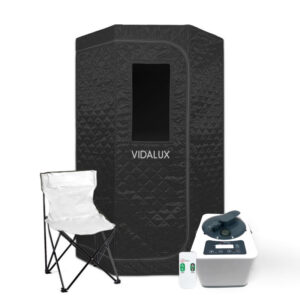
The Vidalux Portable Ice Recovery Pod is £49. It includes three layers of thermal insulated TPE protection, a UV-resistant skin-friendly PVC inner lining, a rip-stop polyester outer layer, a thermo lid, an all-weather cover, a hand pump, an inflatable seat, a carry bag, and a 12-month warranty. It’s 80cm in diameter and 75cm tall, with a 320-litre capacity. It works at 15°C or below using nothing but ambient outdoor cold.
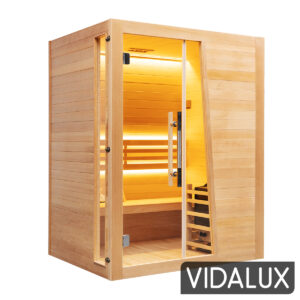
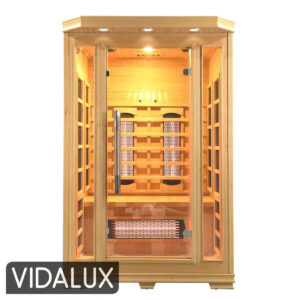
Pair it with any model from our home sauna range, and you have the full Nordic cycle – heat and cold, contrast therapy, vascular response – for less than the cost of a single premium chiller. Our entry-level 1-Person Carbon Infrared Sauna is £1,099, which puts a complete sauna and ice bath setup at under £1,150 with everything included.
No chiller. No monthly £120 electricity bill. No chest freezer rust. No DIY electrocution risk. No subscription water care. Just a properly engineered hot half and a properly engineered cold half, set up a few steps apart in your garden.
That’s what doing it properly actually looks like. Built for real performance, with zero hassle. Review the full setup.
Frequently Asked Questions
Q: Should I do the sauna or ice bath first? A: You should do the sauna first, then the ice bath. Heating the body before cold exposure increases the release of norepinephrine, which supports recovery and mental clarity, and the standard protocol uses 10 to 15 minutes of sauna followed by two to three minutes of cold immersion.
Q: How cold does an ice bath need to be to work? A: An ice bath needs to be between 10°C and 15°C to deliver the recovery and nervous-system benefits research supports. Water below 7°C is rarely necessary and increases hypothermia risk. In the UK, ambient outdoor temperatures naturally hit this range for most of the year.
Q: Do I need a chiller for my home ice bath? A: No, you do not need a chiller for a home ice bath in the UK. A well-insulated portable pod placed outdoors will reach 15°C or below for most of the year using ambient cold alone. Chillers add £60 to £120 per month in electricity costs.
Q: How long should I stay in an ice bath? A: You should stay in an ice bath for two to five minutes per round. Peak norepinephrine release occurs in the first two to three minutes, and exposure beyond five to eight minutes provides minimal extra benefit while increasing hypothermia risk significantly.
Q: Can I do contrast therapy if I have high blood pressure? A: You should not do contrast therapy with uncontrolled hypertension, particularly with systolic readings above 180 mmHg. Cold immersion causes a temporary blood pressure surge that can be dangerous in this case, and anyone with cardiovascular conditions should consult a healthcare professional before starting.
Q: How many rounds of sauna and ice bath should I do? A: Most evidence-based protocols use two to three rounds per session, finishing on cold for alertness or on heat for sleep preparation. Studies showing measurable benefit typically used three to four sessions per week over four to eight weeks.
ATTENTION: You must always towel down and not enter the sauna wet. This water will soak into the sauna wood and potentially cause the wood to have the associated issues of moisture within wood, such as warping and discolouration, which is not covered under warranty
- About the Author
- UK’s best-rated?

With over 22 years in the home spa industry, Andrew has overseen every stage of the journey—from initial product design and manufacturing to final installation. An author of multiple technical publications and scientific papers, he founded Vidalux to replace industry hype with engineering-led reliability. His focus remains on delivering gym-quality wellness through honest design and technical truth.
DISCLAIMER: All specifications, claims, and advice relating to any internal or external procedure, practise, product, or service were true at the time of writing. For more accurate and up-to-date details in relation to Vidalux services, please visit the relevant dedicated on-site page. For any product-related information, specifications, or guidance, the information on the product page should be considered the governing source.