Why Cheap Steam Generators Trip Your RCD (It’s Not The Fuse)
Your steam generator keeps tripping the electrics. You’ve reset the switch. Twice. Maybe three times this week.
You’ve probably checked the fuse. Maybe even replaced it. But if your cheap steam generator is tripping the RCD, the fuse was never the problem.
What’s actually failing is hidden inside the generator tank, and it’s a fault that budget units are almost designed to develop. Understanding why it happens (and what to look for in a replacement) could save you from repeating the same expensive mistake.
The Difference Between a Fuse and an RCD (And Why It Matters)
Most people use “tripped” to mean one thing. In reality, your consumer unit has two different types of protection doing two different jobs.
A fuse (or MCB) protects against overload. If too much current flows through the circuit, more than the wire can safely handle, the fuse blows. It’s protecting the wiring.
An RCD does something else entirely. It monitors the balance of current flowing out and coming back. If even a tiny amount of electricity escapes to earth, the RCD cuts power in milliseconds. It might escape through water, a cracked component or damaged insulation.
According to the Health and Safety Executive, an RCD is “a device which detects some, but not all, faults in the electrical system and rapidly switches off the supply” (HSE guidance on electrical systems).
So what does it mean when the RCD trips but the fuse doesn’t?
It means electricity is going somewhere it shouldn’t. Not too much current. The wrong path. And in a steam generator, that “wrong path” is almost always through water that’s found its way to a live conductor.
The RCD is doing exactly what it’s supposed to do. What matters now is what’s causing the leakage.

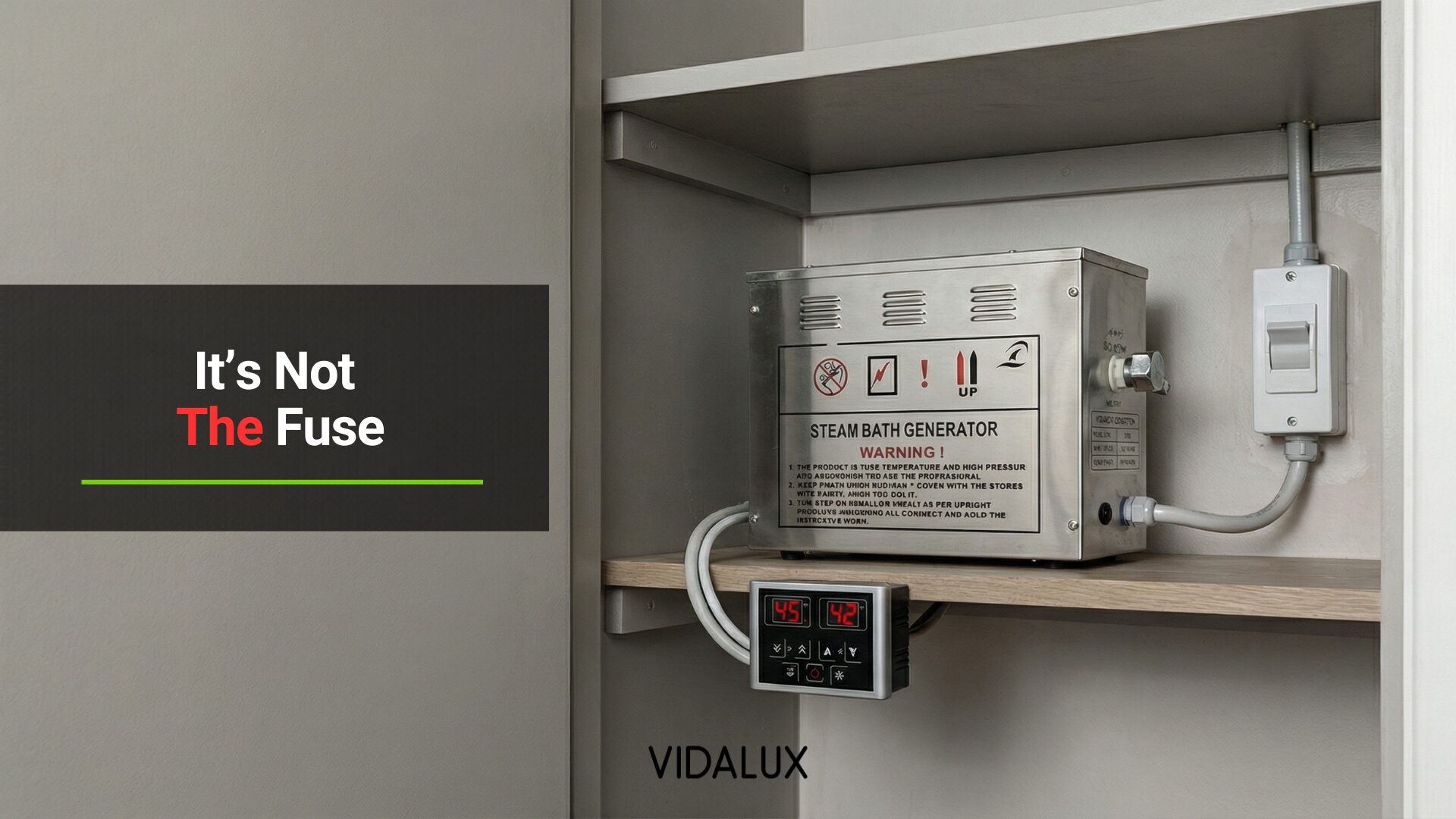
Think of a steam generator like a heavy-duty kettle. Water sits inside a sealed tank. A heating element, submerged in that water, boils it into steam.
In budget generators, that element is typically made from basic copper or a low-grade alloy. And here’s where the trouble starts.
If you live in a hard water area (most of Southern and Eastern England), limescale gradually coats the element surface. That scale acts like a blanket, trapping heat against the metal instead of letting it transfer into the water efficiently. The element runs hotter. Hotspots form. The casing weakens.
Over time, often sooner than most owners expect, the element casing cracks or corrodes through. When that happens, water inside the tank touches the live electrical conductor. The RCD detects this earth leakage instantly and trips.
But why does it sometimes work fine for 15 minutes before tripping?
That’s thermal expansion. The element starts cold and intact enough to function. As it heats up, the metal expands, opening the crack wider. Water reaches the conductor. The RCD trips. A pattern of working briefly, then cutting out, is a classic sign of an element in its final stages.
This is a documented, well-understood failure mode. The element casing cracks, water touches the live wire, and the RCD does its job.
Why It Happens Sooner Than You’d Expect
Element failure is predictable, and certain conditions accelerate it dramatically.
Hard water is the primary accelerator. Limescale forces the element to overwork, running hotter than it was designed to. Cheap elements without scale-resistant coatings degrade quickly under these conditions.
The second factor is stagnant water. Generators without an automatic drain function leave water sitting on the element between uses. That standing water deposits more scale, more corrosion, more damage, session after session.
Is this covered under warranty?
In most cases, no. Calcium buildup is generally classified as a maintenance issue, not a product defect. It’s a foreseeable problem in hard water areas, which is precisely why the engineering of the element matters so much in the first place.
Put simply: a cheap element in a hard water area is a fault waiting to happen. The only open question is when it will fail.
What to Look for in a Generator That Won’t Let You Down

Here’s what separates a dependable generator from one that’s counting down to its first RCD trip.
Element material. Look for stainless steel or high-grade alloy elements rather than basic copper. Better materials resist scale adhesion and tolerate the thermal cycling that steam generation demands.
Tank construction. A stainless-steel reservoir and casing prevents internal corrosion of the tank itself, not just the element. Vidalux generators use a fully stainless-steel case and internal reservoir, engineered to withstand repeated heating cycles without degradation.
Auto-drain function. After each steam session, the generator should drain stagnant water automatically. This prevents scale sitting on the element between uses, one of the key accelerators of corrosion. You should hear the unit drain after each session completes.
Safety components. Overload protection circuits, pressure-relief valves, and automatic shut-off if the water supply fails. These aren’t luxury extras. They’re baseline engineering for any generator you’ll trust long-term.
Certification. ISO9001 and CE as a minimum. These confirm the unit has been manufactured to consistent, auditable quality standards.
Proper installation. Every steam generator, regardless of brand or size, requires a dedicated electrical circuit. A qualified, Part P-certified electrician will confirm the correct supply, breaker, and cable size for your specific unit.
Explore the full range of Vidalux steam showers to see how these engineering principles work in practice.
Protect Your Investment (Before It’s Too Late)
If you already own a steam generator, any brand, a few simple steps can significantly extend the life of your heating element.
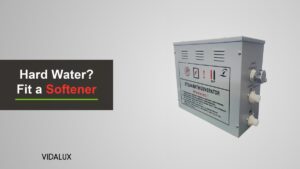
Fit a water softener if you’re in a hard water area. This is the single most effective thing you can do. It protects the element, the solenoid valves, and the water level sensors from scale buildup. The “Clear & Bright” softener is a straightforward option worth considering.
Use the auto-drain function after every session. If your generator has one, make sure it’s working. You should hear the unit drain when the cycle ends.
Only use approved descalers. Aggressive acids will eat the heating element seals, potentially causing the exact failure you’re trying to prevent.
And if your RCD is already tripping?
Do NOT keep resetting it and using the generator. The element needs replacing. Continued use risks further damage to the unit and compromises the safety protection the RCD is providing. Unplug the generator and contact your supplier or a qualified electrician.
For accessories, water softeners, and maintenance essentials, see what’s available at Vidalux accessories.
The Honest Summary
A tripping RCD has a simple explanation: your electrical system is telling you that water has found its way to a live conductor inside your steam generator, almost always through a cracked or corroded heating element.
Cheap copper elements in hard water areas are particularly vulnerable. It’s a predictable failure, not a random one. And it’s preventable, with better materials, proper drainage, and sensible maintenance.
If you’re replacing a failed unit or choosing your first steam shower, look at the engineering that goes into the parts you can’t see. The element. The tank. The drainage cycle. The safety certification. It’s also worth knowing what happens once a generator needs spares.
That’s where reliability lives.
Review the standards. Compare Vidalux steam generators and choose with confidence.
Frequently Asked Questions
Q: Why does my steam generator trip the RCD but not the fuse?
A: A steam generator trips the RCD because of earth leakage, not overload. When a heating element casing cracks, water contacts the live conductor. The RCD detects this and cuts power instantly to prevent electrocution.
Q: What causes a steam generator heating element to fail?
A: Steam generator heating elements fail when limescale builds up and causes hotspots that crack the element casing. Hard water areas accelerate this. Cheap copper or low-grade alloy elements in budget generators can fail sooner than most owners expect.
Q: Can I keep using my steam generator if the RCD keeps tripping?
A: You should not keep using a steam generator that trips the RCD. Each trip indicates earth leakage from a failing element. Continued use risks further damage. Unplug the unit and contact your supplier or a qualified electrician.
Q: Does hard water damage steam generators?
A: Hard water does damage steam generators by depositing limescale on heating elements and solenoid valves. Fitting a water softener is the most effective prevention. It protects the element, valves, and sensors from scale buildup.
Q: What should I look for in a reliable steam generator?
A: A reliable steam generator should have a stainless-steel reservoir, durable heating elements, an auto-drain function, oversized safety components, and ISO9001 and CE certification. Proper installation on a dedicated circuit by a qualified electrician is equally important.
- About the Author
- UK’s best-rated?

With over 22 years in the home spa industry, Andrew has overseen every stage of the journey—from initial product design and manufacturing to final installation. An author of multiple technical publications and scientific papers, he founded Vidalux to replace industry hype with engineering-led reliability. His focus remains on delivering gym-quality wellness through honest design and technical truth.
DISCLAIMER: All specifications, claims, and advice relating to any internal or external procedure, practise, product, or service were true at the time of writing. For more accurate and up-to-date details in relation to Vidalux services, please visit the relevant dedicated on-site page. For any product-related information, specifications, or guidance, the information on the product page should be considered the governing source.
Ready to choose?
Browse the full Vidalux range of saunas, steam showers, baths and shower cabins, all in one place