The Truth About Steam Shower Leaks (And How We Engineered Them Out)
Steam shower leaks are the number one fear people have before buying a cabin. And honestly? It’s a fair concern.
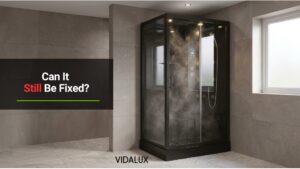
Plenty of cabins on the market do leak. Browse forums, read reviews, and look at the complaints. Water on bathroom floors. Damp behind walls. Silicone turning black within a year. These aren’t rare edge cases – they’re predictable outcomes of cabins built without serious engineering behind them, cheap eBay imitations.
But here’s the thing. Leaks aren’t a steam shower problem. They’re a design problem. And design problems have design solutions.
This article explains exactly why steam showers leak, what separates a well-engineered cabin from a cheap one, and how one brand approached the problem by engineering it out entirely – rather than relying on silicone to patch over it.
Why Do Steam Showers Leak in the First Place?

It almost always comes down to the same handful of weak points.
The biggest culprit is exposed silicone. Most steam shower cabins rely on visible silicone beads running along every internal joint – where glass meets tray, where frame meets panel, where the door channel sits against the base. In a warm, humid environment like a steam cabin, that silicone starts to degrade. It yellows. It attracts mould. It peels. And once it separates from the surface, water finds a path out.
But isn’t silicone designed for wet areas?
It is – but it’s not designed to be the primary seal in a pressurised steam environment. Think of it like duct tape on a water pipe. It might hold for a while, but it was never the right solution for the job. What you need is a mechanical seal – something engineered into the structure, not applied over the top of it.
The second failure point is the tray. Cheap cabins use thin, unsupported trays that flex underfoot. Over time, that movement breaks whatever seal exists between tray and frame. Water gets underneath, pools where you can’t see it, and eventually makes its way to the floor.
Then there’s the frame itself. If it’s flimsy or poorly fitted, the whole structure shifts slightly as it heats and cools. Even a fraction of a millimetre of movement is enough to compromise a silicone joint.
The common thread? These aren’t random faults. They’re predictable consequences of cabins assembled from generic parts, with no integrated engineering and no real-world testing behind them.
The Hidden Cost of Buying on Price Alone
A steam shower cabin for under £800 sounds like a bargain. Until it isn’t.
The units sold at rock-bottom prices through marketplace sites are typically assembled from off-the-shelf components with no original R&D behind the design. Nobody tested the tray under load. Nobody checked whether the frame seals held after 500 steam cycles. Nobody engineered a solution for what happens when water inevitably finds its way past a silicone joint.
So what actually happens when something goes wrong?
You call the seller. There’s no technical team. There are no spare parts. There’s no one who understands the product because nobody designed it – they just sold the box it came in.
The real cost of a cheap cabin isn’t the purchase price. It’s the water damage repair, the replacement unit, the second installer fee, and the weeks of disruption while you sort it out. That’s the false economy.
Vidalux has been manufacturing and refining steam showers for over decades. That means a UK-based support team you can actually speak to, a massive spare-parts inventory – including parts for discontinued models – and multi-stage quality control on every single unit, not random sampling.
That difference doesn’t show up in a marketplace listing. But it shows up the first time you need help.
What “Leak-Free by Design” Actually Means – Steam Shower Leaks Solved at Source
There’s a meaningful difference between a cabin that uses silicone to prevent leaks and one that’s structurally designed so leaks can’t happen.
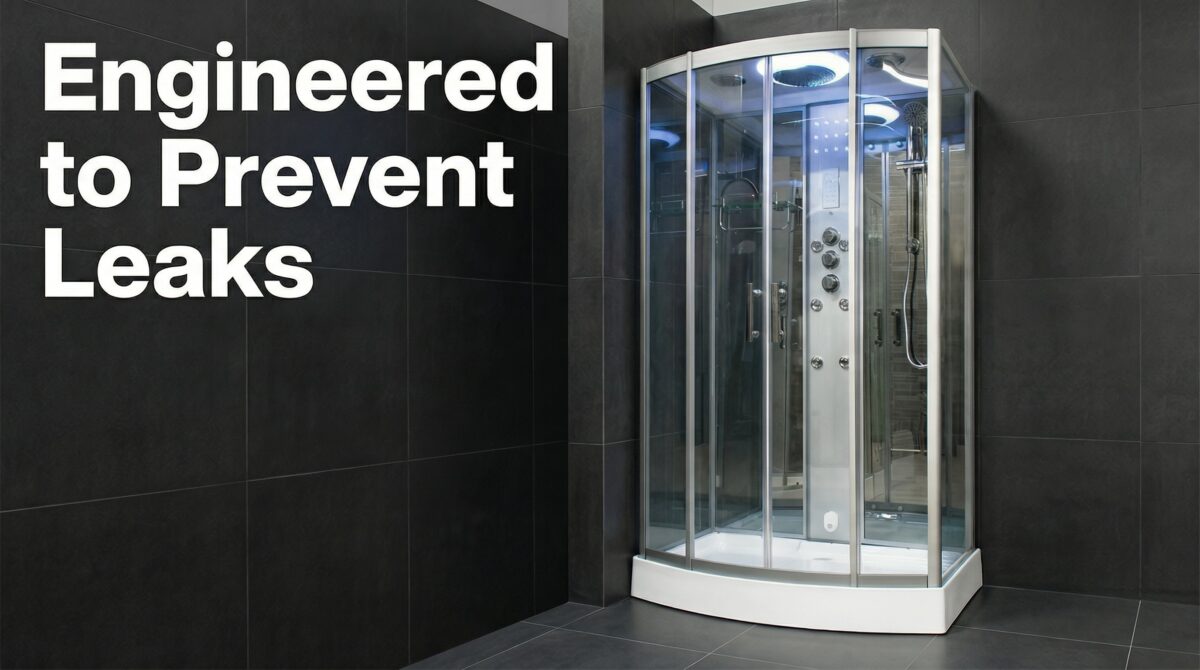
Vidalux’s approach is called Leak-Seal Technology, and it works on three levels.
First, the cabin uses a compression-sealed structure. The frame, glass, and tray lock together mechanically – not through adhesive. This means the seal doesn’t degrade over time the way silicone does, because it’s not relying on a chemical bond. It’s a physical one.
Second, the tray includes built-in return channels. In the unlikely event that any water bypasses a seal, it’s directed straight back inside the cabin rather than escaping onto the floor or behind the wall. It’s a failsafe that most cabins simply don’t have.
Third – and this is the part people notice most – there’s zero exposed silicone inside the cabin. None. No mould-prone beads running along every joint. No yellowing strips to scrub. No annual resealing. If silicone is used at all, it’s optional, external, and completely hidden on joining faces.
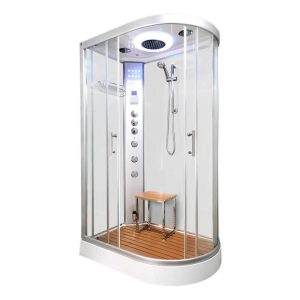
Worth noting: this engineering sits on a reinforced acrylic base with a steel frame underneath. Not a thin plastic tray that flexes. The structure is rigid, stable, and built to stay that way.
The cabin also uses a thermostatic Vernet valve – the same industry-leading component found in brands costing twice as much – along with safety glass, premium runners, and precision-assembled fittings. The build quality isn’t just about preventing leaks. It’s about creating a cabin that performs reliably for years without degrading.
If you’re interested in steam’s wellness benefits – respiratory comfort, relaxation, skin cleansing, and muscle relief – but want them without the anxiety, that’s the point. You shouldn’t have to worry about your bathroom while you’re trying to unwind in it. Explore the full range of Vidalux aromatherapy oils designed to work with steam as a natural carrier.
What Your Installer Will Tell You
Ask any installer who’s fitted more than a handful of steam cabins, and they’ll have strong opinions about which ones they’d rather work with.
Cheap cabins generate callbacks. Frames don’t sit square. Trays don’t sit flat. Fittings don’t match UK standards. The installer spends three hours fighting the build, then gets a phone call a month later because it’s leaking.
Vidalux cabins are designed to go together in under an hour using a Quick-Build System with screwless fast-fix framework on many models. Standard UK fittings mean no improvisation. The cabin can even sit against untiled walls, which saves the customer significant time and money on bathroom prep.
Does that really matter to someone buying the shower?
More than most people realise. An installer who trusts the product installs it with confidence. Fewer errors during build means fewer problems afterwards. And fewer problems means you’re enjoying your steam session instead of chasing a leak six weeks later.
That’s engineering doing its job quietly. Which is exactly how it should work.
How to Spot a Steam Shower That Won’t Leak
Even if you don’t end up choosing Vidalux, here’s what to look for when comparing any steam shower cabin. These are the questions that separate a well-engineered unit from one that’s likely to cause problems.
Does the cabin use compression seals, or does it rely entirely on silicone to stay watertight? Is that silicone hidden or exposed inside the cabin where it’ll attract mould? Does the shower tray have return channels to catch water that bypasses the seal – or does it just let it escape? Is the base reinforced with a steel frame, or is it freestanding plastic that’ll flex underfoot?
Does the brand have a good number of legitimate reviews?
Check the glass. Is it tempered safety glass, or something thinner and less robust?
Toughened safety glass is the recognised standard for glass in buildings, engineered to break into small, blunt fragments rather than sharp shards if it ever fails. According to the British Standard for toughened safety glass, this is what separates genuine safety glass from cheaper alternatives.
Then look beyond the product itself. Does the manufacturer hold spare parts? Is there a UK-based team you can phone? How long has the brand been making steam showers – and will they still be around if you need support in five years?
These aren’t trick questions. They’re the basics. And if a seller can’t answer them clearly, that tells you something important about what’s behind the price tag.
Browse the full range of Vidalux steam showers to compare specifications side by side.
Leaks Are an Engineering Problem. Engineering Solves Them.
Steam showers have earned a reputation as the highest-rated manufacturer within our market – and much of it comes from cabins that were never properly engineered in the first place. Exposed silicone, thin trays, weak frames, and no failsafe for water bypass. Those are design choices, and they lead to predictable results.
The alternative is a cabin where leak prevention isn’t an afterthought but the starting point. Compression seals instead of silicone. Return channels instead of hope. A reinforced structure instead of a flexible one.
Once you know what to look for, the right choice becomes clear.
Review the standards. Compare the craftsmanship. Choose with confidence.
Frequently Asked Questions
Q: Do all steam showers eventually leak?
A: No. Leaks typically result from poor design – exposed silicone, weak trays, and no water return channels. A well-engineered cabin with compression seals and a reinforced base is designed for long-term, leak-free performance without relying on silicone joints.
Q: Can I install a steam shower against untiled walls?
A: Yes, if the cabin is self-contained with proper leak-seal engineering. Vidalux cabins are designed to sit in front of untiled surfaces because no water passes behind the panels. Your installer can confirm suitability for your specific bathroom.
Q: How often do I need to reseal a steam shower with silicone?
A: With cabins that rely on exposed silicone, you may need to reseal annually. Vidalux cabins use compression seals with zero silicone on show, meaning there’s nothing to reseal, no mould to scrub, and no exposed silicone to reseal or scrub.
Q: What should I check before buying a steam shower online?
A: Look for compression seals rather than silicone reliance, a reinforced steel-frame base, tempered safety glass, UK spare parts availability, and a manufacturer with a proven track record. If the seller can’t explain the engineering, reconsider.
Q: Are cheap steam showers from marketplace sites worth it?
A: The purchase price is low, but the risk is high. Without proper R&D, quality control, spare parts, or technical support, a cheap cabin that leaks can cost far more in water damage repairs and replacement than a properly engineered unit from the start.
- About the Author
- UK’s best-rated?

With over 22 years in the home spa industry, Andrew has overseen every stage of the journey—from initial product design and manufacturing to final installation. An author of multiple technical publications and scientific papers, he founded Vidalux to replace industry hype with engineering-led reliability. His focus remains on delivering gym-quality wellness through honest design and technical truth.
DISCLAIMER: All specifications, claims, and advice relating to any internal or external procedure, practise, product, or service were true at the time of writing. For more accurate and up-to-date details in relation to Vidalux services, please visit the relevant dedicated on-site page. For any product-related information, specifications, or guidance, the information on the product page should be considered the governing source.