Steam Shower vs Bath Cost: What You’ll Actually Pay in Water and Energy (2026 Guide)
If you’re on a metered water supply in 2026, you already know the feeling. That moment when you open the bill and wonder where it all went.
Baths are one of the biggest contributors. And if you’ve been comparing a steam shower vs bath cost, chances are you’re trying to work out whether switching your routine would actually save you money.
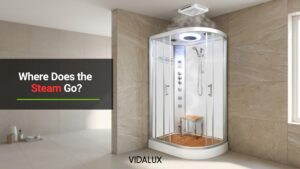
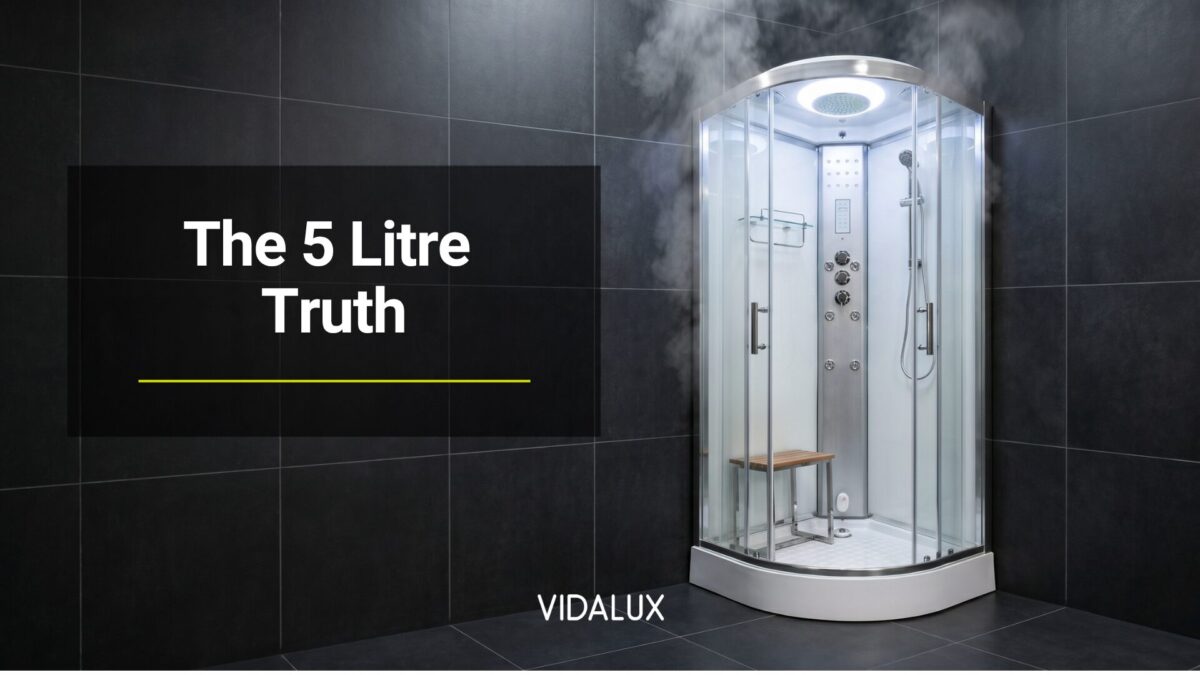
Here’s the thing. A steam shower is a fully enclosed shower enclosure – monsoon showerhead, hand shower, massage jets – with a built-in steam generator. It gives you two separate experiences in one cabin: a private steam room for relaxation, and a complete shower for getting clean.
Steam first, then shower. Two activities. One footprint. One set of plumbing.
The question is whether that costs more or less than your current bath routine – and what you actually get for the money. This guide breaks it down with real 2026 figures.
How a Steam Shower Actually Works (This Matters for the Maths)
Before the numbers make sense, you need to understand how people actually use a steam shower at home. It’s not what most people assume.
You don’t run the steam and the shower at the same time. You can’t – the running water would dissipate the steam. They’re two separate functions inside the same cabin.
The typical routine looks like this:
Steam first. You step into the cabin, close the door, and start the steam generator. The enclosed cabin fills with warm steam. You sit, relax, breathe. A typical home session runs 10-20 minutes – enough to unwind, warm up, and sweat.
Then shower. When you’re done steaming, you switch to the shower – monsoon head, hand shower, or massage jets. You rinse off, wash your hair, get properly clean. A standard shower takes around 8 minutes.
Some people prefer a quick rinse first, then steam, then a final shower. Either way, the steam and shower are sequential – and the whole routine happens inside one cabin without stepping into another room.
But won’t that take ages?
It’s roughly 20-25 minutes total for a full steam-then-shower session. That’s longer than a quick shower, but consider what it replaces. If you currently bath for relaxation and shower separately for cleaning – which many people do – you’re already spending that time across two separate activities in two different places. A steam shower combines both.
The Real Numbers – Water Usage
Let’s look at how much water each option actually uses.
A standard UK bath uses between 80 and 150 litres of hot water per fill, depending on the size and depth. According to the Energy Saving Trust, the average modest fill is around 80 litres, but a full soak easily pushes toward 150.
A steam shower session uses water in two stages. The steam generator needs approximately 2.5 litres for a 15-minute session (based on the established rate of around 5 litres per 30 minutes). The shower portion uses water at a standard rate – the average UK shower runs about 8 minutes at 8-12 litres per minute for a typical thermostatic shower. At a conservative 10 litres per minute, that’s roughly 80 litres.
Total for a full steam-then-shower session: approximately 83 litres.
How does that translate to your water bill?
On a metered supply, Thames Water charges approximately £4.21 per cubic metre (combined water and wastewater) as of 2026. Here’s the comparison:
Scenario | Water Used | Water Cost |
|---|---|---|
Bath (modest fill) | ~80 litres | ~34p |
Bath (full soak) | ~150 litres | ~63p |
Steam shower (15 min steam + 8 min shower) | ~83 litres | ~35p |
A full steam-and-shower session uses roughly the same water as a modest bath – but gives you a steam room experience AND a complete shower.
Against a full bath, you’re saving around 70 litres per session. That’s meaningful on a meter.
And here’s the number most people miss.
If you currently bath to relax AND shower separately to get clean – even just a few times a week – you’re using 160-230 litres across two activities. A steam shower handles both in one cabin for approximately 83 litres. That’s roughly half the water, or less.
Energy Costs – What Does It Actually Cost to Run?

Water is only half the equation. Heating it is where the real cost sits.
The steam portion runs on electricity. At current UK rates of 27.7p per kWh (Ofgem Q1 2026 price cap), a typical steam generator running for 15 minutes costs approximately 19p. A full 20-minute session costs around 26p.
Worth noting: generators don’t run at full power the entire time. Once the cabin reaches the set temperature, the heating element cycles on and off to maintain it – much like a thermostat on a central heating boiler. The actual cost is often lower than the calculated maximum.
The shower portion heats water through your existing boiler or system – exactly as any standard shower would. At gas rates of approximately 5.9p per kWh (Ofgem Q1 2026), heating 80 litres from mains cold to 40°C costs roughly 17p.
What about heating a bath?
Heating 150 litres from around 10°C to 40°C requires approximately 5.2 kWh. On a gas combi boiler, that’s around 31p. Even a modest 80-litre bath costs roughly 17p in gas.
Think of it like comparing a desk lamp to a floodlight. The steam generator heats a tiny amount of water very efficiently for the steam. The shower portion is the same as any shower. A bath heats a huge volume all at once.
Here’s the combined picture:
Scenario | Water Cost | Energy Cost | Total Per Session |
|---|---|---|---|
Bath (full, gas heated) | ~63p | ~31p | ~94p |
Bath (modest, gas heated) | ~34p | ~17p | ~51p |
Standard shower only (8 mins) | ~34p | ~17p | ~51p |
Steam shower (15 min steam + 8 min shower) | ~35p | ~36p | ~71p |
A full steam-and-shower session costs around 71p – noticeably less than a full bath, and about 20p more than a shower on its own.
That extra 20p is the cost of adding a 15-minute private steam room session to your daily shower routine.
But what about the bath-and-shower people?
If you currently shower to get clean AND bath to relax – even a few times per week – here’s what that costs:
Routine | Total Per Session |
|---|---|
Full bath + separate shower (same day) | ~£1.45 |
Steam shower (steam then shower, one cabin) | ~71p |
That’s roughly half the cost. And half the water.
The Annual Picture – What Does This Actually Save?
One session doesn’t make or break a budget. But multiply it across a year, and the numbers matter.
Let’s say your household uses the bath or steam shower four times per week. That’s 208 sessions per year.
Scenario A: Replacing full baths
Cost Per Session | Annual Cost (208 sessions) | |
|---|---|---|
Bath (full, gas heated) | ~94p | ~£196 |
Steam shower (15 min steam + 8 min shower) | ~71p | ~£148 |
That’s a saving of approximately £48 per year. Over five years, around £240 in reduced water and energy costs.
Scenario B: Replacing a shower-AND-bath routine
This is where the savings become significant. If you currently shower daily and bath three or four times per week for relaxation, you’re running two water-and-energy events. A steam shower combines them.
Replacing four weekly bath-plus-shower combinations with steam shower sessions could save over £150 per year on water and energy combined.
(For comparison, home saunas follow a similar pattern – low per-session costs that add up to real value over time.)
Is it always cheaper?
Let’s be clear: if you only take modest, half-filled baths and never shower separately, a steam shower costs slightly more to run per session because of the electricity for the generator. The maths favours steam showers most strongly when you’re replacing full baths, or when you currently bath AND shower as separate activities.
These are estimates based on current 2026 tariffs. Your actual savings depend on your water supplier, energy tariff, usage habits, and heating system. The direction of the numbers, though, is consistent.
Beyond the Numbers – What You Actually Get
The cost comparison tells part of the story. But it doesn’t capture what a steam shower replaces in your routine.
A bath gives you one thing: relaxation in warm water. It does that well. But it doesn’t get you clean – most people shower before or after a bath anyway. It takes time to fill, time to drain, and uses a significant amount of water and energy for a single experience.
A steam shower gives you two things in one place. The steam session handles the relaxation – warmth, muscle comfort, respiratory comfort, stress reduction. Then the shower handles the cleaning – monsoon showerhead, hand shower, massage jets, and a thermostatic Vernet valve (the same valve found in shower systems costing twice as much).
So what does the steam actually do?
Steam supports respiratory comfort, relaxation, stress reduction, and improved circulation. It helps with skin cleansing and may support better sleep. It doesn’t replace medical care – but as part of a regular routine, the benefits are well-documented.
There’s also aromatherapy. Steam carries essential oils effectively, dispersing them evenly throughout the cabin. A few drops in the aromatherapy cup and your steam session becomes something notably different from sitting in a warm bath.
One thing to consider: you don’t have to steam every time you shower. Most people use the cabin as a perfectly normal shower on weekday mornings – quick in, quick out. The steam is there for the evenings and weekends when you want to unwind. Same cabin, same footprint, two completely different experiences depending on what you need that day.
The Vidalux Approach – Efficiency Engineered In
Not all steam showers are built the same way. And how a cabin is designed directly affects how well the steam works and how efficiently it runs.
Vidalux steam showers are fully enclosed, self-contained cabins – sealed by Leak-Seal Technology, a compression-sealed structure with return channels that keep water inside the tray, finished with no silicone on show. That sealed environment is critical for steam performance. Heat stays inside the cabin rather than dissipating into the bathroom, which means the generator cycles less frequently and uses less energy.
The Quick-Build system keeps installation costs down – assembly takes under an hour, and the cabin can sit in front of untiled walls, saving time and money on preparation.
Inside, every component is selected for long-term reliability. The thermostatic Vernet valve, reinforced acrylic base on a steel frame, and high-quality safety glass are the same premium components found in brands charging twice the price. Customisation options – backboard, tray, column, framework, and floor insert – let you match the cabin to your bathroom without compromising on build quality.
Warranties run up to five years on registration (model dependent), spares are stocked for years, and support is genuine, UK-based, and human.
You can view the full range at https://vidalux.co.uk/steam-showers/
Put simply: the efficiency isn’t just about what it costs to run. It’s about what it costs to own.
What to Look For When Comparing Running Costs
Whether you’re looking at Vidalux or any other brand, here’s what matters when comparing the real running cost of a steam shower.
Check the generator’s kW rating. Lower kW means lower electricity cost per session – but the generator must be matched to the cabin size. An undersized generator works harder and costs more in the long run.
Ask about efficiency cycling. Does the unit run continuously at full power, or does it regulate itself by cycling on and off? In a well-designed, fully sealed cabin, the generator reaches temperature quickly and spends most of the session in low-power maintenance mode. This makes a meaningful difference over hundreds of sessions.
Check whether you’re on a metered water supply. If you are, the water savings from replacing baths are most significant – you’re cutting 70+ litres per session on a full bath. If you’re not metered, the energy comparison still applies.
Consider your current routine honestly. Do you bath to relax AND shower to get clean? If so, a steam shower combines both into one session and one set of water. That’s where the biggest savings sit. If you only bath occasionally, the running cost savings are smaller – but you gain a private steam room inside your existing shower footprint.
And remember – a steam shower replaces your shower enclosure entirely. If you’re already planning a bathroom renovation, the comparison isn’t steam shower vs nothing. It’s a steam shower vs a standard enclosure – with a built-in steam room included.
If you’d rather skip the steam and still get the same engineering, Vidalux also makes hydro shower cabins – the same build quality and leak-free design, without the steam generator. You can see those at https://vidalux.co.uk/hydro-shower-cabins/
The Maths Is Clear
A steam shower gives you a private steam room and a complete shower in one cabin – for roughly the same water as a modest bath and less than the cost of a full one.
Steam first. Shower after. Two experiences. One footprint. Around 83 litres and 71p per session.
If you’re currently filling a bath to unwind and showering separately to get clean, the numbers are hard to argue with.
See the quality. Compare the craftsmanship. Choose with confidence.
Frequently Asked Questions
Q: How much water does a steam shower use per session?
A: A full steam-then-shower session uses approximately 83 litres – around 2.5 litres for a 15-minute steam and 80 litres for an 8-minute shower. That’s roughly the same as a modest bath, but gives you two experiences instead of one.
Q: How much does a steam shower cost to run per session?
A: A 15-minute steam session costs approximately 19p in electricity. The shower portion costs roughly 17p in gas-heated water. Total for a full steam-and-shower session: around 71p at current 2026 rates – less than a full bath.
Q: Is a steam shower cheaper to run than a bath?
A: A steam shower session is cheaper than a full bath and comparable to a modest bath. The biggest savings come from replacing a shower-and-bath routine with one combined session – roughly halving the water usage and cost.
Q: Can I use a steam shower as a normal shower?
A: A steam shower works as a completely normal shower every day. Vidalux models include a monsoon showerhead, hand shower, and massage jets. The steam is an optional feature – most people use it a few times per week, not every shower.
Q: Can I run the steam and shower at the same time?
A: No. The steam and shower functions run separately. The typical routine is steam first for 10-20 minutes, then shower to rinse off and get clean. Running water would dissipate the steam, so they’re designed as sequential experiences.The file I created is already clean markdown with proper heading levels. Here it is rendered so you can copy it straight across to Surfer:
- About the Author
- UK’s best-rated?

With over 22 years in the home spa industry, Andrew has overseen every stage of the journey—from initial product design and manufacturing to final installation. An author of multiple technical publications and scientific papers, he founded Vidalux to replace industry hype with engineering-led reliability. His focus remains on delivering gym-quality wellness through honest design and technical truth.
DISCLAIMER: All specifications, claims, and advice relating to any internal or external procedure, practise, product, or service were true at the time of writing. For more accurate and up-to-date details in relation to Vidalux services, please visit the relevant dedicated on-site page. For any product-related information, specifications, or guidance, the information on the product page should be considered the governing source.