Infrared vs. Traditional Saunas: The Engineering Differences Explained (And How to Choose)
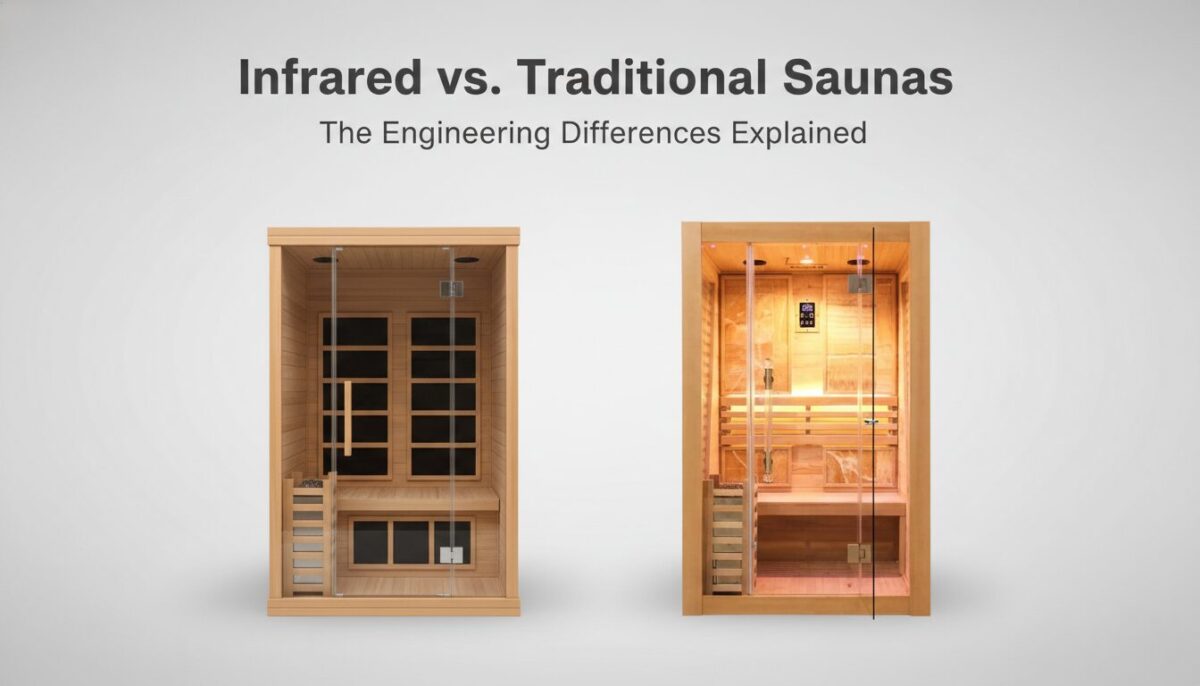
Infrared vs. traditional saunas. If you’ve been looking into a home sauna, you’ve almost certainly hit a wall of confusing claims. “Deep detox.” “Miracle sweat.” “Life-changing results.” It’s a minefield – and very little of it tells you what you actually need to know.
Here’s the thing. A sauna is a tool. It’s not a miracle. And the difference between these two types isn’t about which one is “better.” It comes down to something far more practical: how the heat reaches your body.
One heats the air around you. The other heats you directly.
That single engineering distinction changes everything – the temperature you sit in, how long you stay, how you sweat, and which one fits your routine. Let’s break it down properly.
The Traditional Method: Heating the Air
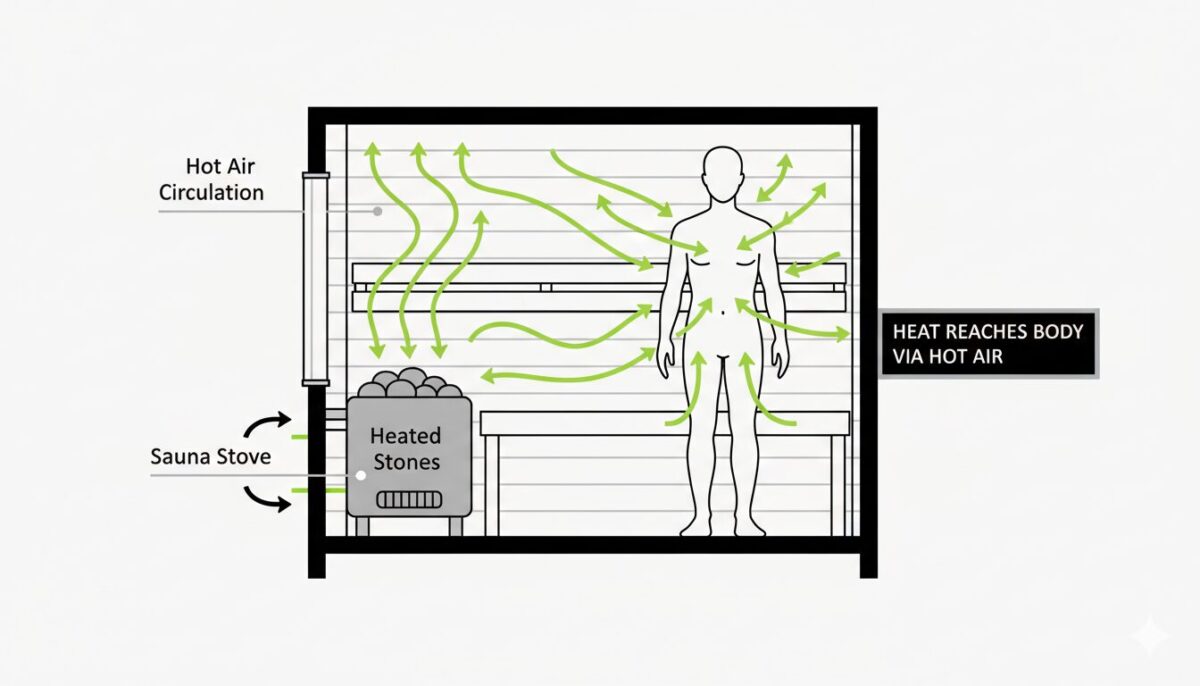
This is the one you’ve probably already experienced.
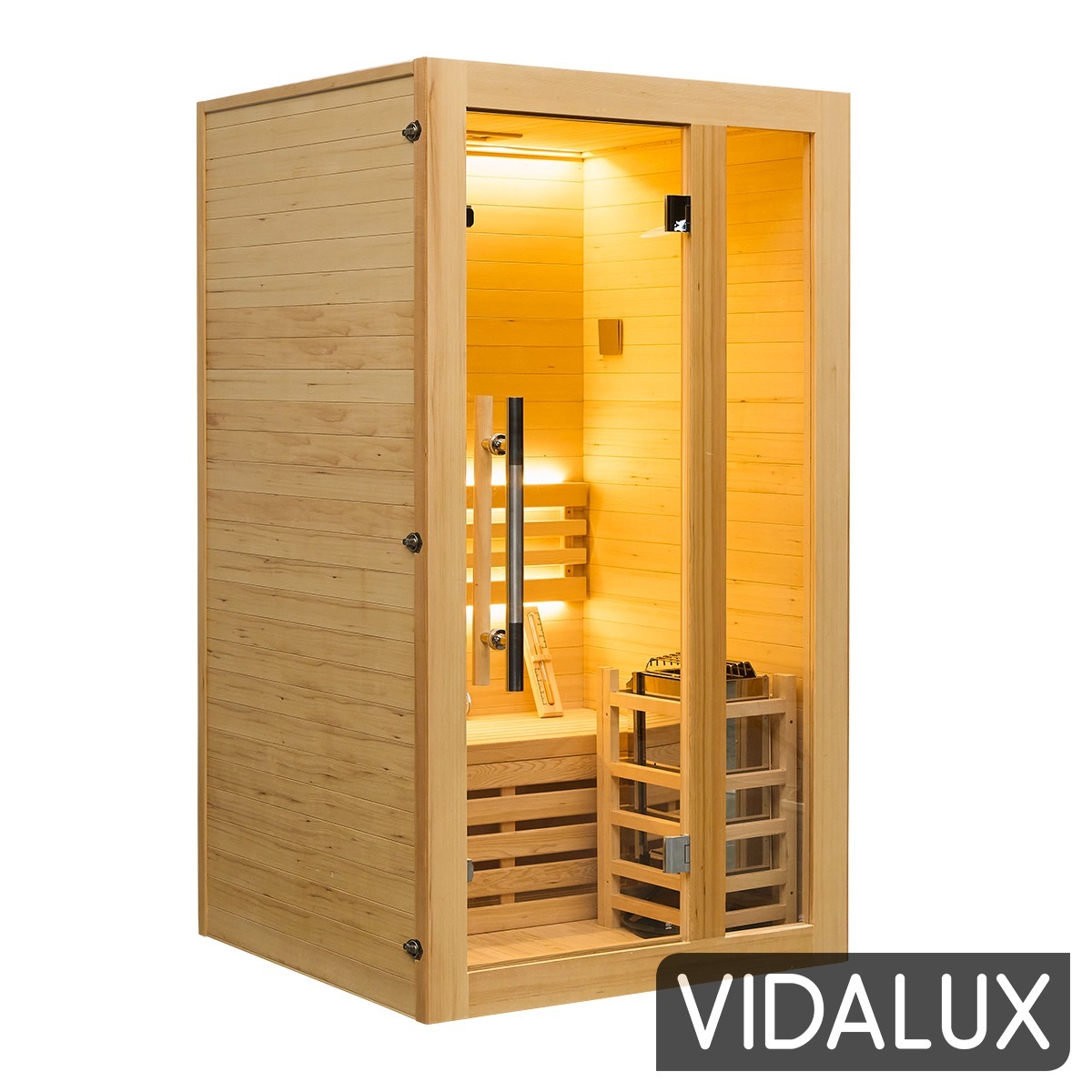
A traditional sauna uses a stove to heat rocks, which heat the air, which then heats your body. It’s a chain reaction. You’re sitting in a tightly insulated cabin where the air temperature climbs to an intense 70-90°C – sometimes higher.
The sweat you produce is your body’s reaction to that extreme external heat.
Your skin heats first. Then your core temperature follows. The whole process is intense, invigorating, and deliberately powerful.
But what about löyly?
Löyly is the Finnish tradition of pouring water over heated stones. That burst of steam spreads the heat more evenly through the cabin and dramatically intensifies the perceived temperature – even though the actual air temperature doesn’t change much. It turns dry heat into moist heat, and it’s a core part of the authentic Finnish sauna experience.
The result? A strong, enveloping heat that triggers rapid sweating in shorter sessions. Traditional saunas support circulation, stress reduction, and muscle relaxation through high-temperature exposure. The intense heat also stimulates blood vessels near the skin’s surface, encouraging blood flow and creating that familiar flushed, invigorated feeling.
Many users prefer the ritual – the intensity, the breathing, the cycles of heat and cooling. Sessions tend to run 15-20 minutes, sometimes repeated in cycles with cold plunges or cool-down breaks between rounds.
If you’re the kind of person who walks out of the gym sauna feeling completely reset, this is the system you know.
The Infrared Method: Heating the Body
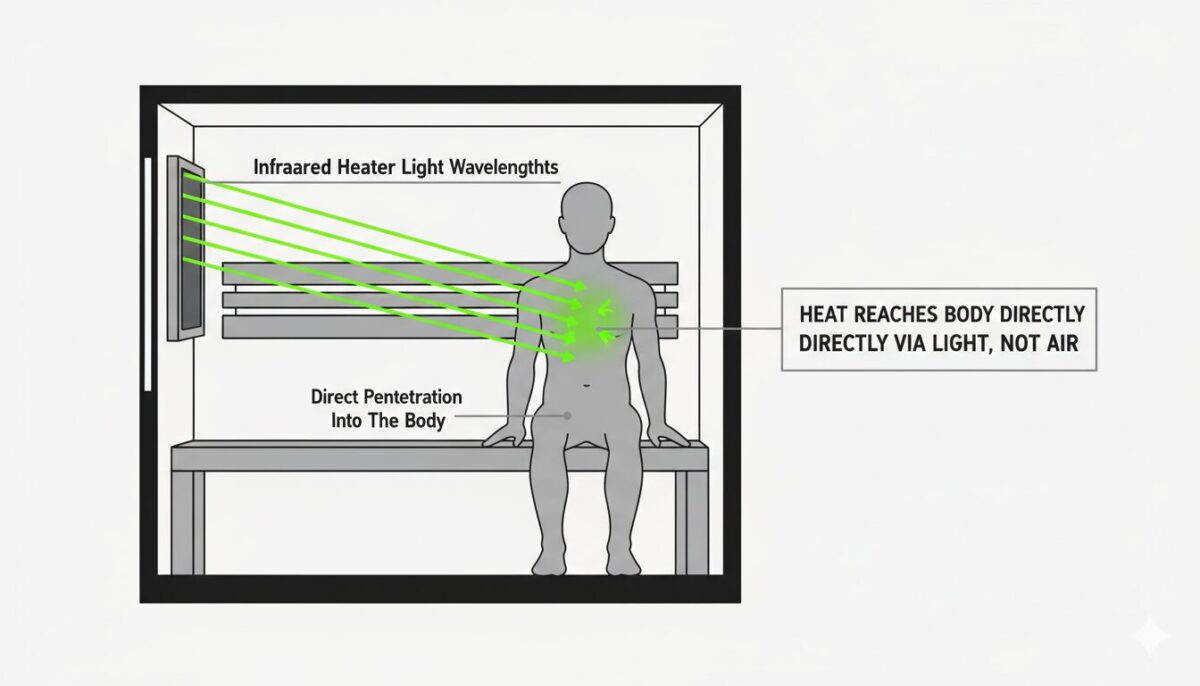
Now forget everything about hot air.
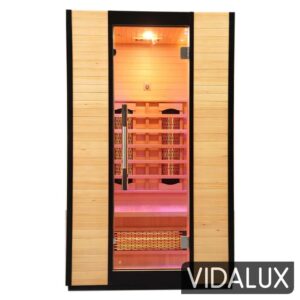
Infrared saunas work on an entirely different principle. Instead of heating the room and waiting for that heat to reach your body, infrared heaters use non-visible wavelengths of light to warm your tissue directly. Think of it like standing in sunlight on a cool day – you feel warm even though the air around you is cold. That’s radiant heat, and it’s the same basic mechanism.
The air temperature inside an infrared cabin typically sits between 45-60°C. That’s noticeably lower than traditional.
Does lower temperature mean weaker performance?
No. And this is the most common misconception in the sauna market.
The lower air temperature is a sign of efficiency, not weakness. Because infrared energy bypasses the air entirely, it doesn’t need extreme temperatures to raise your core temperature and trigger a deep sweat. You’re achieving the same physiological response – sweating, improved blood flow, muscle loosening – through a different mechanism.
Put simply: infrared uses light to do the work, not super-heated air.
This means you can sit comfortably for longer sessions. Many infrared users run 30-45 minute sessions daily, using the sauna for recovery, relaxation, and sleep support. The lower air temperature doesn’t leave you gasping or counting the minutes until you can get out.
It’s a gentler, more sustainable approach to heat therapy – one that fits into a daily routine rather than feeling like an endurance test. For people managing sore muscles, chronic stiffness, or simply wanting a reliable wind-down before bed, that consistency matters. A sauna you use five times a week delivers more than one you use once because the heat is too intense to face regularly.
The Technology Behind the Heat
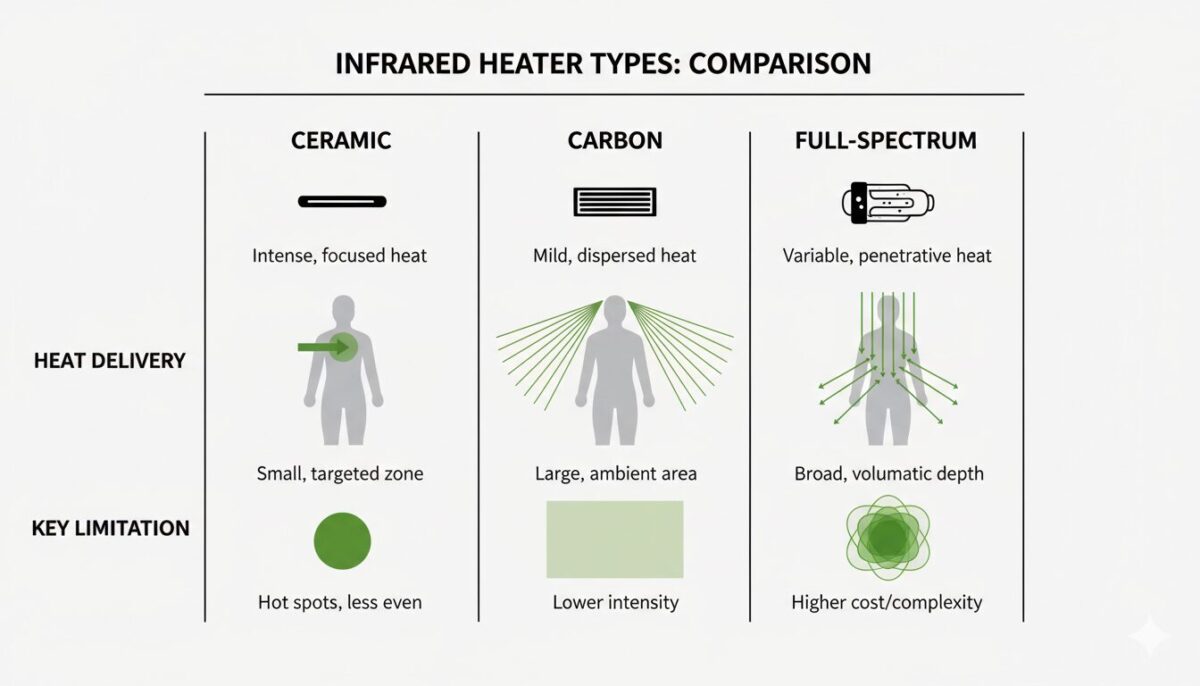
Not all infrared saunas are created equal, and this is where a lot of the marketing noise comes from. Let’s be clear: the heater type inside the cabin matters as much as the type of sauna itself.
There are three infrared wavelengths:
- Near Infrared (NIR) – penetrates just below the skin, supports surface-level warmth and skin rejuvenation
- Mid Infrared (MIR) – reaches soft tissue, enhances circulation and muscle recovery
- Far Infrared (FIR) – the deepest penetration, raises core temperature, supports detox pathways through sweating
Most budget infrared saunas on the market produce FAR infrared only. FIR is the easiest and cheapest to manufacture, which is why it dominates the entry-level market. It works – but it’s only one part of the spectrum.
Full-spectrum systems combine all three wavelengths, providing broader coverage and faster core heating. Most brands charge £200-£500 per heater as a premium upgrade for full-spectrum capability.
What about the heaters themselves?
Two types dominate:
Ceramic heaters warm up fast and deliver strong, direct heat – but their infrared throw is narrow, creating hot spots near the heater and cold spots further away. Sessions can feel uneven.
Carbon panels spread heat more evenly across the whole body with no cold spots – but they’re slower to warm up and only produce FAR infrared.
Each type has a clear weakness. And that’s been the engineering challenge in this market for years – how to get the speed and intensity of ceramic with the even coverage of carbon, across the full infrared spectrum.
It’s a bit like choosing between a spotlight and a floodlight. One is powerful but narrow. The other covers the room but lacks punch. What you really want is both – in the same fitting.
Which Heat Suits Your Routine?
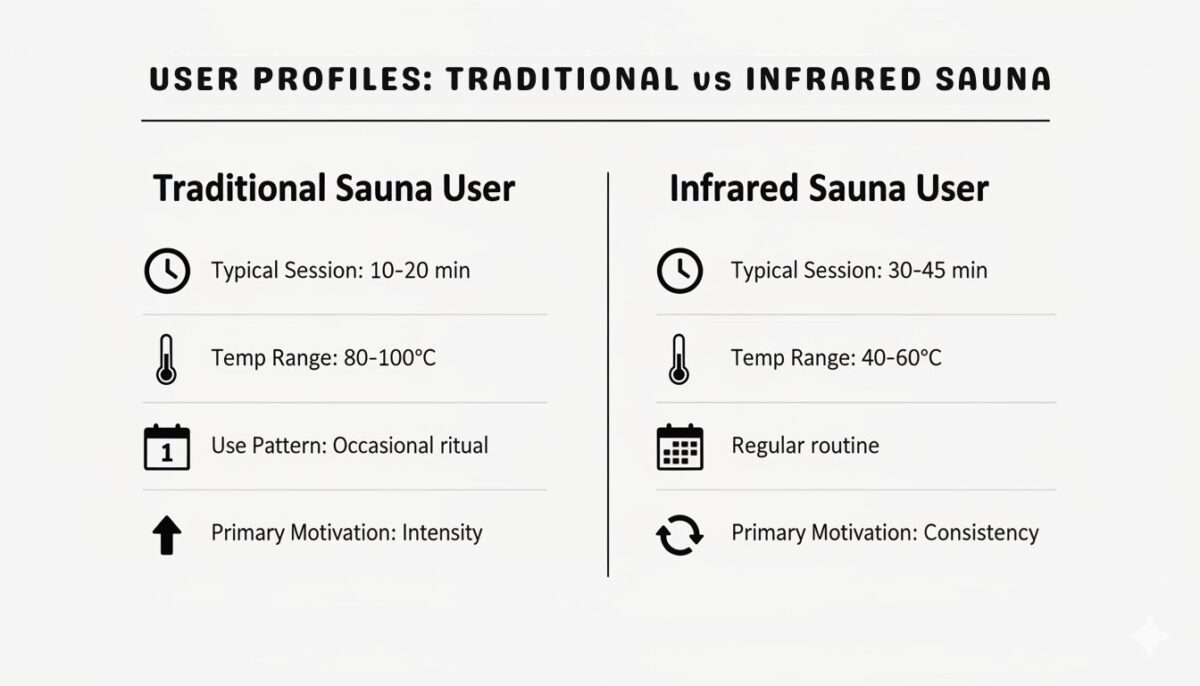
Neither system is inherently better. They’re engineered for different purposes, different people, and different lifestyles.
Choose traditional if you want:
- Intense, gym-style heat at 70-90°C
- Short, powerful sauna sessions (15-20 minutes)
- The ritual of löyly – steam bursts on hot stones
- An invigorating, stimulating experience that leaves you feeling reset
Choose infrared if you want:
- Gentle, comfortable heat therapy at 45-60°C
- Longer sessions (30-45 minutes) that fit into a daily routine
- Deep muscle relief and post-activity recovery
- A calmer, lower-temperature experience that supports sleep and relaxation
So what if you want both?
That’s exactly the question hybrid saunas were designed to answer.
The Vidalux Approach – Hybrid Without Compromise

testing every heater configuration on the market. Ceramic-only. Carbon-only. FAR-only. Full-spectrum upgrades. The conclusion was always the same: every single-heater design had a weakness.
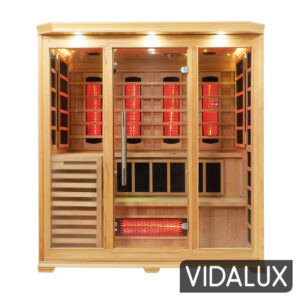
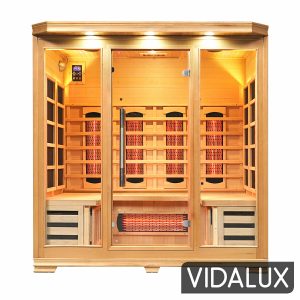
That’s why we engineered Complete Heat – a system that combines nano-carbon crystal heaters with full-spectrum carbon fibre ruby quartz heaters in the same cabin. The carbon panels provide wide, even FAR coverage across walls and floor. The ruby quartz heaters, positioned behind the backrest near large muscle groups, deliver full-spectrum infrared (NIR, MIR, and FIR) with fast warm-up and deep penetration.
No cold spots. No slow start. No missing wavelengths. Full spectrum included as standard – where most brands charge it as a premium upgrade.
The nano-carbon panels also deliver strong energy efficiency. Because infrared heaters warm the body rather than the air, operating costs stay low. There’s no 30-minute wait for the cabin to reach temperature. Complete Heat systems are ready in minutes, not hours.
Our Hybrid sauna range takes this further. Each unit contains two complete, full-power systems in one cabin: a full Complete Heat infrared system and a full Finnish traditional stove. Neither system is reduced, weakened, or altered to fit the hybrid format. Each performs identically to its standalone counterpart.
Worth noting: you use one mode at a time – Infrared Mode or Traditional Mode, never both simultaneously. That’s not a limitation. It’s the correct and safe engineering approach.
The result is a sauna that adapts to you. Infrared during the week for gentle daily wellness. Traditional at the weekend when you want that intense, classic heat. Two experiences. One cabin. Zero compromise on either.
What to Look For When Choosing
Whether you buy from us or someone else, here’s what matters:
Check the heater type. Is it ceramic-only, carbon-only, or a combination? Each has different strengths and weaknesses.
Ask about the spectrum. FAR-only is common at lower price points. Full-spectrum (NIR + MIR + FIR) provides broader wellness coverage but is typically a premium feature.
Understand the temperature range. Traditional operates at 70-90°C. Infrared at 45-60°C. If someone is selling an infrared sauna that “reaches 90°C,” question whether it’s genuinely infrared or just a hot box.
If buying hybrid, confirm both systems are full-power. The honest truth? A genuine hybrid should perform identically in each mode to a standalone unit. If either system is reduced to fit, it’s a compromise – not a hybrid.
Look for low-EMF engineering. Be wary of any brand claiming “Zero EMF” – that’s physically impossible. What you want is a design that minimises EMF output through thoughtful engineering.
The Simple Summary
Traditional saunas heat the air. Infrared saunas heat your body. Both support wellbeing, circulation, stress reduction, and muscle relief – through different mechanisms.
Your choice depends on what fits your lifestyle. Intensity and ritual? Traditional. Daily comfort and recovery? Infrared. Both? A properly engineered hybrid.
Once you know how the heat works, the right choice becomes clear.
Explore our home saunas: https://vidalux.co.uk/home-saunas/
See the quality. Compare the engineering. Choose with confidence.
Frequently Asked Questions
Q: What is the difference between infrared and traditional saunas?
A: The difference between infrared and traditional saunas is how the heat reaches your body. Traditional saunas heat the air to 70-90°C; infrared saunas use light wavelengths to heat your body directly at 45-60°C.
Q: Are infrared saunas as effective as traditional saunas?
A: Infrared saunas are as effective as traditional saunas but work differently. Lower air temperature does not mean weaker performance – infrared bypasses the air to heat tissue directly, supporting deep sweating at comfortable temperatures.
Q: What temperature do infrared saunas reach?
A: Infrared saunas typically reach 45-60°C air temperature. Effectiveness comes from light penetration into the body rather than extreme air heat – making sessions comfortable enough for daily use.
Q: Can you use a hybrid sauna in both infrared and traditional mode?
A: You can use a hybrid sauna in infrared or traditional mode – but not both at once. A properly engineered hybrid contains two full-power systems with separate controls for safe, flexible operation.
Q: What is full-spectrum infrared?
A: Full-spectrum infrared combines three wavelengths – Near, Mid, and Far Infrared – each penetrating to different tissue depths. Most budget saunas are FAR-only; full-spectrum provides broader coverage and faster core heating.
- About the Author
- UK’s best-rated?

With over 22 years in the home spa industry, Andrew has overseen every stage of the journey—from initial product design and manufacturing to final installation. An author of multiple technical publications and scientific papers, he founded Vidalux to replace industry hype with engineering-led reliability. His focus remains on delivering gym-quality wellness through honest design and technical truth.
DISCLAIMER: All specifications, claims, and advice relating to any internal or external procedure, practise, product, or service were true at the time of writing. For more accurate and up-to-date details in relation to Vidalux services, please visit the relevant dedicated on-site page. For any product-related information, specifications, or guidance, the information on the product page should be considered the governing source.